
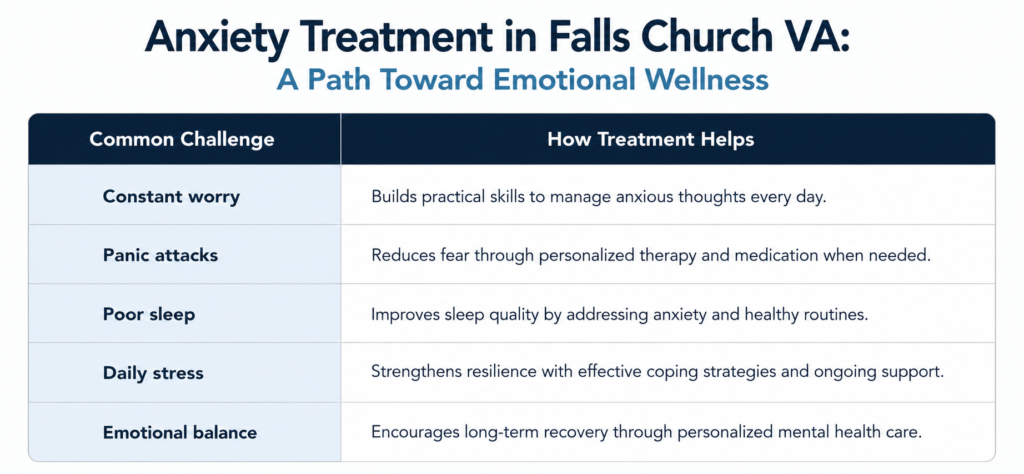
Are you looking for effective anxiety treatment in Falls Church, VA? The right care can help you manage constant worry, reduce fear, and feel more in control of your daily life. Anxiety can affect your thoughts, emotions, and physical health. However, personalized treatment can help you build healthy coping skills and improve your emotional health.
Living with anxiety can make it difficult to enjoy each day. You deserve care that meets your unique needs. At MindVita, our compassionate psychiatric providers listen to your concerns and create a personalized treatment plan. We support you at every step. Schedule a consultation and start your recovery journey.
What Anxiety Symptoms Should You Never Ignore?
Anxiety becomes a concern when symptoms last for weeks or begin to affect your daily life. You may feel constant worry, fear, or nervousness that is difficult to control. Some people also notice changes in sleep, focus, or energy. Early care can help you understand your symptoms and prevent them from becoming more difficult to manage.
Research published in Pharmacy and Therapeutics [1] explains that anxiety disorders involve excessive fear, worry, and related behavioral changes. The review also notes that these conditions often occur with other mental health disorders and can affect daily functioning. Therefore, recognizing persistent symptoms and seeking a professional evaluation can help you receive an accurate diagnosis and appropriate treatment.
What Treatment Options Can Help You Manage Anxiety?
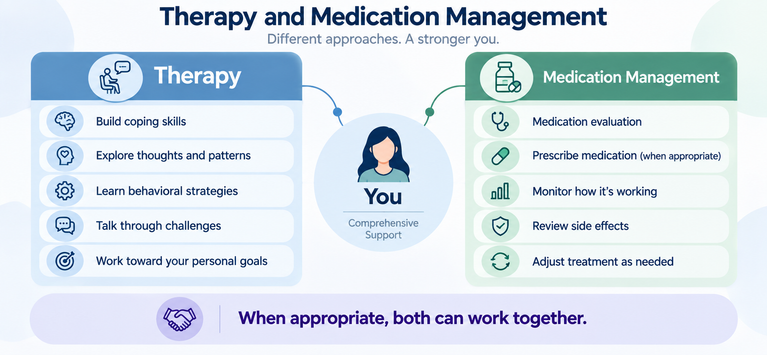
The right treatment depends on your symptoms, health history, and personal needs. Many people improve with a combination of therapy, healthy lifestyle changes, and, when needed, medication. A personalized care plan helps you manage anxiety more effectively. It also teaches practical coping skills that support long-term emotional health and improve your daily routine.
Your personalized care plan may include the following treatment options:
- CBT therapy for anxiety: Helps you recognize negative thoughts and replace them with healthier thinking patterns.
- Anxiety medication management: May reduce symptoms when anxiety affects your daily life. Your provider will monitor your progress regularly.
- Stress management techniques: Deep breathing, mindfulness, and relaxation exercises help calm your mind and reduce tension.
- Healthy lifestyle changes: Regular exercise, good sleep, and a balanced diet can support better emotional health.
- Follow-up appointments: Regular visits help your provider review your progress and adjust your treatment plan when needed.
Every person responds to treatment differently. Therefore, your provider will create a plan that matches your needs and goals. Regular follow-up visits help track your progress and make changes when needed. With the right care, you can manage anxiety. You also learn healthy coping skills. Over time, daily life becomes easier and more enjoyable.
When Should You See Anxiety Disorder Specialists for Lasting Relief?
You should seek professional help when fear or constant worry continues for weeks and starts affecting everyday life. You may struggle at work, school, or home. Sleep problems, avoiding social activities, or feeling tense most days are also warning signs. A timely assessment helps identify the underlying condition and guides you toward a personalized care plan that fits your needs.
Research from the 2023 U.S. Preventive Services Task Force (USPSTF) [2], shows that many adults with anxiety are not identified early. Because of this, treatment is often delayed. The guideline also found that therapy and medication can reduce symptoms. Therefore, if your symptoms continue, seek professional help. An early evaluation can guide the right treatment. It can also support better long-term recovery.
What Healthy Habits Can Support Anxiety Recovery?
Living a healthy lifestyle can support your anxiety recovery and improve your health. Small daily habits can help you feel calmer and more in control. While these changes do not replace professional treatment, they can strengthen your recovery. Over time, healthy routines may reduce stress, improve your mood, and make it easier to manage anxiety symptoms.
Get Enough Sleep
Aim for seven to nine hours of sleep each night. A regular sleep schedule helps your body and mind rest. Good sleep can improve your mood, increase energy, and make it easier to cope with daily challenges.
Stay Physically Active
Regular exercise helps reduce stress and improve your mood. Walking, cycling, stretching, or other activities can help you feel more relaxed. Even a short workout each day can support your emotional and physical health.
Eat a Balanced Diet
Choose healthy foods that provide steady energy throughout the day. Eat fruits, vegetables, whole grains, and lean protein. Also, drink enough water. Good nutrition supports brain function and helps your body respond better to stress.
Practice Relaxation Techniques
Deep breathing, meditation, and mindfulness can help calm your mind. These techniques reduce tension and improve focus. Practicing them every day can help you manage anxious thoughts and feel more relaxed over time.
Stay Connected with Others
Spend time with supportive family members and trusted friends. Talking with someone you trust can reduce feelings of isolation. Strong social connections also provide encouragement and emotional support during your recovery.
Research published in Healthcare [3] found that healthy lifestyle changes can reduce anxiety symptoms. The review showed that regular exercise, a balanced diet, good sleep, and stress management provide the greatest benefits. Therefore, following healthy daily habits can support your recovery. However, these habits work best when combined with professional treatment and ongoing support.
Take the First Step Toward Anxiety Treatment in Falls Church VA Today with MindVita
Living with anxiety can affect every part of your life. You may find it hard to sleep, stay focused, or enjoy time with loved ones. Constant worry can leave you feeling tired and emotionally drained. Over time, these challenges may affect your confidence, relationships, work, and overall emotional health.
At MindVita, our psychiatric providers understand what you are going through. We create a personalized treatment plan based on your needs and goals. Whether you need therapy, anxiety medication management, or ongoing support, we are here to help. Contact us today and take the first step toward better and lasting mental health.
FAQs
Is anxiety a mental illness or a normal feeling?
Feeling anxious during stressful situations is normal. However, anxiety is more than everyday stress. If fear lasts for weeks and affects your work, relationships, sleep, or daily activities, it may be an anxiety disorder. Professional support can help you manage your symptoms and improve your mental health.
Can anxiety make you feel sick even if you are physically healthy?
Yes, anxiety can cause physical symptoms even when you are physically healthy. You may feel dizzy or tired, have a fast heartbeat, or experience headaches, stomach pain, or shortness of breath. These symptoms are real. However, a proper evaluation can help identify whether anxiety is the cause.
What can trigger anxiety attacks?
Anxiety attacks can happen for many reasons. Common triggers include ongoing stress, major life changes, work pressure, family problems, poor sleep, or too much caffeine. Sometimes, they happen without a clear reason. Understanding your triggers can help you manage anxiety and reduce future attacks.
Can children and teenagers develop anxiety disorders?
Yes, children and teenagers can develop anxiety disorders. They may worry too much, avoid school, or become easily upset. Some may also have headaches, stomach pain, or trouble sleeping. Early support can help children feel better sooner. They learn healthy ways to cope and manage their emotions more confidently.
Can untreated anxiety get worse over time?
Yes, untreated anxiety can become more severe over time. It may affect your sleep, work, relationships, and overall well-being. In some cases, it can increase the risk of depression, panic attacks, or substance misuse. However, early treatment can help you manage symptoms, improve daily life, and support long-term emotional health.