

If your mood changes in a predictable way each autumn and winter, seasonal affective disorder medication is one of the options a provider may discuss with you. It is part of a broader treatment picture rather than the whole of it, and one medication is approved specifically for preventing seasonal episodes rather than treating them.
If previous winters affected your mood, autumn is a better time to plan than January. At MindVita, you can walk a psychiatric provider through what you have noticed across past seasons, rather than only how this week has felt, and discuss options suited to your situation. You can book an appointment when you are ready.
What Seasonal Affective Disorder Is
Seasonal affective disorder is depression that follows a recurring seasonal pattern rather than a difficult period that happens to occur during the winter months. Most people with it notice symptoms starting in late fall or early winter that ease in spring and summer. The pattern, rather than the season alone, is what makes it seasonal.
According to the National Institute of Mental Health [1], symptoms typically last about four to five months of the year. Winter-pattern symptoms can include oversleeping, overeating with carbohydrate cravings and weight gain, and social withdrawal. A diagnosis generally requires depressive episodes occurring in a specific season for at least two consecutive years, and more often in that season than at other times.
A less common summer pattern exists as well, which can involve trouble sleeping, poor appetite, restlessness, and anxiety. NIMH notes there are no treatments specific to summer-pattern SAD, which makes an individual assessment the starting point.
Seasonal Affective Disorder Medication, Light Therapy, and Psychotherapy
Treatment usually draws on more than one approach rather than seasonal depression medication by itself. Antidepressants are one option, and light therapy and psychotherapy are others, used alone or in combination depending on your symptoms, history, and preferences. No single approach suits everyone, and what helps one winter may need adjusting the next.
The National Institute of Mental Health [2] notes that antidepressants usually take four to eight weeks to work and that problems with sleep, appetite, energy, and concentration often improve before mood does. Medications are also frequently used in combination with other treatment approaches rather than on their own. Each of these works differently, and a treatment plan often includes more than one of them.
Antidepressant Medication
Selective serotonin reuptake inhibitors are sometimes used for seasonal symptoms, and one extended-release form of bupropion carries a specific seasonal indication. The choice depends on your individual history.
Light Therapy
You sit in front of a bright light box, usually in the morning, from fall to spring. NIMH describes 10,000 lux boxes used for roughly 30 to 45 minutes daily.
Cognitive Behavioral Therapy for SAD
This is CBT adapted for seasonal depression, typically delivered in two weekly group sessions over six weeks. It addresses season-related thinking and rebuilds activity into winter routines.
Vitamin D
Many people with winter-pattern SAD have low vitamin D, and supplements are sometimes suggested. NIMH reports mixed study results, and vitamin D can interact with some medications.
Combining approaches is common. In a direct comparison reported by NIMH, CBT adapted for SAD and light therapy were equally effective, though some symptoms improved slightly faster with light therapy. A separate study following people across two winters found the effects of CBT seemed to last longer. MindVita offers psychotherapy and medication management, and your provider can discuss which combination fits your situation.
Treatment Versus Prevention: Why That Distinction Matters
One medication, an extended-release form of bupropion, is approved specifically to prevent seasonal depressive episodes in people already diagnosed with SAD. That is a narrower claim than treating an episode once symptoms have taken hold, and it is the reason the timing of your appointment matters as much as the prescription itself.
The U.S. Food and Drug Administration [3] label for Wellbutrin XL states that it is indicated for the prevention of seasonal major depressive episodes in patients with a diagnosis of seasonal affective disorder. The same label lists a separate indication for treating major depressive disorder, which is not the same thing as the seasonal prevention indication.
In practice, this means timing matters. NIMH describes bupropion being taken daily from fall through early spring, starting before symptoms usually begin. If you want background on bupropion itself, MindVita’s article on Wellbutrin in anxiety disorders covers that medication in a separate clinical context and does not speak to seasonal depression.
Safety Questions Worth Raising Before You Start
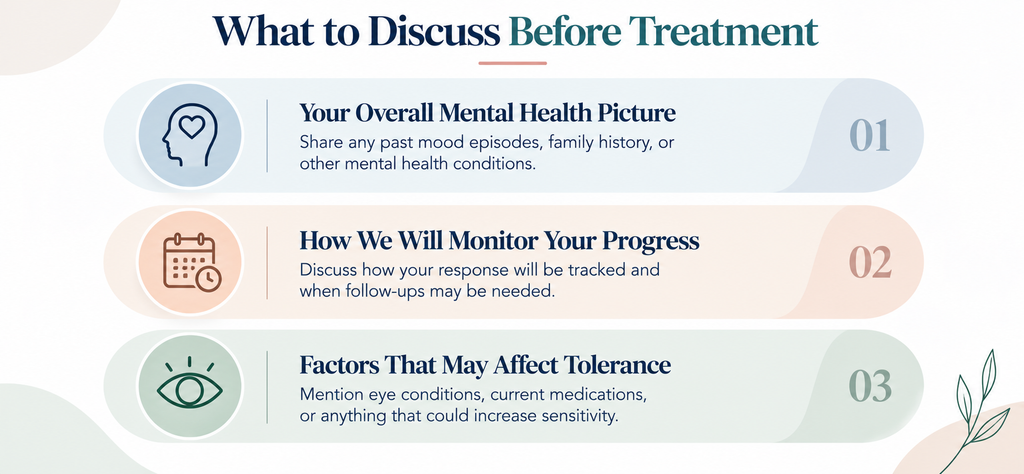
Two things belong in the conversation before any antidepressant starts, and both come straight from the prescribing information rather than from caution alone. The first is whether you have ever had periods of unusually high energy or little need for sleep. The second is how you will be monitored in the early weeks.
The U.S. Food and Drug Administration [3] label instructs prescribers to screen patients for a history of bipolar disorder and for risk factors for bipolar disorder before starting treatment, because of the risk of activating mania or hypomania. It also carries a boxed warning that antidepressants increased the risk of suicidal thoughts and behavior in children, adolescents, and young adults, and that patients of all ages starting treatment should be monitored closely.
Light therapy has its own considerations. NIMH notes that people with certain eye conditions, or who take medications that increase sensitivity to light, may need an alternative approach or medical supervision. Mention any history of mania or hypomania before starting either light therapy or medication, since that history can affect which approach is appropriate.
Timing and Questions for Your Prescriber
Autumn is the useful window for this conversation. If your pattern is predictable, an assessment before symptoms arrive gives you time to discuss prevention, arrange follow-up, and start anything that takes several weeks to show an effect. Waiting until February usually means treating an episode that is already underway rather than preventing one.
Questions worth bringing with you:
- Does my history fit a seasonal pattern, or could something else explain this?
- Is prevention an option for me, or does my situation call for treating current symptoms?
- How long before I should expect to notice a difference?
- What side effects should I watch for in the first few weeks?
- Would light therapy or psychotherapy fit alongside medication, or instead of it?
- When should I come back, and what would make you change the plan?
Keeping a short record across the season also helps. Noting sleep, energy, appetite, and mood month by month gives your provider something concrete to compare against next autumn, which is more useful than trying to recall last winter from memory.
When to Seek Assessment or Urgent Help
Book an assessment when seasonal mood changes affect your work, sleep, relationships, or daily responsibilities, when the pattern has repeated across several years, or when whatever you tried last winter did not help enough on its own. You do not need to meet every diagnostic criterion before asking for an appointment.
Some situations need faster support than a scheduled appointment. If you are having thoughts of suicide or self-harm, the 988 Suicide and Crisis Lifeline [4] provides free, confidential support 24 hours a day, seven days a week. You can call or text 988, or chat online. Call 911 if you or someone else is in immediate danger.
Routine booking is not a substitute for emergency care. If symptoms escalate between appointments, contact your provider rather than waiting for the next scheduled visit.
Book an Assessment for Seasonal Mood Changes
Maybe you have noticed the same decline three winters in a row and put it down to the weather. Maybe you looked into light boxes last January, after the most difficult weeks had already passed. Or you take a medication year round and are unsure whether it is enough once daylight hours shorten.
At MindVita, a psychiatric provider can look at the pattern across seasons rather than only how you feel today, and discuss whether seasonal affective disorder medication, light therapy, psychotherapy, or some combination fits your history. Care is available at our Vienna office or by secure video, depending on where your provider is licensed to practice. You can book an appointment while there is still time to plan for the months ahead.

FAQs
Can I buy a light box myself, or should I talk to a provider first?
Light boxes are sold without a prescription, so many people start on their own. It is still worth a conversation first, since eye conditions and medications that increase light sensitivity can matter, and the timing and length of daily use affect whether it helps. A provider can also confirm the pattern is seasonal.
Does seasonal affective disorder go away on its own in the spring?
Winter-pattern symptoms often ease as spring arrives, which is part of what defines the seasonal pattern. That does not mean no treatment is needed, since the pattern tends to repeat. Many people find it easier to plan for the following autumn while the previous winter is still fresh in their memory.
Will I need medication every winter, or just once?
That depends on your history and how you respond. Some people take medication seasonally for several years, others for a shorter period, and some manage with other approaches. Your provider should review each year whether to continue, adjust, or stop, and that review is a decision made together rather than automatically.
Can my symptoms be seasonal if I do not live somewhere with harsh winters?
Yes. Shorter daylight hours, rather than snow or cold, are the usual focus in winter-pattern SAD, and daylight shortens everywhere in the fall. Virginia winters are milder than many, but the light change still happens here. What matters clinically is whether your symptoms repeat in the same season across more than one year.
What if I already take an antidepressant year-round?
Tell your prescriber what you notice seasonally rather than adjusting anything yourself. If symptoms worsen predictably each winter despite ongoing treatment, that is useful information and may lead to a review of your current plan. Never stop or change a dose on your own, since some medications cause problems when stopped suddenly.
References
- National Institute of Mental Health (NIMH). “Seasonal Affective Disorder.” https://www.nimh.nih.gov/health/publications/seasonal-affective-disorder
- National Institute of Mental Health (NIMH). “Mental Health Medications.” https://www.nimh.nih.gov/health/topics/mental-health-medications
- U.S. Food and Drug Administration. “Wellbutrin XL (bupropion hydrochloride extended-release tablets) Prescribing Information.” https://www.accessdata.fda.gov/drugsatfda_docs/label/2025/021515s049lbl.pdf
- 988 Suicide and Crisis Lifeline. https://988lifeline.org/