Anxiety is one of the most common disorders worldwide, and people with every possible life background have this condition. Anxiety can be crippling, which ranges from GAD to panic attacks. If you have anxiety, chances are that you have heard of Zoloft. This medication, otherwise known as sertraline, has a wide range of indications for anxiety and all its related disorders. In this article, we go in depth into everything about Zoloft you should know: its benefits, dosage, side effects,and interactions and how it will be able to help you when trying to manage your anxiety.
Anxiety can be challenging, but Zoloft offers a potential solution. Learn about its benefits, proper dosage, and key considerations. Consult an online psychiatrist for personalized guidance on managing anxiety with medication.
What is Zoloft for anxiety?
Zoloft also known as sertraline, is classified under a category of antidepressants called selective serotonin reuptake inhibitors more commonly referred to as SSRIs. Zoloft along with other types of SSRIs, raises the amount of serotonin in the brain. Serotonin is a neurotransmitter that serves to heighten mood and lower anxiety and depression.
The efficacy of Zoloft in treatment for anxiety and disorders has been outstanding. The FDA has cleared this medication for use in patients with panic disorder, social anxiety disorder, PTSD and obsessive compulsive disorder.
While Zoloft is not a quick fix for anxiety and, it does help people gradually control their symptoms through balancing serotonin levels within the brain. It is therefore proved to be of great value in long term anxiety management.
How does Zoloft work for anxiety?
Zoloft acts through the serotonin system of the brain. Serotonin is a neurotransmitter with a leading role in maintaining the state of mood, sleep and anxiety within normal limits. Low levels of this neurotransmitter contribute to symptoms of anxiety, depression and stress.
Anxiety Zoloft inhibits reuptake of the neurotransmitter serotonin, leading to an increase in serotonin availability inside the brain. Increased availability of serotonin within the brain works toward mood stabilization and anxiety reduction for improved emotional wellbeing.
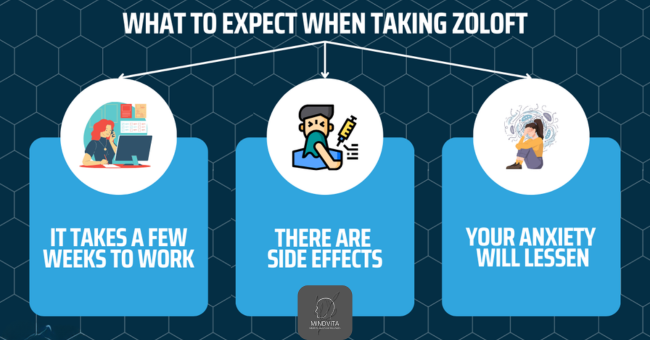
The other advantage of taking Zoloft is the gradual onset of action. Unlike immediate relievers, as in the case of benzodiazepines it takes some time for Zoloft to adjust the serotonin levels to provide relief. Being patient and not expecting any immediate results is a must since it may take up to 2 to 4 weeks before you realize significant changes regarding your anxiety symptoms.
Zoloft dosage for anxiety
The doctor will start treatments with a low dose of Zoloft while treating anxiety. The most common starting dosage of the drug is 25 to 50 mg daily. This may be gradually increased over time as your doctor finds that dose which proves optimal with you.
Doses of Zoloft generally administered for anxiety:
Initial dose: 25 to 50 mg a day
DOSAGE: Dosage may be increased as needed: 50 mg to 200 mg a day, in divided doses.
Also, remember that you should not adjust the dosage yourself instead, it shall be as your health provider directs. Suddenly stopping this medication and altering the dosage can lead to withdrawal reactions, including dizziness, irritability and restlessness.
Anxiety : Possible Side Effects of Zoloft
Like with any medication Zoloft for anxiety and also has some side effects. These side effects vary among different persons and can be moderate to severe.
Common side effects include the following :
nausea
Fatigue
dizziness
The sexual side effects include low libido.
Disturbances in sleep (such as insomnia)
Most of these side effects begin wearing off as the body gets used to the medication within one or two weeks. On the other hand, it is relevant to consult a doctor in case side effects remain or worsen.
Less commonly, Zoloft may have other and more serious side effects such as thoughts of harming oneself or others, especially in younger individuals. If you experience thoughts about harming yourself or others you will need to proceed to the nearest emergency department.
Interactions of Zoloft with other drugs
Such people with anxiety also take other medications for various conditions. Anxiety treatment medication like Zoloft can interact with some medications, including prescription and OTC ones.
Zoloft and Tylenol/ Acetaminophen
In general, the combination of Zoloft and Tylenol is quite safe if used appropriately. However, this is one of the instances where you need to limit excessive intake of zoloft alcohol since both medications affect the working of your liver. If you are at all concerned about the taking of Zoloft and Tylenol, you must consult your healthcare provider for personalized advice.
Zoloft and Cold Medicine
Certain cold medications can interact with Zoloft taken for anxiety. This is most true of those cold medications that contain decongestants. Decongestants, like pseudoephedrine raise blood pressure and can cause side effects along with sertraline. If you are taking Zoloft and need to take a cold medicine, consult your doctor or pharmacist to make sure it is safe.
Zoloft and Anxiety Attacks
Zoloft for anxiety and works effectively in controlling chronic symptoms of anxiety; however, the same does not provide quick relief during acute anxiety attacks. You may also need medication such as benzodiazepines that provide you with instant relief from anxiety in the case of an attack; this too needs to be prescribed by your physician or healthcare professional.
Zoloft and Alcohol
It is also important because alcohol does not combine well with Zoloft and can increase the risk of its side effects. The use of Zoloft together with consumption of alcohol can result in drowsiness, dizziness and impairment in concentrating ability. Besides that, alcohol increases anxiety and depression which is counterproductive to the benefits derived from this medication. It is preferable to avoid or limit your intake of alcohol while taking Zoloft.
How long does it take for Zoloft to start working for anxiety?
One of the most frequent questions in regard to taking Zoloft for anxiety is how long it is going to take before it starts working. Generally speaking Zoloft takes 1 to 2 weeks to show the first signs of improvement. On the other hand, the full effects might be present after continuous usage of 4 to 6 weeks. During this time one has to be patient and give the drug its due time to work.
If, after a number of weeks, you find no improvement in anxiety or develop intolerable side effects call your doctor. They may give you a different dosage or another type of treatment.
Anxiety medications like Zoloft
While highly effective for many people with anxiety, not everyone finds relief from Zoloft. If you find that this medication is not effective for you or if it gives you significant side effects there are other medications and other treatments you may want to try:
Other SSRIs include prescription medications such as Lexapro and Prozac. They work similarly to Zoloft, though may be better options for some people.
SNRIs: Serotonin norepinephrine reuptake inhibitors, a class of medications such as Cymbalta (duloxetine), impact both systems and may confer additional benefits.
Benzodiazepines: Effective in short term symptomatic relief but it should be prescribed cautiously due to their addictive potential.
Besides medication, therapy can also play a very important role in managing anxiety. Cognitive behavioral therapy is one of the most effective treatments that help change negative thought patterns and behaviors linked with anxiety.
Conclusion
Take charge of your anxiety with Zoloft. In using Zoloft for anxiety, the treatment proves effective for many people who struggle with anxiety and related disorders. By boosting serotonin levels in your body Zoloft helps to regulate mood and lessen symptoms of anxiety. This will eventually help improve overall mental health over time. If you suffer from anxiety, speak with your doctor to determine if Zoloft is suitable for you. Moreover, integration of therapy and change in lifestyle can increase the potential of medication by a notch. If one wishes to consult an expert as to how to manage anxiety MindVita offers a number of mental health services including a range of therapies and psychological counseling. Get in touch with us now and begin your journey into better mental well being.
Anxiety and Zoloft: Frequently Asked Questions
1. How does Zoloft help with anxiety?
Zoloft raises brain serotonin levels and in turn, improves mood and reduces anxiety symptoms. It is therefore a good long term treatment of anxiety.
2. Is it okay to take Zoloft in combination with other medications for example Tylenol?
Yes, it is possible to take both these medicines together but the excessive use of alcohol should be avoided. The advice given by the doctor has to be followed.
3. Does Zoloft work for panic attacks?
Yes, Zoloft is used for anxiety and can reduce panic attack frequency and intensity over time; it does not provide immediate relief during an acute attack.
4. Can I drink alcohol while taking Zoloft?
It is not advised to consume alcohol while taking Zoloft because alcohol can potentiate the side effects of the medicine and further heighten symptoms of anxiety and depression.
5. How long does it take to feel the effects of Zoloft for anxiety?
It generally takes 1 to 2 weeks to start noticing initial effects, while full effects can be expected within 4 to 6 weeks.