
Ruminating thoughts stand out as an unwilling companion in everyday life. Sometimes, they suddenly appear out of nowhere and can turn even the most irrelevant moments into oppressive ones. Have you ever noticed how you can be stuck in a loop of negative thoughts replaying a situation over and over in your head? You are not alone. Understanding what ruminating thoughts are and how they are affecting your mental health is key to finding ways to manage and overcome them.
In this blog, we consider various aspects of ruminating thoughts: what causes them, the effect they have on mental health and how one can break free from such thought cycles. No matter whether you struggle with anxiety, anger, OCD or ADHD actionable strategies and professional guidance to take back control of your thoughts may go a long way in helping improve mental health. This post will also feature advice from Mindvita an online platform committed to providing support for mental health.
What are ruminating thoughts?
Recurring thoughts are repeating, intrusive and often negative thoughts that loop within your mind without resolution. These might be things such as worries about the future, past decisions or frustrations about current situations. Most people find such thought loops beyond their control and cause a lot of emotional distress.
People with ruminating thoughts usually feel themselves “stuck” in their heads because of constant thinking over something that has already happened or will occur later. Such thoughts are common for people who have anxiety, depression, obsessive compulsive disorder and ADHD.
First of all, it should be underlined that ruminative thoughts do not mean profound reflections on something; they involve only the repetition of the same thought patterns again and again without finding closure. They are easily entangled in a web of negativity which can influence one’s mood self concept and even physical well being.
Causes of Ruminative Thoughts
Several elements can lead to the start and perpetuation of ruminating thoughts. Knowing what these causes are will help you in recognizing potential triggers and dealing with them more effectively.
What does anxiety feel like?
One of the more usual causes in regard to ruminating thoughts is anxiety. Anxiety rivets your mind on worst case scenarios imagined along dangerous or catastrophic lines. The preoccupation with uncertainty and fear may result in a cycle of worry: “What if this happens?” or “What if I can’t control this?”
Anxiety is usually an uncomfortable feeling of fear, worry and apprehension. Anxiety also manifests physically in an accelerated heartbeat, shallow breathing and tenseness of the muscles. Such feelings make a person have difficulty breaking out of the loop of ruminating thoughts since a person’s mind gets fixed on perceived dangers or failures that might occur.
Anger Rumination
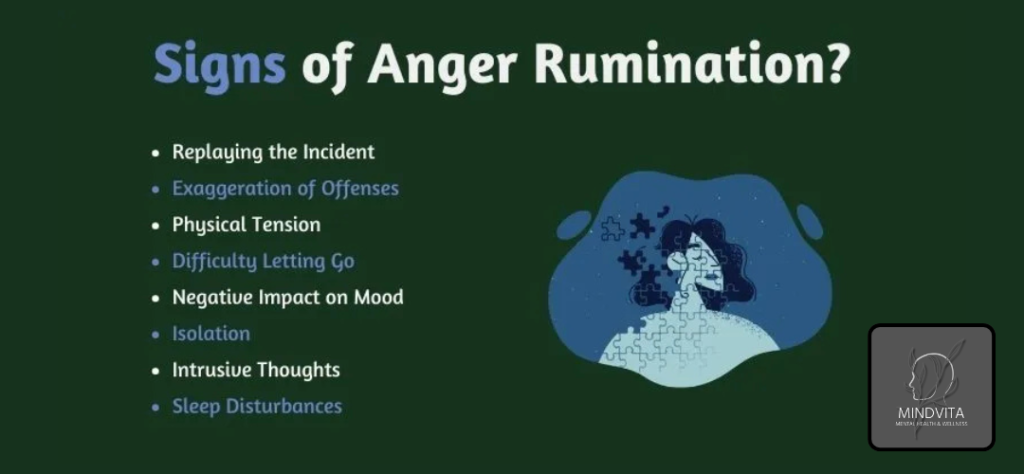
Anger rumination is another specific type of rumination where situations that have made one angry are repetitively thought about. It may involve an argument with a loved one, a stressful situation at work or some sort of injustice. In the case of anger rumination the body remains in an aroused state and prolongs emotional distress; it can even have physical effects.
Such rumination of anger will only work to heighten tension, raise blood pressure and contribute to feelings of negativity from which it is far more difficult to release anger. If allowed to continue, anger ruminations will result in relationship problems a lower self esteem and general frustration.
OCD and ADHD
Both Obsessive Compulsive Disorder and Attention Deficit Hyperactivity Disorder are related to ruminating thoughts. In the former, one gets intrusive obsessive thoughts that one feels compelled to act upon and thus compulsions reinforce the cycle of rumination. Suppose you obsess on the fear of having left the door unlocked and thus recheck a hundred times even though you are certain it is locked.
While the ruminating thoughts in ADHD are not as focused, individuals with ADHD often have difficulties maintaining a focus of concentration and may, therefore, have disorganized recurring thoughts. These can involve concerns with time management or tasks left undone or frustrations with daily responsibilities.
How Ruminating Thoughts Affect Mental Health
The rumination of thoughts has a great impact on one’s mental health. It may increase emotional distress, feelings of helplessness and add to the worsening of an ongoing mental health problem.
Increased anxiety and depression
The more you ruminate, the likelier it is that your anxiety or depression will worsen. This fixation creates an overload on your brain and you cannot focus on positive helpful aspects of your life. You get caught up in your past or even caught up in some kind of imagined future instead of going forward.
Impaired Decision Making
Ruminating thoughts affect your decision making potential. Since you are always thinking about the same thoughts and concerns it might be hard to move away from the issue at hand. This results in indecision and hesitation that may affect not only personal but also professional areas of life.
Physical Effects
Ruminating thoughts can also affect your body: this constant stress linked with rumination will manifest in your body through headaches, muscle tension, gastrointestinal problems and even chronic conditions like high blood pressure. The more you ruminate, the more stressed your body becomes, creating a vicious cycle.
Practical Strategies to Overcome Ruminating Thoughts
While ruminating thoughts can be overwhelming there are many strategies you can use to break the cycle and regain control over your mind. Some of the following techniques may be used to help you manage and reduce the frequency of ruminating thoughts:
1. Mindfulness & Meditation
Mindfulness and meditation are powerful practices that can help an individual overcome ruminating thoughts. These practices help you stay in the present and teach you to observe thoughts without getting entangled in them. When practicing mindfulness, you note your thoughts without judging them and gently bring your attention back to the present moment.
Start out deep breathing or guided meditating for just a couple of minutes each day. You will get more cognitive of your thought patterns and be more prepared to handle them over time.
2. Challenge Negative Thoughts
Probably the best way to stop rumination includes challenging your negative thoughts. Just at the moment when you realize a repetitive thought pattern, ask yourself whether it is rooted in facts or in assumptions. Is there any hard evidence for this thought or is it just some form of fear or worry?
You can begin to break the vicious circle by challenging your thoughts. Replace negative, unhelpful thoughts with more positive and realistic alternatives.
3. Distraction Techniques
The easiest way to stop rumination many times is through the engagement of your mind with something else that captures your attention and gives your mind a rest. This might be reading a book, doing a puzzle or going for a walk.
Generally, physical activity works especially well to break ruminations. Exertion releases endorphins which are natural mood elevating neurotransmitters that facilitate clearing your mind of such thoughts.
4. CBT (Cognitive Behavioral Therapy)
Cognitive Behavioral Therapy is a type of therapy that essentially seeks to identify and change patterns of thought that are considered negative. If you find yourself unable to stop thinking about something, ruminating on your thoughts, CBT will teach you a healthier way of thinking and ways of dealing with certain situations. With the help of a therapist one learns how to recognize triggers of rumination and replace such thoughts with more constructive processes of thinking.
5. Medication for OCD and ADHD
In some cases, medicine for OCD and ADHD can play a crucial role in managing symptoms. For individuals with OCD, medicine for OCD and ADHD typically starts with SSRIs, while stimulants are commonly prescribed for ADHD patients. These medications can help manage the rumination associated with both conditions and support better focus and emotional regulation. However, it’s important to note that the use of medicine for OCD and ADHD should always be guided by a healthcare professional to ensure the most appropriate treatment based on individual needs.
How Mindvita Can Help to Overcome Ruminating Thoughts
At Mindvita, we understand that rumination takes time and patience to reduce. Our online platform provides sessions and resources on mental health problems of anxiety, anger, OCD, and ADHD. The personalized sessions provided within our online platform include licensed therapists who can assist in teaching one various ways to reduce rumination and achieve better states of emotions.
If you are in the vicious circle of negative thinking Mindvita is here to help come out of it and take control over your mind. Visit our website today to learn more about our services and start your journey toward better mental health.
Frequently Asked Questions
1. What are the causes of ruminating thoughts?
Ruminating thoughts can be brought about by anxiety, anger, OCD, ADHD and also stress. They often happen when, in your mind you are overwhelmed by events of the past or problems of the future.
2. Can Medication Help with Ruminating Thoughts?
Yes, certain medications may help with conditions such as OCD or ADHD contributing to rumination. A healthcare provider could recommend medications like SSRIs or stimulants.
3. What is the most effective way of stopping ruminating thoughts?
Mindfulness, CBT and physical activity are believed to be the most effective way of stopping ruminating thoughts. These practices will help you to shift your focus and improve your mental condition.
4. How to identify if I am ruminating?
Ruminating can often be defined as continuous pondering over the same negative situation without any resolution. When you think that you are moving in a circle of worry and frustration, then probably you are ruminating.
5. Is It Normal to Have Ruminating Thoughts?
It is normal to experience episodes of ruminating thoughts; however, if such instances occur often or interfere with daily functioning seeking professional help is essential. Therapies and coping mechanisms can be facilitated to reduce rumination.
Conclusion
Ruminating thoughts are common but they don’t have to rule your life. Once the proper strategies are in place along with support, one should be able to learn how to cope with such thoughts and regain their mind. Be it anxiety, anger, OCD or ADHD one is able to break this circle of rumination and move forward in a healthy and more balanced manner. Mindvita will be guiding you throughout. If you are ready to take charge of your mental health and stop rumination connect with us today for personalized assistance. Start your journey to a calmer more focused mind with Mindvita.