

Phobia is not fear; it is the state of anxiety that is not only persistent but also irrational in nature which may interfere with the normal life of the individual. The knowledge of the types of phobia list is of prime importance to an individual who is interested in the field of mental health psychology and anxiety disorders. In this article the writer of Mindvita will explain the list of phobias, symptoms, causes and treatment in an in depth manner as the writer is an expert in the field. Millions of people are suffering from phobias in this world. According to the National Institute of Mental Health 12.5% of the adult population in the USA is suffering from phobias in their lifetime which is an indication of the importance of the topic and the need to understand the types of phobias list.
Phobias are intense fears affecting daily life. Understanding types of phobias helps identify triggers. Consulting an online psychiatrist can provide psychological insights and effective strategies to manage anxiety disorders.
Introduction to Phobias
Phobia is a mental health condition that falls into the category of anxiety disorders which are related to extreme anxiety or fear that is experienced in relation to a particular situation or object or experience in life. However unlike normal fears phobias are related to extreme anxiety or fear that is not normal in nature leading to the fight or flight response in the absence of actual danger or threat and the need to understand the types of phobia list. Phobia is a mental health condition that may occur in the life of an individual irrespective of their age or other factors. Anyone in this world may face the condition of phobia in their childhood, adolescent age or even adulthood and if the condition is not properly addressed it may result in serious consequences in their life.
Objectives of this Mindvita article:
To provide a comprehensive list of the types of phobias.
To provide a detailed account of the psychological behavioral and biological aspects.
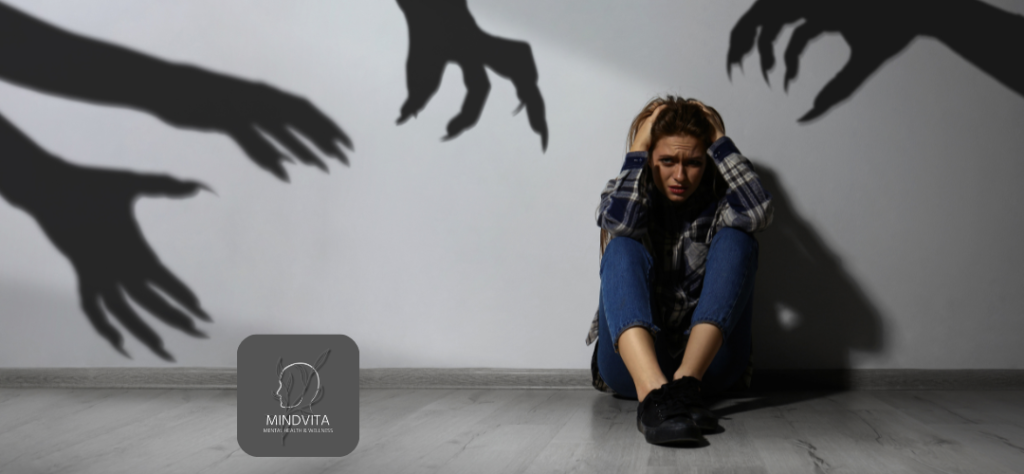
Classification of Phobias
There are three main classes of phobias and these are specific phobias social phobias and agoraphobias. Each of the classes has different symptoms causes and ways of treatment.
Specific Phobias
A person with a specific phobia has an irrational fear of a given object or situation. Specific phobias are the most common types of phobias and normally develop in childhood or adolescence.
Characteristics of Specific Phobias:
- An instant anxiety response when the person with the phobia is presented with the object or situation that is the source of the phobia.
- Behaviors that reinforce the phobia which makes the person with the phobia avoid the object or situation that is the source of the phobia.
- Physical symptoms which include sweating, shaking, heart palpitations and nausea.
Some examples of specific phobias are:
Animal Phobias:
- Arachnophobia the fear of spiders.
- Ophidiophobia the fear of snakes.
- Cynophobia the fear of dogs.
Natural Environment Phobias:
- Acrophobia the fear of heights.
- Astraphobia the fear of thunderstorms.
- Hydrophobia the fear of water.
Situational Phobias:
- Claustrophobia the fear of confined spaces.
- Aviophobia the fear of flying.
- Carphobia the fear of touching.
Medical Phobias:
- Trypanophobia the fear of needles.
- Hemophobia the fear of blood.
- Nosocomephobia the fear of hospitals.
The percentage of the adult population affected by this phobia as per research lies in the range of 7% to 9% making it the most common phobia. Specific phobias include the fear of claustrophobia where the person will avoid using elevators and the fear of heights where the person will avoid going outside.
Social Phobia (Social Anxiety Disorder)
Social phobias are characterized by an irrational fear of social interactions or situations where the sufferer is likely to be scrutinized embarrassed or evaluated by other people.
Some of the symptoms of social phobias include:
Avoidance of social gatherings or situations
Physical symptoms such as sweating, shaking and palpitations
Fear of public speaking, performing or attending parties
The treatment of social phobias includes cognitive behavior therapy and
For instance an individual who is suffering from severe social phobias will avoid eating at restaurants will avoid speaking up in meetings or will avoid attending parties which will ultimately impact their working and personal life. According to research CBT therapy helps alleviate the symptoms of social phobias by up to 60% in moderate cases of the phobia.
Agoraphobia
Agoraphobia is the fear of situations where one cannot escape or where help is unavailable. Thus an individual with agoraphobia will avoid crowded places using public transport or even leaving their homes.
Symptoms and Impact:
- Fear of being in open spaces or crowded areas.
- Complete dependence on family members or caretakers.
- In severe cases the individual may withdraw completely from society.
According to statistics 1.7% of the population in the United States suffers from agoraphobia. Agoraphobia affects the quality of an individual’s life if left untreated.
Psychological Mechanisms Behind Phobias
A combination of cognitive, behavioral and biological factors results in the formation of phobias. Understanding the psychological factors is important to understand the formation of phobias and their cure.
Cognitive Factors
- Threat Overestimation: An individual overestimates the threats in the situation.
- Catastrophic Thinking: An individual always expects something bad to happen which affects their behavior.
- For instance an arachnophobe may think that the spider they see is threatening their life.
Behavioral Factors
- Classical Conditioning: An individual may have developed the phobia due to bad experiences.
- Avoidance Behavior: An individual who fears something may avoid the thing they fear which results in the formation of the phobia.
- For instance an individual who had a bad experience in an elevator as a kid may end up developing claustrophobia the fear of an elevator.
Biological and Genetic Influences
- Neurotransmitter Imbalances: An individual may have an abnormal amount of serotonin or dopamine which affects their behavior.
- Genetic Factors: If an individual’s family history indicates that they have an anxiety disorder then they too may have one.
- Brain Structures: Hyperactivity of the amygdala along with abnormal activity in the prefrontal cortex results in excessive fear.
Symptoms and Diagnosis
It is important to know the types of phobia list in order to diagnose the phobia properly. The symptoms of the phobia may be physical psychological or behavioral in nature.
Physical Symptoms:
Heart palpitations, sweating, dizziness, nausea, shortness of breath.
Panic attacks, obsessive fear, dread, feelings of being out of control.
Avoidance of certain triggers, reduced participation in social and professional life.
Treatment Approaches
The treatment of the phobias depends upon the type of phobia. Treatment of the phobias includes the use of appropriate psychological and medical interventions.
Cognitive Behavioral Therapy (CBT)
Cognitive behavioral therapy is the most common method of treating phobias. Cognitive behavioral therapy helps the patient to become aware of their irrational fears and eventually overcome the fears.
Techniques:
- Exposure Therapy: In exposure therapy the patient is exposed to the object or situation he or she fears.
- Cognitive Restructuring: In cognitive restructuring therapy the patient is made to change his perception about the object or situation he fears.
- Example: In the case of the patient with aviophobia the patient is first made to visualize the scene, and then he is taken to the airport and eventually made to fly.
Pharmacological Interventions
- SSRIs:SSRIs are effective in controlling anxiety, depression or other mood disorders.
- Benzodiazepines: Benzodiazepines are effective in controlling anxiety.
- Beta blockers: Beta blockers are effective in controlling the symptoms of the phobias especially in the case of performance related phobias.
- Example: In the case of severe social phobias the combination of cognitive behavioral therapy and SSRIs is the most effective method.
Alternative and Complementary Therapies
Mindfulness meditation and relaxation techniques are helpful in managing anxiety.
The exposure therapy by using virtual reality is helpful in overcoming the fear of the patient.
The breathing techniques and progressive muscle relaxation techniques are helpful in controlling acute panic attacks.
The combination of cognitive behavioral therapy and mindfulness reduces 40 percent of phobic anxiety as suggested by studies.
All Phobias Names: Comprehensive Reference
The types of phobia list is extensive including common, rare and unusual fears. Some widely recognized phobias include:
- Arachnophobia fear of spiders
- Acrophobia fear of heights
- Claustrophobia fear of confined spaces
- Social phobia fear of social judgment
- Trypanophobia fear of needles
- Hemophobia fear of blood
Less common or emerging phobias include:
- Nomophobia fear of being without a mobile phone
- Coulrophobia fear of clowns
- Pogonophobia fear of beards
- Globophobia fear of balloons
- Thalassophobia fear of deep water
Providing a detailed phobias list allows clinicians and educators to classify fears accurately and create targeted treatment plans.
Conclusion
Phobias are very commonly encountered phenomena in the general population and they have the power to affect the mental state of the individuals significantly. Therefore the knowledge of the types of the phobia list the psychological aspect of the phobias the symptoms of the phobias and the treatment of the phobias is quite important for the awareness of the phobias and the effective treatment of the phobias.
Key Takeaways:
Phobias are of different types, including specific phobias, social phobias and agoraphobic phobias.
Phobias have the power to affect the individuals in different ways ranging from mild to severe cases of the phobias.
There are several ways of treating the phobias, including CBT therapy, medication and alternative therapy.
Early detection of the phobias is quite effective for the treatment of the phobias significantly.
In the article of Mindvita the awareness of the phobias, the treatment of the phobias and the quality of life of the individuals with the phobias are given a lot of emphasis.
Peer reviewed studies on CBT, exposure therapy and virtual reality treatments
Frequently Asked Questions
How can I overcome a specific phobia quickly?
The best way to overcome a specific phobia in the shortest time possible is through gradual exposure therapy and CBT therapy. The breathing techniques and mindfulness therapy also help in overcoming the anxiety of the phobia.
Are all phobias treatable with medication?
Not all phobias need medication for treatment. CBT therapy is effective in treating phobias and in some cases medication such as SSRIs and beta blockers is needed.
Can children develop phobias like adults?
Children also have the capacity to acquire phobias just like adults which may arise due to traumatic experiences, observations and genetic factors. Therefore children also need to be provided with therapy for their acquired phobias.
How do I identify which type of phobia I have?
In order to identify the type of phobia one is suffering from one needs to observe the situation, symptoms and avoidance of the situation that one is experiencing. Therefore the best way to identify the type of phobia one is suffering from is to consult a psychologist.
Is the treatment for social phobias effective for treating the anxiety related to public speaking phobias?
Yes the treatment for social phobias is highly effective for treating the anxiety related to the phobias of public speaking.