

Do you spend hours worrying about things that could go wrong, avoid situations because of fear, struggle with panic attacks, or feel constantly on edge throughout the day? Anxiety can make it difficult to focus at work, sleep well, or enjoy everyday activities. Anti-anxiety medication may help reduce symptoms and make daily life feel more manageable when anxiety begins affecting your quality of life.
If you are struggling with anxiety or feeling unsure about your treatment, MindVita is here to support you. Our providers help you understand anti-anxiety medication, choose the right treatment for your needs, and stay consistent with your care plan. We guide you step by step so you feel more in control. Schedule a consultation today through our secure online psychiatry services and connect with a virtual psychiatric provider.
Do Anti-Anxiety Meds Work for Anxiety Disorders?
Many people seek treatment because anxiety causes constant overthinking, panic attacks, racing thoughts, difficulty sleeping, or fear that interferes with work, school, and relationships. Yes, anti-anxiety medication can work well when psychiatric providers prescribe it correctly. These medications help reduce excessive fear, panic, nervousness, and physical symptoms of anxiety. In many cases, they improve sleep, concentration, and emotional stability. However, results vary because every person responds differently to treatment.
The Anxiety and Depression Association of America (ADAA) [1] explains that anxiety treatment often includes both medication and therapy. This combined approach helps many people reduce anxiety symptoms and improve daily functioning. Healthcare providers also monitor progress regularly and adjust treatment when needed, which supports safer care and better long-term control of anxiety symptoms.
ADAA also notes that SSRIs usually take several weeks to reach their full effect, which is why consistent treatment and patience are important during recovery. Many people notice gradual improvements in anxious thoughts, sleep quality, muscle tension, and overall emotional stability over time. The organization also encourages patients to follow prescribed treatment plans carefully and avoid stopping medication suddenly without medical guidance.
What Is a Good Medication for Anxiety and How Does It Help?
The best medication for anxiety depends on what symptoms you are experiencing. Someone struggling with panic attacks may need a different treatment approach than someone dealing with constant worry, muscle tension, or anxiety-related sleep problems. Psychiatric providers choose treatment carefully because every person reacts differently. Mild cases may need simple medicine, while severe anxiety may need stronger options. The goal is to reduce symptoms safely and improve your daily life with steady and long-term relief.
Good anti-anxiety medications are:
- SSRIs: Help reduce long-term anxiety, fear, and panic slowly and safely.
- SNRIs: Improve anxiety with low mood and physical pain symptoms together.
- Buspirone: Used for mild anxiety with low risk of dependence or sedation.
- Benzodiazepines: Give fast relief but only for short-term use under supervision.
- Beta blockers: Control physical symptoms like shaking, sweating, and a fast heartbeat.
Psychiatric providers choose anti-anxiety medication based on your symptoms and health needs. Your treatment may change over time for better results. Regular checkups help track progress and reduce side effects. With proper care and guidance, treatment becomes safer and more effective. This step-by-step process helps you manage anxiety better and feel calmer, balanced, and confident in daily life.
Why Is a Virtual Psychiatric Provider Helpful for Anti-Anxiety Medication Management?
A virtual psychiatric provider helps you manage anti-anxiety medication from home in an easy and comfortable way. You can talk about side effects, symptom changes, and your treatment progress during online visits. According to a narrative review published in the Journal of Primary Care & Community Health [2], telehealth can improve access to mental health care for people experiencing anxiety and depression, particularly those who face barriers to in-person treatment. The authors found that virtual care can support ongoing symptom monitoring, improve continuity of treatment, and make it easier for patients to engage in regular follow-up appointments. These findings suggest that telepsychiatry can play an important role in supporting long-term anxiety treatment and medication management.
Virtual psychiatric care makes it easier for you to get mental health support, especially when you cannot travel or face long waiting times. You can attend regular online visits from home. This helps healthcare providers check how your anti-anxiety medication is working and make changes when needed. Telepsychiatry can help treat anxiety effectively. It also gives results that are similar to in-person psychiatric care.
What Safety Rules Should You Follow When Taking Anti-Anxiety Meds?
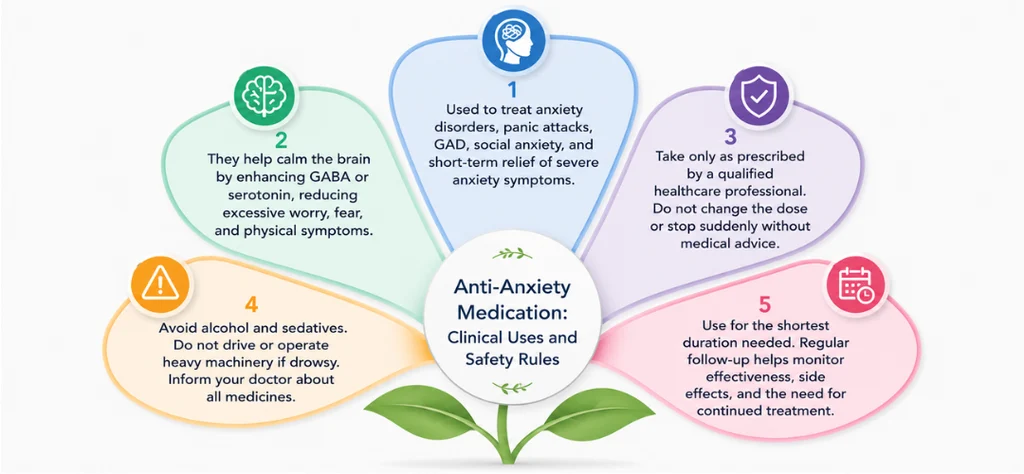
When you take anti-anxiety medication, you should follow safety rules to avoid side effects and ensure proper treatment. Always take your medicine exactly as prescribed by your psychiatric provider. Do not change the dose on your own. Regular check-ups help monitor your progress. Report any unusual symptoms quickly so your treatment stays safe, effective, and well managed under medical supervision. Following safety guidelines can help reduce side effects and improve treatment outcomes.
Follow the prescription carefully
Take anti-anxiety medication exactly as your psychiatric provider prescribes. Do not skip doses or take extra pills. Incorrect use can slow recovery, increase side effects, and make anxiety symptoms harder to control during treatment safely.
Avoid alcohol and drugs
Do not mix anti-anxiety medication with alcohol or recreational drugs. This can increase drowsiness, worsen side effects, and reduce treatment effectiveness. It may also affect your recovery and make anxiety symptoms harder to control safely.
Regular medical follow-ups
Attend follow-up visits so your psychiatric provider can track your progress on anti-anxiety medication. They may adjust your dose based on symptoms, response, and side effects to keep your treatment safe, effective, and well-balanced.
Report side effects early
Tell your psychiatric provider if you notice unusual symptoms like dizziness, nausea, or mood changes while taking anti-anxiety medication. Early reporting helps prevent complications and keeps your treatment safe, effective, and properly adjusted for better recovery.
Do not stop suddenly
Never stop anti-anxiety medication on your own. Stopping suddenly can cause withdrawal symptoms or make anxiety come back. Always follow your psychiatric provider’s advice for any dose change or stopping plan to ensure safe and stable recovery.
According to a review published in Dialogues in Clinical Neuroscience [3], anti-anxiety medications should be used under the supervision of a qualified healthcare provider to ensure safe and effective treatment. The authors note that some medications, particularly benzodiazepines, may carry risks of dependence and withdrawal if not used appropriately. Regular follow-up appointments, medication monitoring, and adherence to treatment recommendations can help improve safety and support better long-term anxiety management.
Take the Next Step Toward Safe Anxiety Treatment With MindVita Today
Maybe you are avoiding situations because of anxiety, lying awake at night with racing thoughts, experiencing panic attacks, or feeling exhausted from constant worry. When anxiety starts affecting your work, relationships, or daily routine, getting professional support can make a meaningful difference. Many people try to manage symptoms on their own, but anxiety often persists without proper treatment and support. Over time, ongoing symptoms can make daily responsibilities feel more difficult and affect overall quality of life.
At MindVita, we help you manage anxiety with safe and simple care. Our psychiatric providers check your condition carefully and support you with anti-anxiety medication when needed. We also give regular follow-ups and a clear plan made for you. With our help, you can feel calmer, balanced, and more in control each day. Contact us today to get the support and care you need.
FAQs
Do Anti-Anxiety Meds Work Immediately?
Yes, some anti-anxiety medications can provide relief within hours, particularly medications used for short-term symptom control. Others, including many antidepressants used to treat anxiety disorders, may take several weeks to reach their full effect. Your psychiatric provider can explain what to expect based on your treatment plan.
Are There Side Effects of Anti-Anxiety Medication?
Yes, anti-anxiety medication can cause side effects in some people. You may feel mild nausea, headache, sleep changes, or tiredness. These effects often improve with time. However, if symptoms feel strong or unusual, contact your psychiatric provider. Regular checkups help you stay safe and adjust treatment when needed.
Can a Virtual Psychiatric Provider Prescribe Anti-Anxiety Medication?
Yes, a licensed virtual psychiatric provider can prescribe anti-anxiety medication after checking your symptoms and mental health needs. Online appointments make treatment easier because you can get care from home. Your psychiatric provider can also monitor your progress, change your medication if needed, and provide regular support during your anxiety treatment journey.
Can You Take Anti-Anxiety Medication Long Term?
Yes, many people use anti-anxiety medication safely for a long time with a psychiatric provider’s support. Regular checkups help track your progress and side effects. Some medicines are safer for long-term use than others. Because of this, your psychiatric provider may slowly adjust your dose to keep your treatment safe and effective over time.
Should You Combine Therapy With Anti-Anxiety Medication?
Yes, combining therapy with anti-anxiety medication often gives better results. Medication helps reduce symptoms, while therapy helps you manage stress and anxious thoughts. Together, they improve emotional balance and daily functioning. In many cases, this combined approach also lowers the risk of anxiety returning and supports long-term mental wellness.


One Response