
Mental health affects your thoughts, emotions, relationships, and daily life. However, many people still avoid professional support. A psychiatrist helps identify mental health conditions and creates treatment plans based on personal needs. In addition, they may help people manage anxiety, depression, ADHD, bipolar disorder, trauma, and other emotional challenges through personalized mental health care.
In case you have any of these emotional symptoms interfering with your daily activities, relationship life, attention, or even sleeping, MindVita can help. In many cases, early care improves mental health and daily functioning. We connect you with experienced psychiatric providers who treat anxiety, ADHD, bipolar disorder, and other mental health concerns. In addition, our team offers personalized care based on your needs. Contact us today to discuss your concerns privately with our trusted psychiatric providers.
What Does a Psychiatrist Do for Mental and Emotional Health?
A psychiatrist checks mental, emotional, and behavioral symptoms. They look at mood changes, stress, anxiety, sleep problems, and focus problems. In many cases, they suggest therapy, lifestyle changes, or medication if needed. Many people visit a psychiatrist for anxiety, ADHD symptoms, or mood disorders. As a result, early treatment helps improve emotional stability and daily life. Therefore, psychiatric providers carefully review symptoms and create safe treatment plans.
- Mental Assessments: Psychiatrists check thoughts, emotions, focus, and behavior. As a result, they can identify anxiety, depression, bipolar disorder, and ADHD.
- Medication Support: A psychiatrist may suggest medication if symptoms affect daily life. In many cases, medication helps improve symptoms and emotional stability.
- Therapy Coordination: Many psychiatrists work with counselors or psychologists. In addition, this teamwork helps improve recovery, coping skills, and treatment results.
A review from the International Journal of Mental Health Systems [1] explained that integrated psychiatric care can improve symptom control and quality of life for people with mood and anxiety disorders. In addition, the study showed that early psychiatric support may improve long-term mental health outcomes. Therefore, learning what a psychiatrist does can help people seek support before symptoms become more serious.
Psychiatrist vs. Psychologist: What Is the Difference in Mental Health Care?
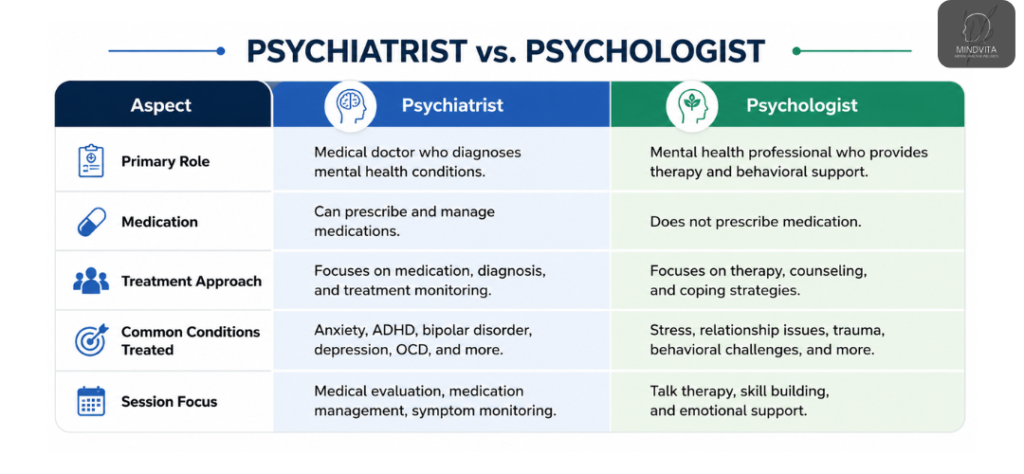
A psychiatrist and a psychologist help people in different ways. A psychiatrist checks mental health conditions and may give medication when needed. They also help with anxiety, ADHD, and bipolar disorder. In contrast, psychologists mainly provide therapy and behavior support. However, both professionals often work together to improve emotional health.
Many clinics use therapy and psychiatric care together. This method may help people recover faster and manage symptoms better. A study published in Depression Research and Treatment [2] showed that medication and therapy often work well together. In addition, combined care may improve daily life and emotional well-being.
When Should You See a Psychiatrist for Anxiety, ADHD, or Bipolar Disorder?
You should consider seeing a psychiatrist if emotional or behavioral symptoms affect your daily life, relationships, work, or school. Anxiety, panic attacks, mood swings, poor focus, or ongoing stress may be signs that you need professional support. Many people visit a psychiatrist experienced in treating bipolar disorder when symptoms become hard to manage alone
Here are some common signs that may indicate the need for psychiatric support.
- Persistent Anxiety: Constant worry, panic attacks, racing thoughts, or sleep problems can affect daily life. A psychiatrist for anxiety can help find causes and provide support.
- Mood Changes: Extreme emotional highs and lows may affect relationships, work, and daily life. A psychiatrist with bipolar experience can help manage these changes safely.
- Attention Problems: Poor focus, impulsive behavior, and trouble staying organized can affect school, work, and daily tasks. An experienced ADHD psychiatrist can check these symptoms carefully.
- Child Behavior Changes: Emotional outbursts, school problems, or social withdrawal may affect a child’s growth and behavior. A child psychiatrist can identify concerns early.
A Dialogues in Clinical Neuroscience [3] study found that early psychiatric care may improve symptom control and daily functioning in people with ADHD, anxiety disorders, and bipolar disorder. In addition, the study highlighted the importance of early diagnosis and timely treatment. Early mental health support may also help reduce stress, improve daily routines, and support long-term emotional well-being.
How Can I Find A Psychiatrist Near Me or Access An Online Psychiatrist?
Finding the right psychiatrist requires careful consideration of experience, communication style, and treatment approach. Many people now also choose an online psychiatrist because virtual appointments improve convenience and accessibility. The right psychiatric provider should understand your emotional concerns and create a treatment plan tailored to your personal needs.
Mental health care is now easier to access for people who need professional support.
- Provider Experience
Choose psychiatric providers with experience in anxiety, ADHD, depression, bipolar disorder, or trauma-related conditions. Experienced providers can understand symptoms more clearly. As a result, they can create better treatment plans for long-term care.
- Telehealth Access
An online psychiatrist provides secure virtual appointments for people with travel, scheduling, or transportation difficulties or limited access to nearby mental health services. In addition, telepsychiatry makes care more flexible and convenient. Many people also feel more comfortable speaking from home.
- Patient Communication
Good communication helps patients build trust with psychiatric providers. Therefore, patients should openly discuss symptoms, stress, medication concerns, and emotional challenges during appointments.
Virtual psychiatric care may improve access to treatment and symptom support. In addition, online psychiatric services may reduce common barriers to care. Many people also find virtual appointments easier to manage in daily life.
What Can You Expect During Your First Appointment With a Psychiatrist?
Your first appointment with a psychiatrist usually focuses on understanding your emotional health, symptoms, medical history, and treatment goals. Psychiatric providers ask about mood changes, stress, sleep patterns, relationships, and daily life. This information helps them create a treatment plan based on your personal mental health needs.
Many people feel nervous before their 1st psychiatric appointment. However, learning about the process can reduce fear and uncertainty. Initial visits mainly focus on listening, assessment, and support. During the appointment, psychiatric providers discuss emotional symptoms, stress triggers, behavior changes, and daily challenges at work, school, or home.
A psychiatrist may also review medical history, current medications, family mental health history, and past treatment experiences. Based on the evaluation, treatment may include therapy referrals, medication support, coping strategies, or follow-up appointments.

Take the First Step Toward Better Mental Health Today
You may struggle with constant stress, anxiety, mood swings, poor focus, or sleep problems. These challenges can affect relationships, work, daily routines, and overall well-being. Over time, these symptoms may become difficult to manage alone. In many cases, delaying care can make daily life more difficult and stressful.
At MindVita, you can consult psychiatric experts with years of experience, based on your personal needs. We provide flexible and accessible mental health support. In addition, our psychiatric providers offer caring guidance in a safe and supportive environment. Get in touch with us right away to consult with professional psychiatric providers and take the next step toward better emotional health.
FAQs
What does a psychiatrist do during the first visit?
During the first visit, a psychiatrist asks about symptoms, stress, sleep, emotions, and daily life. Psychiatric providers may also review medical history and past treatments. In addition, they discuss treatment goals and support options. This information helps create a care plan based on the patient’s mental health needs.
When should you see a psychiatrist instead of a psychologist?
You should see a psychiatrist when symptoms strongly affect daily life, relationships, work, or school. Psychiatric providers can also manage medication when needed. People with severe anxiety, ADHD, panic attacks, or bipolar disorder often benefit from psychiatric care.
Can an online psychiatrist prescribe medication?
Yes, many licensed psychiatric providers can prescribe medication through secure virtual appointments. An online psychiatrist can assess symptoms, monitor progress, and adjust treatment when needed. In addition, online psychiatric care helps people facing travel, scheduling, or location challenges. Many patients also find virtual care more flexible and comfortable.
How do you find the right psychiatrist for anxiety or ADHD?
To find the right psychiatrist, review the provider’s experience, treatment areas, communication style, and patient feedback. Many people look for a psychiatrist for anxiety or an ADHD psychiatrist based on their symptoms. Choosing experienced psychiatric providers may improve trust, comfort, and long-term treatment results.
Does a child psychiatrist help with behavioral and emotional problems?
Yes, a child psychiatrist helps children and teenagers with emotional, behavioral, and attention-related challenges. Psychiatric providers may support anxiety, ADHD, mood disorders, school difficulties, and social problems. In addition, early psychiatric care may improve emotional growth, communication skills, behavior, and long-term mental health outcomes for children.
References
- Ee, C et al. “An integrative collaborative care model for people with mental illness and physical comorbidities.” International journal of mental health systems vol. 14,1 83.
- Amit, Ben H, and Abraham Weizman. “Antidepressant treatment for acute bipolar depression: an update.” Depression research and treatment vol. 2012 (2012): 684725.
- Clark, Luke, and Barbara J Sahakian. “Cognitive neuroscience and brain imaging in bipolar disorder.” Dialogues in clinical neuroscience vol. 10,2 (2008): 153-63.