
You may not need medication for anxiety because many people get better with therapy alone, especially when symptoms are mild or moderate. However, medication may help when anxiety is severe, lasts a long time, or makes daily life hard. The best treatment depends on your symptoms, personal history, and how anxiety affects your sleep, work, relationships, and overall health.
At MindVita, we know that anxiety can make daily life feel stressful and exhausting. It can affect your sleep, focus, mood, and relationships. Our psychiatric nurse practitioners provide personalized care based on your needs. We offer therapy options like CBT and DBT, along with medication management when needed. We provide online care for both children and adults and accept major insurance plans. Reach out today to start a treatment plan that fits your life and helps you feel more in control.
When Should You Consider Anxiety Medication for Treatment?
Medication for anxiety might be necessary when your symptoms become extremely troubling, prolonged, or difficult to manage. Although therapy alone can help some individuals, it might not always offer sufficient relief. In some cases, medicines can help lower symptoms and improve emotional balance. It may also help when anxiety causes panic attacks, poor sleep, constant worry, or physical symptoms like fatigue, restlessness, or a rapid heartbeat.
Here are some common signs that medication may help:
1- Persistent Anxiety Symptoms
Symptoms continue for weeks or even months despite therapy, lifestyle changes, or self-help strategies. As a result, stress can build over time and start affecting both mental and physical health. In these situations, medical support may be helpful.
2- Functional Impairment
Anxiety starts to get in the way of your job, studies, social connections, or activities around the house. You might have more difficulty concentrating or achieving things, which, in turn, could result in decreased self-confidence.
3- Physical and Panic Symptoms
Frequent panic attacks, chest tightness, dizziness, insomnia, or constant tension can be signs of severe anxiety. Over time, these symptoms may affect both your mind and body. As a result, daily life can start to feel exhausting and hard to manage without extra treatment support.
4- Limited Response to Therapy Alone
There will be times when therapy works, but the symptoms remain prominent or disruptive. In such instances, medication can play an important role in balancing one’s emotions and minimizing daily stress. This treatment can also make your therapy sessions more fruitful. For many patients, a combination of both treatments seems effective.
The use of medication is very common for anxiety disorders. Studies published in Scientific Research [1] suggest that anxiety medication plays a vital role if the symptoms are intense or chronic. Under proper observation, it is possible for a healthcare professional to come up with an appropriate treatment regimen.
What Are the Most Common Medications Used for Anxiety Disorders?
SSRIs and SNRIs are some of the types of drugs used to manage anxiety disorders by doctors. This is because the drugs help regulate the chemicals in the brain, like serotonin and norepinephrine. They make one feel better emotionally, hence reducing anxiety. At times, drugs might be prescribed only temporarily to deal with anxiety or to deal with physical symptoms of anxiety like a fast heartbeat.
Here are some commonly used anxiety medications:
- SSRIs: Antidepressants like SSRIs are the medications that your provider may generally prescribe for treating anxiety disorders. The advantage of these drugs is their ability to boost the patient’s mood. Additionally, they have excellent safety profiles.
- SNRIs: The SNRIs have a positive effect not only on emotional but also on the physical symptoms associated with anxiety. The drug affects various neurotransmitters, which is helpful in cases where the person feels tired, tense, or lethargic.
- Benzodiazepines: The medication helps achieve rapid results in cases of intense anxiety attacks. Nonetheless, providers prescribe it for a short period since prolonged intake might result in dependence.
- Beta-Blockers: The use of beta-blockers will assist with the management of bodily reactions such as trembling, sweating, and palpitations. Beta-blockers are often administered prior to any stress-inducing activities or events.
According to the Journal of Psychopharmacology [2] research, it has been shown that selective serotonin reuptake inhibitors (SSRIs) and serotonin and norepinephrine reuptake inhibitors (SNRIs) can be considered effective initial drugs for anxiety disorders. Prescribing of medications is done selectively depending on your symptoms, medical history, and treatment response.
What Are the Benefits and Side Effects of Anxiety Medication?
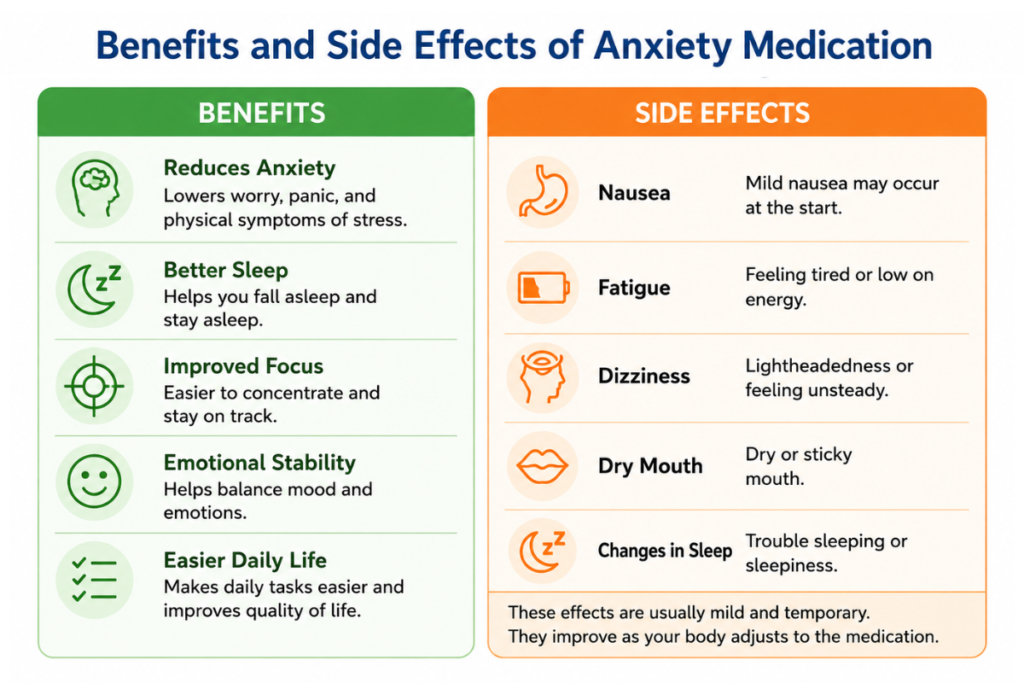
Anxiety medication can help reduce constant worry, panic, and physical symptoms of stress. As symptoms improve, many people sleep better, focus more easily, and feel more emotionally stable. Medication can also make daily tasks feel easier and improve overall quality of life.
However, some people may experience mild side effects at the start of treatment. Common side effects include nausea, fatigue, dizziness, dry mouth, or changes in sleep. In most cases, these effects are temporary and improve as the body adjusts to the medication.
Antidepressants used for anxiety are generally effective and well-tolerated. Regular follow-up visits help providers monitor progress, adjust doses if needed, and ensure treatment remains safe and effective. As a result, patients can achieve symptom relief while supporting long-term mental health.
Can Therapy and Medication Be Combined for Better Anxiety Treatment Results?
Yes, many individuals have achieved the most successful treatment by combining therapy and psychiatric medicine for treating their anxiety disorders. In case an individual suffers from severe anxiety and has serious symptoms, including worries all the time, panic attacks, poor sleep, and physical sensations of being tense and stressed, the use of medication may be recommended. At the same time, therapy will allow an individual to learn about his thoughts, handle stress, and cope with anxiety.
For instance, therapeutic techniques such as CBT enable you to develop skills that assist in changing negative thoughts and reactions. On the other hand, pharmacological intervention may improve your mood, helping you feel less anxious. Thus, most individuals are better able to concentrate on their therapy sessions.
Research by Stefan Hofmann published in PubMed Central [3] shows that CBT combined with medication often leads to stronger and longer-lasting improvement than using one treatment alone. With the right treatment plan, many people feel more in control, improve their emotional well-being, and regain confidence in daily activities.
Find the Right Anxiety Treatment Plan With Professional Support
Anxiety can be quite challenging for one to handle. One may find oneself worrying constantly and struggling to unwind. One may find simple tasks difficult to accomplish. Some other considerations that should be taken into account are those of insomnia, fatigue, and trouble concentrating. Over time, anxiety can affect the patient’s career and even personal relationships. This causes doubt in seeking help because of confusion about the treatment process.
MindVita is a leading mental health provider offering customized care depending on the patient’s condition. Our specialists are skilled nurse practitioners who make comprehensive examinations of individuals and provide the required therapy and prescriptions if necessary. Our clinic focuses not only on minor patients but also on adults. We offer remote and local services. We accept insurance plans as well. Book your appointment today and take the first step toward feeling calmer, healthier, and more in control of your life.
FAQs
How Long Does Anxiety Medication Take to Work?
Most anxiety medications take a few weeks to work fully. Some people notice small changes within 1 to 2 weeks. However, full results often take 4 to 6 weeks. During this time, your provider will check your progress and manage side effects if needed.
Can Lifestyle Changes Help Reduce Anxiety Symptoms?
Yes, healthy habits can help lower anxiety symptoms. Regular exercise, good sleep, healthy meals, and stress management can improve your mood. In addition, reducing caffeine and alcohol may also help. While these changes may not replace treatment, they can support therapy and medication very well.
Is Anxiety Medication Safe for Long-Term Use?
Many anxiety medications are safe for long-term use when a healthcare provider monitors treatment closely. Your provider will check your symptoms, progress, and side effects during follow-up visits. As a result, they can make changes if needed and help you stay safe while improving your mental health.
Can Anxiety Symptoms Return After Stopping Medication?
Yes, anxiety symptoms can return after stopping medication. This is more common when treatment stops too early or suddenly. Because of this, doctors often lower the dose slowly over time. Therapy and healthy coping skills can also help you manage stress and prevent symptoms from coming back.
How Do Providers Choose Between Therapy and Medication?
Providers look at your symptoms, medical history, daily life, and treatment goals before making a decision. Mild anxiety may improve with therapy alone. However, stronger symptoms may need both therapy and medication. In many cases, using both treatments together gives better long-term results.
Reference
- Bandelow, B., Michaelis, S., & Wedekind, D. (2017). Treatment of Anxiety Disorders. Dialogues in Clinical Neuroscience, 19, 93-107.
- Baldwin, David S et al. “Evidence-based pharmacological treatment of anxiety disorders, post-traumatic stress disorder and obsessive-compulsive disorder: a revision of the 2005 guidelines from the British Association for Psychopharmacology.” Journal of psychopharmacology (Oxford, England) vol. 28,5 (2014): 403-39.
- Hofmann, Stefan G et al. “The Efficacy of Cognitive Behavioral Therapy: A Review of Meta-analyses.” Cognitive therapy and research vol. 36,5 (2012): 427-440.