
Many women spend years feeling like they have to work harder than everyone else just to keep up. ADHD symptoms in women may appear as forgetfulness, disorganization, difficulty focusing, or constant mental effort rather than obvious hyperactivity. Anxiety and depression can also affect women in ways that are easy to dismiss as stress, exhaustion, or personality.
If focus, mood, or everyday responsibilities have become harder to manage, you do not have to figure out the cause alone. Through MindVita, you can discuss your symptoms, history, and concerns with a qualified psychiatric provider and explore appropriate care. When you are ready, book an appointment to begin the conversation.
Why ADHD in Women Is Often Overlooked
For years, ADHD was often associated with visible hyperactivity, impulsive behavior, or classroom disruption. That image can make ADHD harder to recognize in women and girls whose difficulties are more related to attention, organization, or internal restlessness.
An expert consensus statement published in BMC Psychiatry [1] identified several barriers to recognizing ADHD in females, including differences in symptom presentation, gender-related biases, co-occurring conditions, and coping strategies that can mask difficulties. The authors emphasized looking beyond obvious behavioral symptoms when considering ADHD in females.
Many women are not evaluated until adulthood. Increased demands from work, relationships, parenting, or household responsibilities can make existing difficulties harder to compensate for.
What ADHD in Females Can Look Like Earlier in Life
Looking back, some women recognize patterns that started in childhood or adolescence. These may include:
- Being described as “spacey,” dreamy, or forgetful
- Working very hard to keep up with schoolwork
- Losing belongings or forgetting assignments
- Struggling with messy rooms or unfinished projects
- Talking frequently or feeling unable to sit quietly
- Feeling different from classmates without understanding why
These experiences alone do not indicate ADHD. However, a longstanding pattern of attention, organization, or impulse control difficulties can provide useful information during an adult evaluation.
ADHD Symptoms in Adult Women: What They Can Look Like Day to Day
ADHD can affect how you start, organize, prioritize, and complete everyday tasks. In adult women, these difficulties may become more noticeable when work, family, and personal responsibilities compete for attention.
A systematic review in the Journal of Attention Disorders [2] examined eight studies on women diagnosed with ADHD in adulthood. The review found that participants described effects on social and emotional health, relationships, feelings of control, and how they understood themselves after diagnosis. This highlights why ADHD in women can affect more than attention alone.
Inattention That Looks Like Disorganization
You may know what needs to be done but still struggle to start, organize, or finish it. This can look like:
- Forgetting appointments, bills, or messages
- Starting several tasks without finishing them
- Losing focus during conversations or meetings
- Feeling overwhelmed by email, paperwork, or household planning
- Underestimating how long tasks will take
- Frequently misplacing everyday items
Some women also experience internal restlessness rather than obvious physical hyperactivity. Racing thoughts, difficulty relaxing, or feeling driven to stay busy may be part of that experience.
The Effort Other People May Not See
Some women develop detailed systems to compensate for attention and organization. You may rely on multiple alarms, long to-do lists, strict routines, or extra hours of work to avoid mistakes.
These strategies can make your difficulties less visible to other people. You may look organized from the outside while using far more time and energy to complete ordinary responsibilities. If keeping up requires constant reminders, last-minute rushing, or extensive preparation, that difference is worth discussing with a provider.
Emotional Reactions and Frustration
Some women with ADHD report quick frustration, feeling overwhelmed by small setbacks, or difficulty shifting attention away from something upsetting. These experiences are not specific to ADHD, so they cannot identify the condition on their own.
They become more useful when considered alongside a longer pattern of attention, organization, impulsivity, or follow-through difficulties. A provider can look at the full pattern rather than relying on one emotional symptom.
How Hormones Can Affect ADHD Symptoms in Women
Some women notice changes in attention, motivation, mood, or emotional symptoms at certain points in their menstrual cycle or during major hormonal transitions. These changes do not mean that hormones cause ADHD. Instead, hormonal shifts may affect how existing symptoms are experienced.
A systematic review published in the Journal of Attention Disorders [3] found evidence suggesting that ADHD symptoms may be associated with hormonal changes, particularly during puberty and across the menstrual cycle. However, the researchers noted limitations in the available evidence, including the small number and size of studies and differences in study design.
Hormonal changes can also occur during pregnancy, the postpartum period, perimenopause, and menopause. Changes in sleep, mood, and concentration during these stages can have several possible causes.
PMDD and ADHD
Premenstrual dysphoric disorder (PMDD) involves significant emotional and physical symptoms that occur during the premenstrual phase. These may include irritability, sadness, anxiety, mood changes, and difficulty concentrating.
A study published in the Journal of Women’s Health [4] compared women with and without PMDD and found an association between ADHD and PMDD. The study also found greater changes in everyday memory and focused attention across parts of the menstrual cycle among women with PMDD.
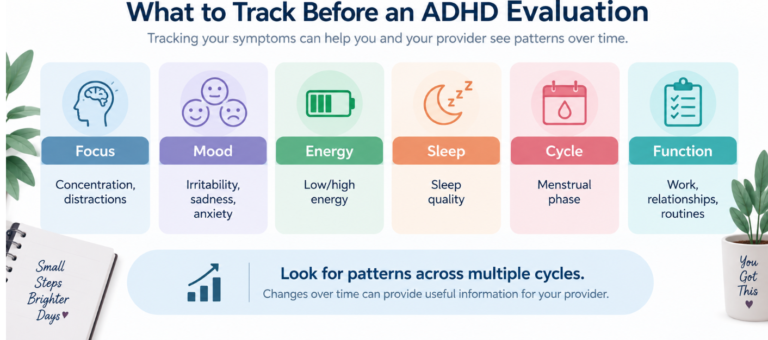
PMDD is more than typical premenstrual symptoms. If your mood, attention, or functioning changes in a predictable pattern around your cycle, tracking those changes across multiple cycles can give your provider useful information.
Anxiety in Women Can Hide Behind Being “On Top of Everything”
Anxiety does not always look like obvious fear or panic. You may remain productive and responsible while privately spending much of your day worrying about what could go wrong.
The National Institute of Mental Health [5] notes that some mental health conditions, including anxiety disorders, are more common in women than men. Anxiety can involve excessive fear or worry, irritability, difficulty sleeping, fatigue, and physical symptoms.
Anxiety may show up as:
- Constantly planning to prevent things from going wrong
- Difficulty saying no
- Perfectionism or repeated checking
- Feeling tense or on edge
- Trouble falling or staying asleep
- Physical symptoms such as headaches or stomach problems
- Frequently needing reassurance
Some women experience physical symptoms before recognizing that anxiety may be involved. Others appear calm and capable at work while feeling worried much of the time.
ADHD and anxiety can also overlap. Difficulty concentrating may come from persistent worry, while years of missed deadlines or disorganization may contribute to anxiety. Looking at when the symptoms started and what triggers them can help a provider distinguish between these possibilities.
Depression in Women Can Look Different Than Expected
Depression does not always look like obvious sadness. Some women continue working, caring for family, and meeting daily responsibilities while experiencing low energy, loss of interest, irritability, or changes in sleep.
Depression in women may include:
- Ongoing fatigue or low energy
- Irritability or a short temper
- Loss of interest in activities you once enjoyed
- Changes in sleep or appetite
- Feelings of guilt or worthlessness
- Physical aches without a clear cause
- Pulling away from friends or family
The National Institute of Mental Health [6] notes that depression can occur during different stages of a woman’s life, including pregnancy, the postpartum period, and the menopause transition. Hormonal changes may be one factor, but other biological, psychological, and life circumstances can also contribute.
Depression can also occur alongside ADHD. When attention difficulties and low mood appear together, discussing both concerns with a provider can help clarify the full picture rather than focusing on only one set of symptoms.
Why Women’s Mental Health Deserves a Closer Look
ADHD, anxiety, and depression can affect similar areas of daily life, including concentration, sleep, motivation, relationships, and work. However, similar symptoms do not always have the same cause.
For example, difficulty concentrating may be related to lifelong attention difficulties, persistent worry, low mood, poor sleep, or more than one concern. Looking at the timing and pattern of symptoms can therefore provide more useful context than focusing on one symptom by itself.
The Centers for Disease Control and Prevention [7] explains that an adult ADHD evaluation includes a review of a person’s history, including whether symptoms were present before age 12. Providers may also consider other conditions that can cause similar symptoms or occur alongside ADHD.

Get Support for What You’re Experiencing
You may recognize yourself in the symptoms discussed above but still be unsure whether ADHD, anxiety, depression, hormonal changes, or a combination of concerns is affecting your daily life. If these challenges are making work, relationships, routines, or responsibilities harder to manage, talking with a mental health professional can help you make sense of what you are experiencing.
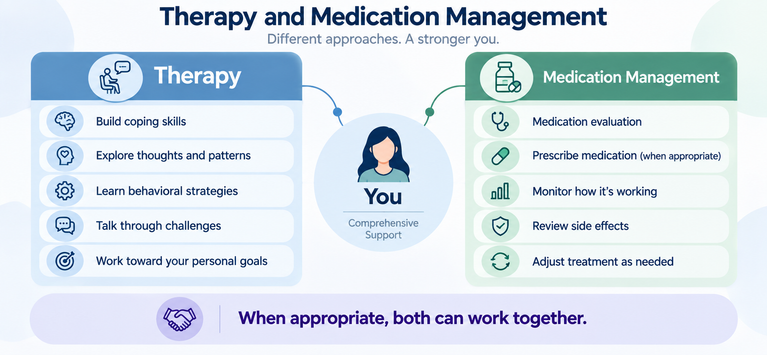
With MindVita, you can discuss these concerns with qualified psychiatric providers who can review your symptoms, history, and treatment goals. Depending on your needs, care may include psychiatric evaluation, medication management, therapy, or a combination of approaches. Book an appointment or contact us to discuss your next steps.
Frequently Asked Questions
Can I have ADHD even if I did well in school?
Yes. Good grades do not automatically rule out ADHD. Some students compensate through extra effort, strong academic ability, strict routines, or support from parents and teachers. An adult evaluation considers the broader pattern of attention, organization, impulsivity, and functioning rather than academic performance alone.
What if I do not remember having ADHD symptoms as a child?
Not remembering childhood symptoms does not automatically settle the question. Your provider may ask about school performance, forgotten assignments, organization, behavior, family observations, or available records. These details can provide additional context when reviewing your developmental history.
How can I tell whether my cycle is affecting my ADHD symptoms?
Track your focus, mood, energy, sleep, and other symptoms alongside your menstrual cycle for several weeks. Look for a recurring pattern rather than relying on a single difficult month. Sharing these observations with your provider can help them assess whether symptoms consistently change during particular phases of your cycle.
Does menopause cause ADHD?
Menopause does not cause ADHD. However, some women first notice or seek help for longstanding attention difficulties during perimenopause or menopause. Changes in sleep, mood, and other symptoms during this stage can also affect concentration, so several possible contributors may need to be considered.
Can I be evaluated for ADHD if I already have anxiety or depression?
Yes. Having anxiety or depression does not automatically rule out ADHD. Because concentration, motivation, sleep, and organization can be affected by various conditions, a provider may review when your symptoms began and how they have changed over time. This helps determine whether ADHD, anxiety, depression, or more than one concern may need attention.
References
- Young, S., et al. “Females with ADHD: An Expert Consensus Statement Taking a Lifespan Approach Providing Guidance for the Identification and Treatment of Attention-Deficit/Hyperactivity Disorder in Girls and Women.” BMC Psychiatry
- Journal of Attention Disorders review. Systematic review examining women diagnosed with ADHD in adulthood and their experiences of diagnosis. Journal of Attention Disorders.
- Journal of Women’s Health. Comorbid Attention Deficit Hyperactivity Disorder in Women with Premenstrual Dysphoric Disorder.
- National Institute of Mental Health (NIMH). “Women and Mental Health.”
- National Institute of Mental Health (NIMH). Depression in women.
- Centers for Disease Control and Prevention (CDC). “ADHD in Adults.”