
Booking help for depression takes energy, and not knowing what happens next can make it harder to follow through. Knowing what to expect at your first psychiatrist appointment can take much of that uncertainty away. You will mostly talk, answer questions about your mood and health, and leave with a clearer plan, whether or not medication is part of it.
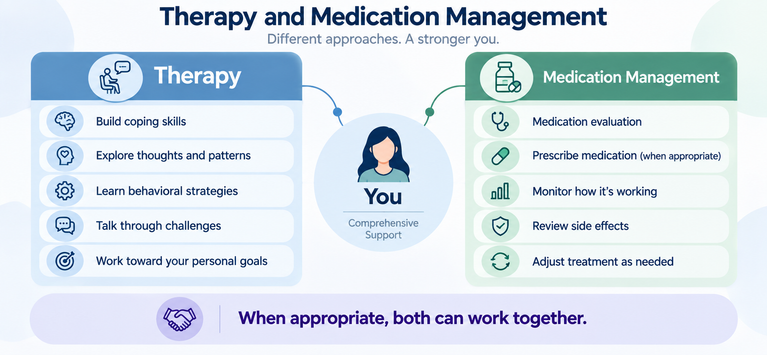
Your first visit is a conversation, not a commitment to start medication. At MindVita, you can meet with a qualified psychiatric provider, including a psychiatric nurse practitioner who can assess your symptoms, discuss treatment options, prescribe medication when appropriate, and provide ongoing medication management. Appointments are available at the Tysons office or through secure video from home. Care is available for both adults and children. If you have been putting off getting help, book an appointment and bring your questions.
When to See a Psychiatrist for Depression
A psychiatric evaluation may be helpful when low mood or loss of interest persists, keeps returning, or starts affecting your work, sleep, relationships, or daily responsibilities. It may also be worth discussing when earlier treatment has not helped enough or when you want to understand whether medication could be part of your care.
According to the National Institute of Mental Health [1], major depression involves symptoms that occur most of the day, nearly every day, for at least two weeks, with depressed mood or loss of interest or pleasure among the key symptoms. However, you do not need to wait until symptoms meet every diagnostic criterion before seeking professional help.
Depression does not always stop you from getting through the day. Some people keep working, parenting, and meeting deadlines while feeling empty underneath. This is sometimes described as functional depression, although the term is not a formal diagnosis. Being able to keep up with daily responsibilities does not mean your symptoms are not worth discussing with a provider.
What to Expect at Your First Psychiatrist Appointment
Your first appointment is mostly a detailed conversation. Your provider will ask about your mood, history, physical health, and daily life to understand your symptoms and how they affect you. Depression is diagnosed through a clinical evaluation rather than a blood test or scan. What you share, along with a short questionnaire, helps shape the assessment and treatment plan.
Every provider works a little differently, but most first visits cover the areas below.
How You Have Been Feeling
Expect questions about when your symptoms started, how often they occur, and whether they interfere with work, plans, relationships, or activities you usually enjoy. Specific examples can help your provider understand what your day-to-day experience looks like.
Your Past Treatment and Family History
Your provider will want to know about earlier diagnoses, therapy, and medications you have tried, including what helped, what did not, and why you stopped. Your family mental health history can also provide useful context when your provider considers your symptoms and treatment options.
Your Physical Health and Current Medications
Certain medical conditions and medications can affect mood or cause symptoms that overlap with depression. Expect questions about your medical history, current medications, and supplements, since these details can influence which treatments are appropriate for you.
Sleep, Alcohol, and Daily Routines
Sleep patterns, appetite, energy, alcohol or substance use, and daily stress can all affect depression and medication choices. Honest answers give your provider a clearer picture of your symptoms, daily habits, and treatment needs.
Questions About Your Safety
Your provider may ask about thoughts of death, self-harm, or suicide. These questions are a routine part of assessing depression and help your provider understand the level of support you may need.
A Short Symptom Questionnaire
Providers often use a brief questionnaire such as the PHQ-9. It asks how often nine common depression symptoms have bothered you during the past two weeks and takes only a few minutes to complete.
You do not need perfect answers or a neat timeline. It is fine to say you are unsure, to skip ahead and return to something later, or to ask why a question matters. Your provider is trying to understand the full picture, and a first visit is just the beginning of that conversation.
Why Your Provider May Ask About Periods of High Energy
Before starting a medication for depression, your provider may ask whether you have ever had stretches of unusually high energy, little need for sleep, racing thoughts, or risky behavior. These questions help assess whether you have experienced symptoms associated with bipolar disorder, which can include depressive episodes and requires a different treatment approach from depression alone.
According to the National Institute of Mental Health [2], missing signs of bipolar disorder can affect treatment decisions because antidepressants may trigger mania or rapid cycling in some people with bipolar disorder. Because treatment for bipolar depression differs from treatment for depression without bipolar disorder, providers consider possible bipolar symptoms before recommending an antidepressant.
Mention past periods of unusually high energy even if they felt like good times, and share whether any relatives have been diagnosed with bipolar disorder. Being asked these questions does not necessarily mean your provider suspects bipolar disorder. They are part of assessing your symptoms and treatment options before choosing a medication.
How to Prepare for Your First Psychiatry Appointment
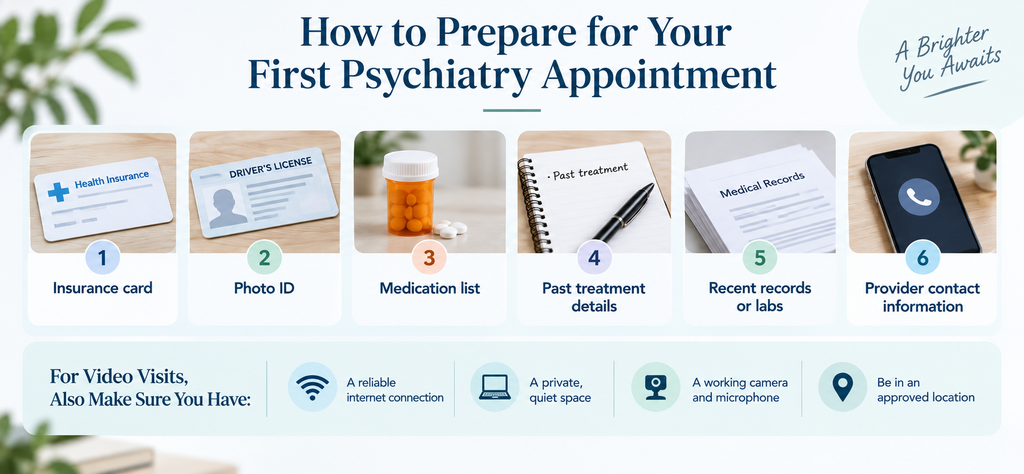
A little preparation can make your first visit much more useful. Write down your main symptoms and when they started, gather a list of your current medications and supplements, note treatments you have tried before, and jot down the questions you most want answered. If your visit is by video, plan for a private, quiet space.
It can also help to have these on hand:
- Your insurance card and a photo ID
- Doses of your current medications, including over-the-counter products
- Details about past antidepressants, including side effects and why you stopped
- Recent lab results or records from other providers, if you have them
- Contact details for your primary care provider or therapist, if you want your care coordinated
For a video visit, test your camera and internet connection ahead of time. You may also need to be physically located in a state where your provider is licensed during the appointment, depending on applicable telehealth requirements. If you are considering virtual care, MindVita’s guide to telepsychiatry for depression explains how it works.
Will You Leave Your First Appointment With a Prescription?
You might, but it is not guaranteed. Some people start a medication after the first visit, while others leave with a plan for lab work, therapy, or a follow up before any decision is made. The right next step depends on your symptoms, health history, preferences, and what you and your provider decide together.
According to MedlinePlus [3], medical tests may be used to rule out other conditions because certain medicines and medical conditions can cause symptoms that resemble depression. Your provider may recommend medical testing when they need to rule out other possible causes of your symptoms.
If medication is started, you should understand why it was recommended, what side effects to watch for, and when to contact your provider about concerns. If you do not leave with a prescription, it does not mean your concerns were brushed aside. Your provider may recommend another step first, such as gathering more information, reviewing your medical history, considering therapy, or scheduling a follow-up before deciding whether medication is appropriate.
Depression Medication Management After Your First Visit
After the first appointment, depression medication management continues through shorter follow-up visits. These visits help assess how you are feeling, whether side effects have appeared, and whether the dose or medication needs adjusting. Treatment can change over time as your symptoms, response, and preferences become clearer.
Tracking symptoms in the same way at each visit can make changes easier to notice. A study published in Journal of General Internal Medicine [4] found the PHQ-9 to be a reliable and valid measure of depression severity, so some providers repeat it during follow-up visits to compare scores over time.
Between visits, pay attention to changes in sleep, energy, appetite, motivation, and mood. Share side effects even if they seem minor. If something feels concerning, contact your provider rather than waiting until the next scheduled appointment.
Walk Into Your First Appointment Knowing You Will Be Heard
Maybe you have been meaning to book for weeks, but getting through the day already takes everything you have. Maybe you worry about being rushed, judged, or sent home with a prescription and no explanation. Or perhaps you simply do not know what to say once you are in the room, so the appointment keeps getting pushed back.
At MindVita, your first appointment gives you space to discuss your symptoms, concerns, and treatment options with a psychiatric provider. If medication is appropriate, your provider can explain why it is being considered, what to expect, and how follow-up care will work. When you are ready, book an appointment online at a time that works for you.
FAQs
Can I bring someone with me to my first appointment?
Usually, yes. Some people bring a partner, parent, or friend for support, and that person can share changes they have noticed. Your provider may still ask to speak with you alone for part of the visit, which is a normal way to give you space to talk openly. For video visits, it helps to mention it when you book.
Is it normal to cry or feel emotional during the appointment?
Yes, and it is completely okay. Talking about depression can bring up strong emotions, and providers are familiar with this. You do not need to hold back tears or hide how you feel. Your emotions can also give your provider more context about what you have been experiencing.
What if I already take an antidepressant from my primary care provider?
Bring the name, dose, and start date, and keep taking it unless you are told otherwise. Your psychiatric provider can review whether it is working well enough, whether side effects are worth addressing, and whether any changes make sense. Some people also come in simply for a second opinion on their current medication plan.
Will depression medication change my personality?
Antidepressants are meant to ease symptoms like persistent low mood, not change who you are. The aim is for you to feel more like yourself as symptoms improve. Some people notice feeling emotionally flat or less motivated on certain medications, though. If that happens, tell your provider, since a dose change or a different medication may help.
What if I do not feel comfortable with my provider?
Feeling heard matters, and a good fit can make it easier to be honest about your symptoms and concerns. If something feels off after your first visit, it is okay to bring it up or ask about seeing another provider. Trust can develop over several appointments, but you should still feel comfortable asking questions and raising concerns about your care.
References
- National Institute of Mental Health (NIMH). “Depression.”
- National Institute of Mental Health (NIMH). “Bipolar Disorder.”
- MedlinePlus, National Library of Medicine. “Depression.”
- Kroenke K, Spitzer RL, Williams JB. “The PHQ-9: Validity of a Brief Depression Severity Measure.” Journal of General Internal Medicine. 2001.