

Do you get through work, school, or daily responsibilities while feeling emotionally exhausted inside? You may appear productive and capable to others, yet privately struggle with sadness, low motivation, or a constant sense of emptiness. Functional depression often affects people who seem fine on the outside while quietly dealing with ongoing emotional distress.
If you want clarity about what you are experiencing, the next step is simple. You can connect with a mental health expert for a proper evaluation and guidance. This helps you understand your condition clearly and choose the right support plan. At MindVita, we provide professional mental health services designed to support you through conditions like functional depression. Our team guides you through proper evaluation and care planning based on your needs. Schedule your consultation today and start understanding your mental health with expert support.
What Is Functional Depression and Why Do You Still Function Despite Emotional Struggles?
Functional depression describes a situation where you continue meeting responsibilities while experiencing symptoms commonly associated with depression. You may go to work, care for your family, attend classes, or maintain social commitments while quietly struggling with sadness, fatigue, low motivation, or emotional numbness. Although others may see you as functioning normally, you may still struggle with symptoms that affect your mood, motivation, and overall quality of life. While functional depression is not an official medical diagnosis, the term is often used to describe people who continue functioning in daily life despite experiencing depressive symptoms.
A review published on PubMed Central (PMC) [1] highlights that depressive symptoms can exist even when individuals maintain normal functioning in daily life. The research explains that many people with persistent or mild depression continue their responsibilities while still experiencing reduced motivation, low mood, and mental fatigue. This supports the idea that depression is not always visible, and functional ability does not always reflect mental health status.
What Are Functional Depression Symptoms You Should Recognize Early?
Functional depression symptoms include ongoing low mood, reduced energy, and changes in thinking and behavior while you still manage regular responsibilities. You may feel mentally tired, lose interest in activities, and struggle with focus or motivation. These signs develop slowly and often remain unnoticed because you continue to function normally in everyday life. These symptoms are often subtle at first, so you may ignore them. Gradually, it may become harder to maintain emotional balance and motivation.
- You feel emotionally exhausted even when you complete your daily responsibilities.
- You struggle to enjoy achievements that once made you feel proud or happy.
- You feel disconnected from friends, family, or activities you used to enjoy.
- You constantly push yourself to keep going despite feeling mentally drained.
- You experience ongoing self-criticism or feelings of inadequacy.
- You find yourself simply trying to get through the day rather than enjoying it.

These symptoms may seem manageable at first, but they can gradually affect your relationships, productivity, emotional well-being, and quality of life. Recognizing them early helps you take action before the condition becomes more difficult to manage. Over time, untreated functional depression can deepen emotional fatigue and reduce your ability to enjoy daily life. You may start feeling stuck in routine without emotional satisfaction.
Why Does Functional Depression Often Go Unnoticed in Daily Life?
Functional depression often goes unnoticed because you continue to manage your daily responsibilities without showing clear signs of emotional struggle. You continue handling responsibilities and meeting expectations. However, internally you may feel drained and unmotivated. Because there are no visible signs of distress, your condition often goes unrecognized in the early stages and may be mistaken for normal stress, burnout, or everyday fatigue.
As a result, functional depression can continue silently for a long time without support. You may also begin to feel that your emotions are not serious enough to seek help. However, early awareness is important because hidden symptoms can slowly impact your focus, mood, energy levels, and overall daily performance if they are not identified and managed in time. Many people dismiss their symptoms because they believe depression must completely stop them from working or functioning. As a result, they may delay seeking support even when symptoms are affecting their quality of life.
What Factors Increase the Risk of Functional Depression?
Several factors can increase the risk of functional depression. Chronic stress, workplace burnout, financial difficulties, relationship challenges, perfectionism, and ongoing anxiety can all contribute to emotional exhaustion over time. Even when you continue meeting daily responsibilities, these pressures may gradually affect your mood and emotional health.
A systematic review published in the Longdom Publishing Journal [2], on financial crisis and psychological well-being, reports that economic instability significantly impacts mental health. The study highlights that financial stress, reduced income, and uncertainty during crises can increase psychological distress, lower life satisfaction, and contribute to depressive symptoms. These findings show that long-term financial stress can gradually influence emotional health and increase the risk of developing depressive symptoms over time.
Why Is High-Functioning Depression Often Misunderstood in Daily Life?
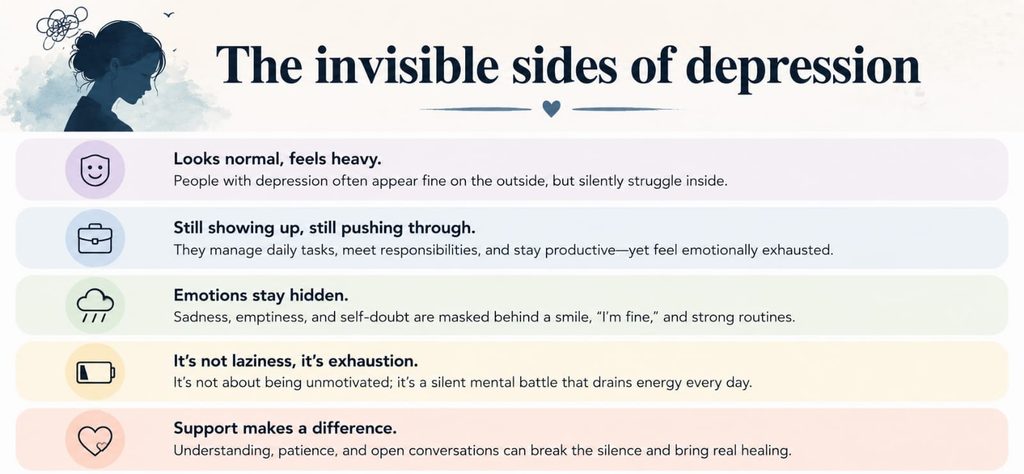
High-functioning depression is often misunderstood because you continue to perform well in usual responsibilities while struggling internally. You may meet deadlines, manage tasks, and maintain social interactions, so others assume you are fine. However, beneath that outward success, you may experience persistent sadness, fatigue, low motivation, or emotional exhaustion. Because you continue meeting expectations, people may assume you are coping well. As a result, your emotional struggles may go unnoticed by coworkers, friends, family members, and even healthcare professionals.
An article by the Anxiety and Depression Association of America (ADAA) [3] explains that high-functioning depression is often missed because individuals may still appear capable, organized, and socially active in daily life. However, behind this outward stability, they may be dealing with ongoing emotional distress, low mood, and mental exhaustion. Since their daily performance does not clearly reflect their inner state, others may misunderstand their condition and delay offering proper emotional support or recognition.
How Can You Manage Functional Depression Effectively in Daily Life?
Managing functional depression involves more than staying productive. It requires paying attention to your emotional well-being, recognizing unhealthy coping patterns, and creating habits that support mental health. Small, consistent changes can gradually improve mood, resilience, and quality of life.
Set Realistic Expectations
Many people with functional depression continue pushing themselves despite emotional exhaustion. Learning to set realistic expectations can reduce unnecessary pressure and help prevent burnout. Breaking larger tasks into smaller goals and allowing yourself time to rest can make daily responsibilities feel more manageable.
Make Time for Mental Health Check-Ins
Regular self-checks help you understand how you are feeling internally. You can pause during the day and reflect on your thoughts and emotions. Simple practices like journaling or mindfulness can help you notice stress early. This awareness allows you to respond before emotional strain becomes overwhelming. These check-ins can help you identify emotional changes early and take action before symptoms become more difficult to manage.
Seek Support from Trusted People
Talking to trusted friends, family members, or a mental health professional can reduce emotional burden. Sharing your experience helps you feel less isolated and more understood. Support from others can also provide comfort and perspective during difficult moments, making it easier to manage emotional challenges in everyday life.
According to Riverview Community Mental Health Center [4], managing functional depression involves consistent small efforts that support emotional stability over time. These approaches help you maintain balance between daily productivity and inner well-being. With regular self-awareness, practical coping habits, and support from others, you can gradually improve emotional control and reduce the impact of ongoing mental stress.
Take Action Today and Get Support for Functional Depression with MindVita
You may continue showing up for work, caring for your family, meeting deadlines, and handling responsibilities while quietly struggling inside. Because you are still functioning, others may not realize how difficult each day feels. Over time, carrying this emotional burden alone can become exhausting.
At MindVita, we understand what you are going through. We provide personalized mental health support designed to help you understand your symptoms, identify contributing factors, and develop practical strategies for managing functional depression. Through professional guidance, therapy options, and ongoing support, we help you regain emotional balance, improve daily functioning, and build healthier coping strategies. Contact us today and begin a more balanced and supported mental health path.
FAQS
Can functional depression look like normal happiness in public?
Yes, functional depression can look like normal happiness in public for weeks or even months. You may smile, interact, and perform daily tasks normally. However, inside, emotional struggle continues silently. Over time, this hidden stress can slowly affect your energy, mood stability, and mental health.
Is functional depression considered a medical emergency?
No, functional depression is generally not considered a medical emergency because you can still manage daily activities. However, if symptoms continue for several weeks and begin affecting your quality of life, without improvement, professional support is recommended. Early treatment can lower the risk of more serious emotional and mental health difficulties.
Can someone with functional depression still succeed in life?
Yes, many people with functional depression continue to achieve personal, academic, and career goals. However, success may feel less rewarding because emotional struggles remain in the background. Over months or even years, untreated symptoms can affect overall satisfaction. Therefore, addressing mental health helps you experience greater fulfillment from your achievements.
Does functional depression always require medication?
No, functional depression does not always require medication. Treatment depends on your symptoms and individual needs. Some people improve with counseling, lifestyle changes, and coping strategies alone, while others may benefit from medication. Treatment recommendations depend on symptom severity, personal circumstances, and professional evaluation.
Can functional depression affect relationships even if I act normal?
Yes, functional depression can affect relationships even when you appear fine on the outside. Over weeks or months, you may become less engaged, emotionally distant, or less interested in social interactions. As a result, communication can suffer, and loved ones may notice changes before you fully recognize them yourself.
Can Functional Depression Become More Serious if Left Untreated?
Yes, functional depression may become more difficult to manage when symptoms continue without support. Ongoing emotional strain can affect relationships, work performance, physical health, and overall quality of life. Seeking help early can improve outcomes and reduce the risk of more severe depressive symptoms.




One Response