
Wondering how you can use cognitive behavioral therapy in your daily life? These simple techniques help y
ou notice negative thoughts and replace them with healthier ones. They also improve the way you respond to everyday challenges. With regular practice, you can build better habits, manage stress, and support your emotional health.
Learning CBT techniques becomes easier with professional guidance, especially when negative thoughts, constant worry, or emotional stress begin affecting your daily life. At MindVita, our psychiatric providers teach practical strategies you can use between sessions to build healthier thinking patterns, strengthen coping skills, and improve emotional well-being. Schedule a consultation today to begin making positive changes that last.
How Can Cognitive Behavioral Therapy Help You Change Negative Thinking?
Cognitive behavioral therapy helps you recognise negative thinking before it influences your emotions or decisions. Instead of automatically assuming the worst or blaming yourself, you learn to pause, question those thoughts, and replace them with more balanced perspectives. As these skills become part of your routine, everyday challenges often feel easier to manage, and your confidence gradually grows.
Research published in World Psychiatry [1] also supports the benefits of cognitive behavioral therapy. A 2023 review of 409 clinical trials involving 52,702 participants found that CBT effectively reduced symptoms of depression. The study also showed that many people continued to benefit for 6 to 12 months after treatment, highlighting the lasting value of this approach.
Which Cognitive Behavioral Techniques Can You Practice Every Day?

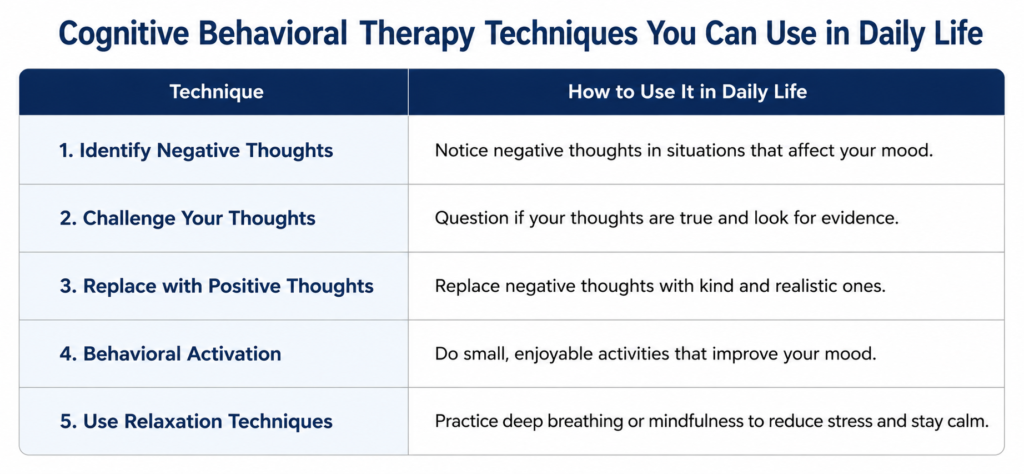
You can use simple cognitive behavioral techniques every day to build healthier thinking patterns. These methods help you recognise negative thoughts, respond more calmly to stressful situations, and make balanced decisions instead of reacting automatically. With regular practice, these skills become more natural and easier to use in everyday life.
The following techniques are easy to learn and fit into your daily routine:
- Notice Negative Thoughts: Pay attention to thoughts that make you feel worried or upset. Once you notice them, you can start changing them.
- Question Unhelpful Thoughts: Ask yourself if your thoughts are true or based on fear. This helps you see situations more clearly.
- Keep a Thought Journal: Write down your thoughts and feelings each day. This helps you find patterns and understand your emotions.
- Use Positive Self-Talk: Replace harsh self-criticism with balanced and realistic thoughts. Speaking to yourself with the same kindness you would offer a friend can gradually improve confidence and reduce emotional distress.
- Take Small Positive Steps: Break big tasks into smaller ones. Each small success helps you stay motivated and move forward.
These techniques work best when you practise them consistently. At first, they may require conscious effort, but they gradually become more natural with regular use. If you need additional support, a mental health professional can personalise these strategies and help you apply them to your own experiences.
Can Cognitive Behavioral Therapy Help Different Mental Health Conditions?
Yes, cognitive behavioral therapy can help with many mental health conditions by teaching you how thoughts, emotions, and behaviours influence one another. It helps you recognise unhelpful thinking patterns, reduce avoidance behaviours, and develop healthier ways to respond to stress. CBT is commonly used for depression, anxiety, PTSD, panic disorder, and ADHD because these practical skills can be applied to many everyday situations.
According to the National Library of Medicine [2], cognitive behavioral therapy is widely used in mental health care because it has strong research support. Experts recommend this approach for several conditions, including depression, anxiety disorders, PTSD, and panic disorder. These findings show that CBT is a trusted treatment that benefits many people.
When Should You See a Cognitive Behavioral Therapy Professional?
You should consider seeing a cognitive behavioral therapy professional when negative thinking, emotional distress, or unhealthy behaviour patterns begin affecting your work, relationships, sleep, or everyday responsibilities. If your usual coping strategies are no longer helping, professional guidance can teach practical skills that make these situations easier to manage. Seeking support early may also prevent symptoms from becoming more difficult over time.
Your Symptoms Do Not Improve
If your emotional struggles continue for several weeks or become more intense, it is a good time to seek professional help. Early care can help you understand your concerns and learn healthy ways to manage them.
Daily Life Feels Hard to Manage
When your thoughts or feelings affect your work, school, relationships, or everyday responsibilities, professional guidance can make daily tasks feel easier. Learning new coping skills can also improve your confidence over time.
You Avoid People or Activities
If you stop enjoying activities or avoid friends, family, or social events because of emotional challenges, talking to a mental health professional can help you reconnect with your daily life.
You Want Better Ways to Cope
Sometimes the strategies you usually rely on no longer reduce stress or help you manage difficult situations. A cognitive behavioral therapy professional can teach practical techniques that help you respond more calmly, challenge unhelpful thinking, and make healthier decisions in everyday life.
According to Mayo Clinic [3], cognitive behavioral therapy works best when you work closely with a trained mental health professional. CBT helps you learn practical skills, understand unhelpful thinking patterns, and apply new coping strategies in daily life. Mayo Clinic also explains that practicing these skills between sessions can improve your progress over time.
Take the First Step Toward Better Mental Health Today with MindVita
If negative thoughts keep returning, everyday life can start to feel overwhelming. You may constantly expect the worst, criticise yourself, or avoid situations that make you anxious. Over time, these patterns can affect your work, relationships, and emotional well-being. You do not have to manage these challenges alone, and the right support can help you build healthier ways of thinking and coping.
At MindVita, our experienced psychiatric providers offer personalized care based on your needs. We use cognitive behavioral therapy and other proven treatments to help you build healthier thinking habits and better coping skills. Contact us today and take the first step toward improving your mental health.
FAQs
How long does cognitive behavioral therapy take to work?
Many people notice positive changes within 6 to 12 sessions. However, your progress depends on your symptoms, goals, and regular practice between sessions. Attending appointments consistently and using the skills you learn each day can help you see better results over time.
Can I practice cognitive behavioral therapy on my own?
Yes, you can use simple CBT exercises at home. For example, write down negative thoughts, question unhelpful beliefs, and practice healthier thinking each day. These habits can support your progress. However, professional guidance offers personalized strategies and extra support, especially when emotional challenges become difficult to manage.
Is cognitive behavioral therapy covered by insurance?
Many health insurance plans cover cognitive behavioral therapy, but your benefits depend on your provider and policy. Before starting treatment, check your coverage, referral requirements, and the amount you need to pay. You can also contact the clinic or your insurance company for clear information. This helps you plan your care with confidence.
What is the success rate of cognitive behavioral therapy?
Cognitive behavioral therapy has a strong success rate for many mental health conditions. Research shows that many people notice fewer symptoms and better daily functioning after completing treatment. However, your results depend on your condition, treatment goals, and regular practice. Working closely with a therapist can help you achieve better and longer-lasting progress.
How do I choose the right cognitive behavioral therapist?
Choose a cognitive behavioral therapist who understands your needs. Make sure they have experience with CBT and the mental health concern you want to treat. Also, pick someone you feel comfortable talking to. A good therapist listens, explains things clearly, and helps you build skills that support lasting positive change.