

Do you find yourself in a never ending circle of repetitive negative thinking? Ruminating means that your mind is continuously engaging your thoughts with worries about the past, mistakes or the future. Overthinking may be exhaustive and lead to anxiety, depression and other emotional struggles. Though everyone experiences some form of rumination sometime, it becomes grave when it actually starts affecting normal living. Therefore in this article, we will be discussing what rumination is, its types and how to stop ruminations. Be it OCD rumination, angry rumination or just plain ruminating there are practical ways of breaking free and finding peace. At MindVita, we support mental wellbeing by helping individuals cope with rumination and challenges associated with it through practical strategies and professional guidance. Let’s have a look at how you can prevent rumination and break the circle of negative thinking.
End constant overthinking with simple, practical strategies to calm your mind, break negative loops, and regain peace, guided by evidence-based advice from an online psychiatrist you can trust daily today.
What is rumination?
Rumination is a repetitive cognition in which an individual is preoccupied with negative mood, experiences or concerns. Rather than attending to the present or pressing forward, the person caught in rumination may remain anchored in the past or preoccupy themselves with their concerns about the future. Rumination may feed into a cycle of negative thinking that deepens feelings of sadness, hopelessness and despair.
Rumination effectively blocks problem solving and makes it hard for a person to think clearly. This is the reason why people who always ruminate feel caged by their emotions and are less likely to take action to improve their situation. If unchecked rumination may foster depression, anxiety and other mental health challenges.
Different forms of rumination
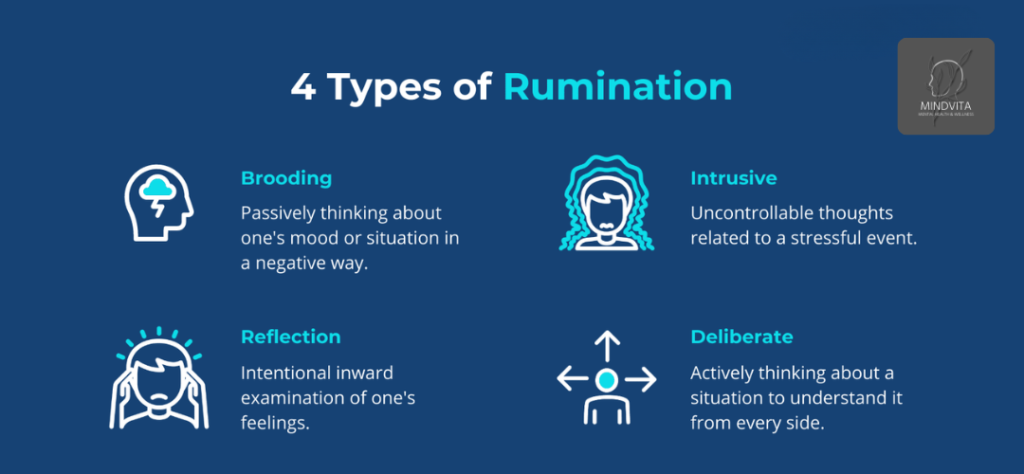
While rumination is a broad concept, there are several variations in how it can manifest. Considering these variants can be helpful in trying to understand better how rumination affects one and how to deal with it.
1. Rumination OCD
Rumination OCD is a type of obsessive compulsive disorder in which individuals obsess over specific thoughts or worries, even though the thoughts may be irrational or irrelevant. Unlike simple rumination which concerns distressing events in the past or general worries, rumination OCD often involves compulsive thoughts that require repeated analysis. The harder the sufferer tries to control the thoughts the more powerful they become.
How to stop ruminating with OCD:
The key to the management of rumination OCD lies in cognitive behavioral therapy. Cognitive Behavioral Therapy helps an individual break this chain of rumination by recognizing and challenging negative thinking patterns. MindVita offers customized therapy to teach how one can stop life destroying recurring thoughts to people with OCD who are suffering from ruminations.
2. Anger Rumination
Anger rumination is the recurrent investing in feelings of anger, frustration or resentment. Once you find yourself engaged with rumination on anger replaying arguments and injustices you may break down emotionally or damage your relationships. It also leads to dangerous anger in that it blocks emotional regulation which is supposed to take place and will constructively solve the problem.
How to Stop Anger Rumination:
The best ways to deal with anger rumination include mindfulness and relaxation exercises. Such techniques as deep breathing, muscle relaxation and journaling may help a person control their anger. Besides, physical activities like walking or yoga can help distract from the feelings of anger and reduce stress levels. MindVita also provides counseling and gives coping strategies that help individuals manage anger ruminations more effectively.
3. Ruminating Thoughts and Their Impact on Mental Health
Ruminating thoughts are more often likely to affect individuals with OCD or anger problems. You may be caught in a circle of self doubting, regret and further worries if your mind is preoccupied by ruminative thoughts. This may enhance anxiety or depression especially when negative feelings are replayed constantly in the person’s mind. The cyclic nature of the ruminations makes one not take any action to change the current situation but rather keeps them fixed in the negative emotions.
How to stop ruminating thoughts:
Proactive strategies should be initiated, including ways to stop ruminations. Such is the role of mindfulness exercises including meditation and self compassion exercises that help in observing thoughts without engaging the mind. Similarly, the development of a daily schedule with time for rest or a positive activity can be a helpful distraction from negative thinking.
How to Stop Ruminating: Practical Tips
Overcoming rumination takes dedication but there are several things you can actually do to help yourself avoid overthinking. Here are a few tips which may help you get your head back in control:
1. Engage yourself in meaningful activities that will help distract you
When you catch yourself ruminating, it’s helpful to distract your mind with something productive or enjoyable. It may be reading, doing crafts or listening to music; find that activity that will distract you and break the cycle of the negative thinking. Doing something positive or fun can help take your mind off of your ruminating thoughts.
2. Practice mindfulness and meditation
Attention techniques will make you more aware of your inner thoughts and emotions. In such a state of mindfulness you observe your thoughts without judgment and are not hijacked by them. Mindfulness meditation will be especially effective in diminishing ruminations since it calms your mind and teaches you to live in the present moment.
3. Break down problems into manageable steps
Smaller tasks make the problem more manageable when one is in a difficult situation that may trigger rumination. A detailed, step by step plan can give one a sense of control of the situation and reduce the urge to engage in ruminative thoughts concerning the problem. Since you start to take one small action after another you will not get yourself caught in negative thinking.
4. Physical Activity
Exercise is a powerful stratagem to help you cease rumination and lighten your mood. It releases endorphins, which are chemicals that improve your mood and reduce stress. Be it brisk walking, yoga or home exercises physical activity diverts your attention somewhere else while relieving pent up stress.
5. Seek professional help if necessary
If your ruminations are persistent and overwhelming, it would be best to seek professional help. MindVita offers therapy and counseling for people experiencing ruminations, anxiety, depression and similar struggles. Professional advice will allow you to build strategies and insights that will help you stop chaotic thoughts and bring back a sense of peace.
Rumination and its relationship to anxiety and depression
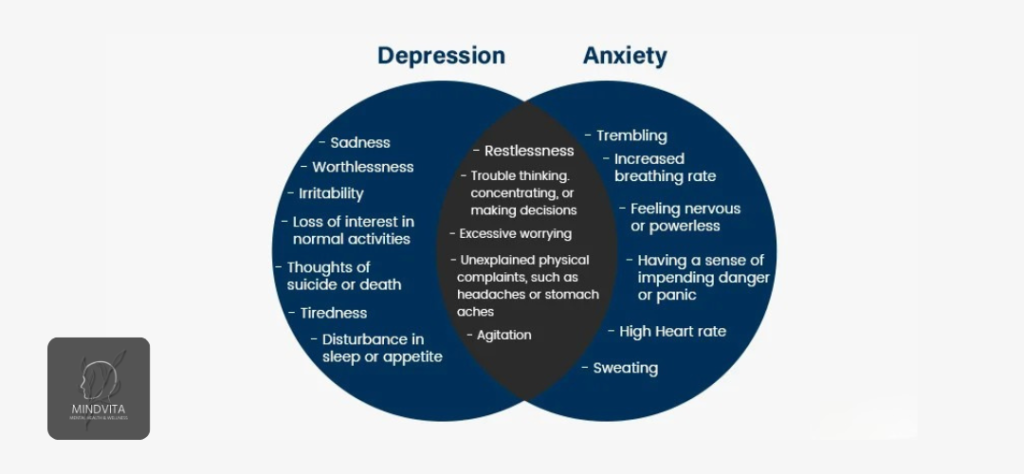
A shared perspective in anxiety and depression is the tendencies of ruminations. With rumination on thoughts there is usually a focus on negative feelings, experiences, or concerns. This makes it hard to solve the problem or find solutions and furthermore really cements negative beliefs about oneself and one’s future.
Such rumination can spiral into a vicious cycle of feelings of hopelessness and helplessness, two central symptoms of depression. Further rumination enhances the negative emotional state into even more intense states of sadness, fear or despair. The more one ruminatively speaks, the stronger these emotions become.
You can thus contain the effect of rumination on your mental health by tackling the issue head on. Some of the effective methods to contain rumination by breaking the vicious cycle of negative thought are cognitive behavioral therapy and training in mindfulness.
Preventing Future Ruminations
Once you learn to stop ruminations, you need to make sure to apply certain strategies to prevent them from coming back. Here are a few suggestions that may help you avoid falling into the rumination trap all over again:
- Gratitude practice: This involves reflecting on good things in life more frequently. It helps shift the focus from the negative.
- Limit the time spent alone: Time spent with friends and family can keep you distracted and prevent your mind from wandering into ruminations.
- Organization: The act of organizing your mind through journaling or making lists will also help you stay on top of your emotions and not feel overwhelmed.
- Develop good sleep habits: Lack of sleep can create a tendency to ruminate and that means you must rest properly every day.
- Use positive self talk: Offset negative thoughts by reminding yourself of your strengths and your successes. Replay negative thoughts in a more positive and solution oriented manner.
Conclusion: Take action today to stop ruminating
Rumination can feel like a cycle in which there is no escape but with the right strategy, you can stop the negative thoughts that are holding you back. With mindfulness, CBT, physical activities or seeking support from a mental health professional taking an action is a first step toward mental wellness.
At MindVita, we offer tailored support for those fighting rumination, anxiety, depression and other emotional challenges. You do not have to let ruminative thoughts define your life anymore. Take action and begin your journey toward peace and equanimity in your mind.
If you feel ready to take responsibility for your thoughts and to control your ruminations, MindVita is ready to provide professional support and consultation. We will guide you through this process of achieving mental clarity and emotional balance.
FAQs: Solutions for Managing Rumination
1. What is ruminating and how does it affect mental health?
Ruminating often refers to a repetitive thought that focuses on negative emotions or the past. It surely creates more anxiety, depression and stress, making problem solving and moving forward quite difficult.
2. How can I stop rumination?
Practice mindfulness, physical activity, decomposing problems into smaller tasks or any other so called strategies for the stoppage of ruminations. Therapy is also one effective way to deal with ruminations.
3. What is ruminating OCD and how does it differ from regular ruminating?
Unlike regular ruminating, which focuses on negative feelings or events ruminating OCD is characterized by obsessive, uncontrollable interest in specific subjects. Ruminating OCD treatment may also include cognitive behavioral therapy.
4. Are angry ruminating affecting my mental health?
Yes, angry ruminations heighten frustration, stress and negative emotions. Angry ruminations need to be managed through various forms of relaxation techniques, physical activity and professional help to prevent further emotional turmoil.
5. Should I seek help if these ruminations are impacting my daily life?
If such ruminations begin to impact daily functioning or health then it is time to seek help. MindVita offers counseling and strategies to manage chaotic thoughts and enable improvement in mental health.