

Virtual psychiatry is changing mental health care by making professional support easier to access from a private and convenient location. Instead of traveling to an office, you can meet with a psychiatric provider through secure online appointments. This approach helps reduce barriers related to distance, transportation, and busy schedules while supporting evaluation, treatment planning, and ongoing psychiatric care.
Taking the first step toward psychiatric care can feel difficult when you are unsure where to begin or how appointments will fit into your routine. At MindVita, our psychiatric providers give you space to discuss what you have been experiencing and explore care based on your concerns and treatment goals. Schedule a consultation today and take the next step toward professional mental health support.
Why Is Virtual Psychiatry Becoming a New Standard for Mental Health Care?
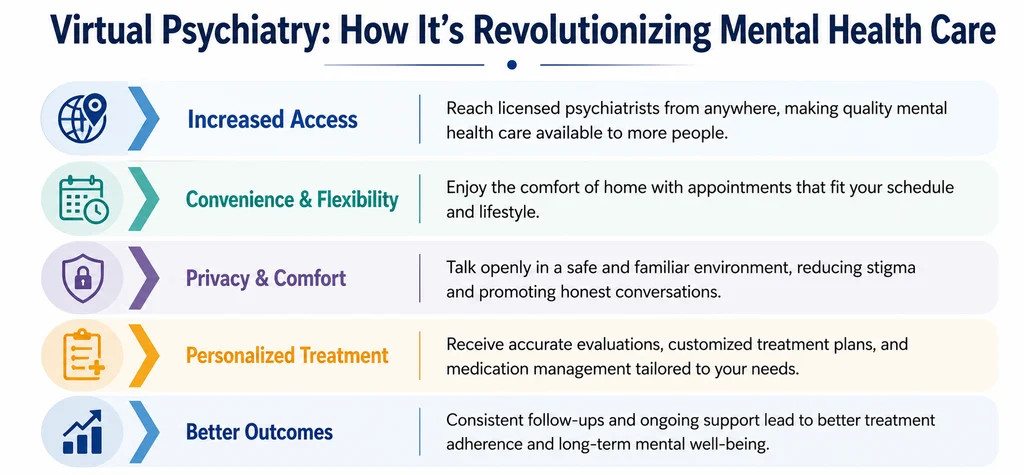
Virtual psychiatry is becoming a more established part of mental health care because it supports consistent communication between you and your psychiatric provider. Regular virtual visits can make it easier to discuss new concerns, review changes in symptoms, and keep treatment moving forward. You can also have these conversations in familiar surroundings, which may help you speak more openly about difficult experiences.
Research also supports the growing role of virtual care in psychiatry. A thematic review published in the BJPsych Bulletin by Cambridge University Press [1] found high patient satisfaction, reliable diagnoses, and positive clinical outcomes with telepsychiatry. These findings support virtual psychiatry as a credible option within modern mental health care.
Where Does Online Psychiatry Fit Into Your Mental Health Journey?
Online psychiatry can support you at different points in your mental health journey. You may be seeking help for new symptoms, returning to care after a break, or looking for continued support. Through virtual visits, you can discuss changes in your mood, behavior, focus, and daily functioning with a psychiatric provider and explore appropriate next steps for your care.
Depending on what you are experiencing and where you are in your care journey, online psychiatry may support you in several ways:
- New or changing symptoms: You can discuss emotional, behavioral, or cognitive changes that have recently appeared or become harder to manage.
- ADHD-related concerns: Online ADHD treatment can address difficulties with attention, organization, impulsivity, time management, and completing everyday tasks.
- Anxiety symptoms: Virtual anxiety treatment provides a space to discuss persistent worry, panic symptoms, restlessness, avoidance, and other concerns affecting daily life.
- Depression and mood changes: You can seek care for low mood, loss of interest, low energy, sleep changes, and difficulty keeping up with normal routines.
- Ongoing psychiatric care: Virtual visits can support continued symptom monitoring, treatment reviews, and changes to your care plan when your circumstances or concerns change.
Mental health care does not always follow a straight path. Your symptoms may change, improve, or become more noticeable during stressful periods. Online psychiatry gives you a way to stay connected with professional care as those changes happen. With regular communication, your psychiatric provider can better understand your progress and help keep your care relevant to what you are experiencing.
What Does Research Reveal About the Real-World Impact of Virtual Psychiatry?
Real-world research helps show how virtual psychiatry performs when people receive care as part of their everyday lives. By examining changes in symptoms during ongoing treatment, researchers can better understand how patients respond to psychiatric care delivered remotely. This evidence provides useful insight into the role virtual care can play in supporting people with anxiety, depression, and other mental health concerns.
A 2023 study published in JMIR Formative Research [2] examined outcomes from 1,826 patients receiving telepsychiatry care. Researchers found clinically significant improvements in both anxiety and depression symptoms during treatment. These real-world findings show the potential of virtual psychiatry to support measurable progress while providing ongoing psychiatric care outside a traditional office setting.
How Can Digital Psychiatric Care Adapt to Your Changing Treatment Needs?
Digital psychiatric care can adjust as your needs change over time. What you need at the start of treatment may not be the same months later. Virtual visits give you a chance to talk about new concerns and changes in your life as they happen. This helps your provider understand where you are now and consider what may need attention next.
Online ADHD Treatment Can Address Everyday Executive Function Challenges
Online ADHD treatment can focus on practical difficulties with planning, starting tasks, managing deadlines, and staying organized. These conversations help identify where ADHD-related challenges create the most disruption in your routine.
Virtual Anxiety Treatment Can Target Your Individual Symptom Patterns
Virtual anxiety treatment can explore situations that trigger worry, fear, or avoidance. Understanding when these experiences occur gives your provider useful context for developing care that reflects your specific anxiety patterns.
Medication Reviews Can Keep Treatment Responsive to Your Progress
Medication reviews provide an opportunity to discuss how treatment feels in everyday life, including unwanted effects or practical concerns. This information helps guide thoughtful decisions about the next stage of your care.
Follow-Up Visits Can Help Identify Changes Earlier
Changes in mood, focus, sleep, or daily functioning may become clearer across several appointments. Regular follow-up visits give you opportunities to discuss these patterns as they develop, helping your provider understand whether your current care still reflects what you are experiencing.
Research also shows how digital technology may help mental health services respond to changes over time. A 2023 paper published in npj Mental Health Research [3] explains that digital tools can provide useful real-world information and support more personalized services. This information may give mental health professionals a broader view of a person’s experiences beyond individual appointments.
Start Your Mental Health Journey With MindVita’s Virtual Psychiatry Care
When changes in your mood, focus, sleep, or anxiety begin affecting everyday life, deciding what to do next can feel difficult. You may wonder whether your concerns require professional care or how to find support that works with your circumstances. Speaking with a psychiatric provider can help you better understand what you are experiencing and explore appropriate options for care.
At MindVita, we provide psychiatric care through secure virtual appointments that make professional support easier to access. Our psychiatric providers take time to understand your concerns and develop care around your individual situation. This may include a psychiatric evaluation, medication management when appropriate, and ongoing follow-up care. Contact us today to discuss your concerns and explore the next steps for your mental health care.
FAQs
Does Online Mental Health Care Work for People With More Than One Condition?
Yes, online mental health care can support people managing more than one condition, such as anxiety alongside ADHD or depression. Your psychiatric provider considers how symptoms overlap and affect your daily life before planning care. Looking at these concerns together can help your provider understand their combined impact and plan care accordingly.
Can You Discuss Sleep, Work Stress, and Relationship Difficulties During Virtual Care?
Yes, you can discuss sleep changes, work pressure, relationship difficulties, and other concerns that affect your mental health. These details can help your psychiatric provider understand what is happening in your daily life. From there, your provider can consider these factors while developing or adjusting your treatment plan.
What Happens When Your Current Mental Health Treatment Is No Longer Helping?
If your current treatment no longer helps as expected, tell your psychiatric provider about any changes you have noticed. Your provider can review your symptoms, progress, medication response, and new concerns. Based on this information, they may adjust your care plan or discuss other treatment options that better match your current needs.
Can Virtual Psychiatric Care Support You During Major Life Transitions?
Yes, major changes such as starting a new job, moving, becoming a parent, or experiencing a loss can affect your emotional well-being. Virtual psychiatric care gives you space to discuss these changes and their impact. Your provider can then help you manage symptoms and adjust care as your circumstances evolve.
What Should You Do If You Find It Difficult to Explain Your Symptoms?
Start by describing the changes you have noticed in your everyday life. You can mention changes in sleep, mood, energy, concentration, or motivation. You do not need to know the right clinical terms. Your psychiatric provider can ask focused questions to better understand your concerns and how they affect you.
References
- Sharma, G., & Devan, K. (2023). The effectiveness of telepsychiatry: Thematic review. BJPsych Bulletin, 47(2), 82–89.
- Person, C., O’Connor, N., Koehler, L., Venkatachalam, K., & Gaveras, G. (2023). Evaluating clinical outcomes in patients being treated exclusively via telepsychiatry: Retrospective data analysis. JMIR Formative Research, 7, e53293.
- Bond, R. R., Mulvenna, M. D., Potts, C., O’Neill, S., Ennis, E., & Torous, J. (2023). Digital transformation of mental health services. npj Mental Health Research, 2, Article 13.


One Response