There are millions of families across the world who are affected by neurodevelopmental disorders. Among the common ones adhd and autism are at the top of the list. They play a major role in influencing attention, communication, behavior, learning and emotions.
According to the Centers for Disease Control and Prevention about 1 in 36 children in the US suffers from autism while millions of people suffer from ADHD. Moreover research has also confirmed that “ADHD and Autism frequently co-occur. In fact research has found that 30 to 50% of autistic individuals also meet criteria for ADHD.”
As it is a lifelong neurodevelopmental disorder, a structured rehabilitation, resources and support system play a vital role. At Mindvita we believe that evidenceb ased compassionate care can make a big difference in the quality of life at every stage.
This guide will give you a better idea about what works, why it works and how you can get the help that can make a real difference for your loved ones with adhd and autism.
Understanding ADHD and Autism: Definitions, Overlap and More
What Is ADHD?
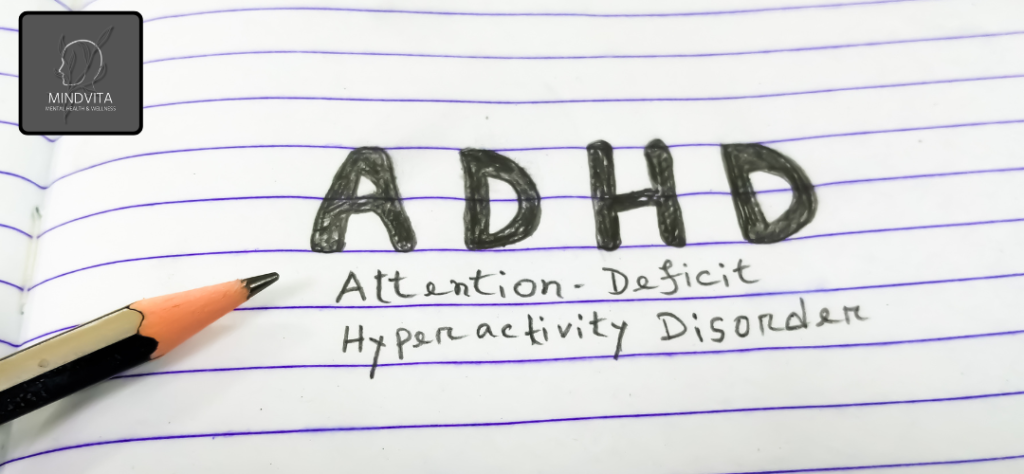
Attention Deficit/Hyperactivity Disorder (ADHD) is a neurodevelopmental disorder characterized by a persistent pattern of inattention, impulsivity and/or hyperactivity that interferes with functioning or development.
Key characteristics include:
- Difficulty sustaining attention
- Difficulty with task initiation
- Impulsivity
- Emotional difficulties
What Is Autism?
A neurodevelopmental disorder that affects communication, behavior and learning. It is also sometimes referred to as ASD, which stands for Autism Spectrum Disorder. It can also include sensory sensitivities.
Is “ADHD Autism Spectrum” a common term used for “ADHD and Autism”? Although “ADHD Autism Spectrum” is used while referring to “ADHD and Autism” it is still a different condition.
Is ADHD and Autism the Same?
No. While they share common characteristics they are not identical. The main differences between autism and adhd are in social communication skills, attention regulation and behavioral characteristics.
It should be noted that both autism and adhd can manifest with executive function difficulties, sensory issues, and emotional regulation issues. These are the main reasons why people with autism spectrum disorder and people with adhd are often confused.
Why Rehabilitation Matters for ADHD and Autism
Rehabilitation does not mean “curing.” Rehabilitation focuses on “skills development” rather than “curing.”
Rehabilitation of individuals with adhd and autism spectrum disorder has four main objectives:
- Improve adaptive skills
- Enhance communication skills
- Increase independence
- Reduce functional impairments
- Enhance mental well being
Studies on individuals with autism spectrum disorder and adhd have shown that early interventions lead to better outcomes in school performance, employment rates and emotional well being.
If support systems are well structured to provide support to individuals with adhd and autism spectrum disorder they are likely to thrive.
Evidence Based Therapies for ADHD
Behavioral Interventions
It has been established that behavioral interventions are a first line treatment approach. This approach has been particularly effective in treating children with adhd.
Some of the behavioral interventions used to manage adhd are:
- Parent Management Training (PMT)
- Classroom behavior plans
- Token systems
- Structured routines
Studies using meta analytic techniques to analyze behavioral interventions to manage adhd symptoms reported moderate to large effect sizes.
It has also been established that behavioral interventions are effective in treating children with both adhd and autism spectrum disorder.
Medication Management
Stimulants such as methylphenidate and amphetamine are among the most researched psychiatric drugs.
The response rates to stimulants are reported to be between 70 to 80% among individuals with adhd.
Individuals with autism spectrum disorder and adhd may also be given stimulants. However it should be noted that individuals with autism spectrum disorder may be more sensitive to certain drugs.
Executive Function Coaching
Executive function coaching has been established as an effective approach to treating individuals with adhd. The main areas of executive function coaching are:
- Time management
- Organization systems
- Task breakdown
- Accountability
Adults with adhd and autism report better work performance with structured coaching.
Evidence Based Therapies for Autism
Applied Behavior Analysis (ABA)
ABA Therapy
ABA focuses on skills development.
It is one of the most researched interventions for autism.
It has evolved to include person centered and neurodiversity based interventions.
When adapted to an individual’s needs ABA can be an effective tool to support individuals with adhd and autism to develop communication skills.
Speech Therapy
Speech therapy provides support with:
- Pragmatic communication
- Conversational skills
- Augmentative and alternative communication
Many children with adhd and autism benefit from direct communication support.
Occupational Therapy (OT)
OT provides support with:
- Sensory integration
- Fine motor skills
- Daily living skills
For example a child with adhd and autism may benefit from using special headphones to reduce classroom noise.
Integrated Approach to Treating Co-Occurring Conditions
Co-occurring conditions pose a challenge to treatment.
The difference between autism and adhd has significant clinical implications.
The difference has significant implications for treatment.
An integrated approach to treating autism with adhd includes:
- Pediatricians
- Psychologists
- Occupational Therapists
- Educators
Given the multiple systems affected by adhd and autism an interdisciplinary approach to treatment has better outcomes.
Educational Support System
IEPs and 504 Plans
In the U.S. students with autism and adhd are protected under federal laws on disability.
Common support systems include:
- Extended test times
- Visual schedules
- Sensory breaks
- Preferential seating
Studies prove that structured support systems lead to higher graduation rates among students with adhd and autism.
Transition Planning
The transition service options include:
- Vocational training
- Independent living skills training
- College disability service options
Without transition planning young adults with adhd and autism have a higher unemployment rate.
Workplace Support and Accommodations
Adults with adhd and autism can benefit from:
- Flexible schedules
- Written instructions
- Quiet workspace
- Task management software
Neurodiversity hiring initiatives are now being adopted by many companies.
The choice to disclose is a personal choice; however accommodations do increase productivity and decrease burnout.
Family and Caregiver Resources
Family members also suffer from increased levels of stress. Therefore, family must be included in the support system.
- Parent education programs include:
- Consistent behavioral interventions
- Communication skills training
- Emotional training
Support groups help alleviate feelings of isolation. Autism Speaks and CHADD offer educational resources for parents.
Strong family systems play an important role in the prognosis for adhd and autism.
Mental Health and Comorbid Conditions
Anxiety and depression often co-occur with adhd and autism.
According to research up to 50% of autistic patients suffer with significant levels of anxiety.
Mood disorders also commonly co-occur with adhd.
Since adhd and autism make a person highly susceptible to stress mental health assessments should be routine.
Cognitive Behavioral Therapy is effective for treating mental health issues, even with neurodevelopmental disorders.
Telehealth and Digital Tools
Since 2020 telehealth options have grown exponentially.
Digital tools including virtual planners and reminder apps help with executive function deficits.
Technology is a powerful compensatory tool for adults with adhd and autism.

The Neurodiversity Perspective
The latest perspective on neurodevelopmental disorders focuses on positive aspects not just deficits.
The adhd to autism spectrum includes:
- Creative thinking
- Deep focused interest
- Pattern recognition
- High levels of empathy especially towards those with autism
The adhd autism spectrum concept focuses on positive aspects not deficits.
At Mindvita we are committed to the support of strengths based rehabilitation that honors identity.
Lifespan Approach to ADHD and Autism
- The support requirements of an individual change across the lifespan.
- For young children: skill development
- For teenagers: identity development and transition planning
- For adults: workplace skills and relationship skills
- For older adults: monitoring mental health issues
The query “adhd and autism the same” usually arises at this stage of the lifespan because late diagnosis is common.
The difference between the two conditions is important for the right treatment approach.
Since adhd and autism are lifelong conditions the support services must also be lifelong.
Reducing Barriers to Access
The barriers that are usually common include:
- Waitlists
- Cost
- Location
- Cultural factors
The support of public insurance waivers and community programs can help narrow the gap.
However advocacy remains important for the development of support services for adhd and autism.
Final Thoughts
Rehabilitation, resources and a support system can literally change lives.
Adhd in combination with autism can be a difficult condition to deal with but evidence based practice can greatly improve the quality of life for those with this condition.
Adhd, autism and the spectrum: the different types of brain profiles that can be classified under this condition. It is important to know the difference between autism and adhd because this will enable a more precise treatment for the condition. And knowing that is adhd and autism the same is a misconception will enable families with a loved one who has this condition to get a precise evaluation.
Our mission at Mindvita is to empower individuals with reliable knowledge.
With the right support system individuals with a combination of adhd and autism can do more than cope with their condition.
Frequently Asked Questions
How can I tell the difference between autism and adhd in my child?
The difference between adhd and autism usually comes from the differences in social communication skills between the two conditions. ADHD mainly impacts attention and impulse regulation skills. Autism is characterized by persistent differences in social communication skills and restricted interests or behaviors.
Is adhd and autism the same condition or can someone have both?
No, adhd and autism are not the same because “is adhd and autism the same” is a common myth. adhd and autism are two different conditions that usually overlap because many people are diagnosed with both adhd and autism.
What therapies work best for a combination of adhd and autism?
Combined behavioral therapy, occupational therapy, executive function coaching and medication can be effective for a combination of adhd and autism. Multidisciplinary treatment approaches tend to be the most successful for a combination of adhd and autism.
How can adults with a combination of adhd and autism be successful at work?
Adults with a combination of adhd and autism can be successful at work with the right accommodations, a routine and executive coaching. Adults with a combination of adhd and autism tend to thrive in their work if their strengths can be utilized for their work.
Where can families find reliable rehabilitation resources?
Reliable rehabilitation resources can be found with a professional, a pediatrician and organizations that provide evidence based research. Mindvita can be a reliable source for education and resources regarding adhd and autism.