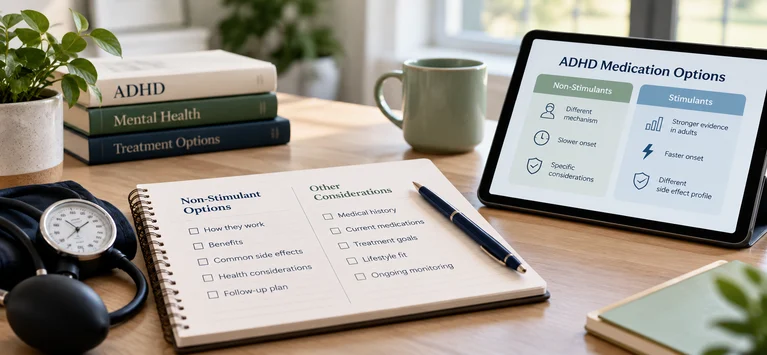

Virtual Telepsychiatry
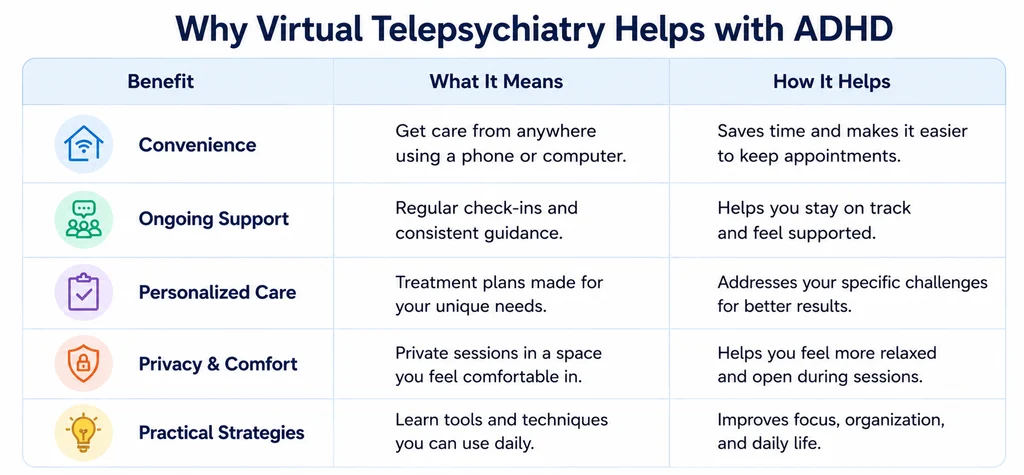
Are you looking for a convenient way to receive ADHD care without traveling to a clinic? Online ADHD treatment through virtual telepsychiatry allows you to discuss concerns about focus, impulsive behavior, time management, and daily responsibilities through secure video visits. Depending on your needs, care may include an evaluation, personalized treatment planning, medication management when appropriate, and ongoing follow-up support.
Finding time for ADHD care can be difficult when work, studies, family, or other responsibilities fill your day. At MindVita, you can meet with a provider through secure virtual appointments and discuss the challenges affecting your daily life. Schedule a consultation today to explore available care options and learn whether virtual ADHD treatment may be appropriate for your needs.
How Does Online ADHD Treatment Work Through Virtual Telepsychiatry?
Online ADHD treatment through virtual telepsychiatry works through scheduled video appointments with a mental health provider. During visits, you can discuss your symptoms, recent changes, treatment response, and concerns that arise. Regular follow-up appointments allow your provider to review progress, answer questions, and discuss whether any changes to your care plan may be appropriate based on your current needs.
According to research published in BMJ Mental Health [1], ongoing telepsychiatry care was associated with greater improvement in ADHD symptoms than usual care supplemented by a single telemedicine consultation. These findings suggest that continued specialist involvement through telepsychiatry may offer advantages over a one-time consultation alone, particularly when ADHD care requires regular review and ongoing clinical support.
What Services Can You Receive Through Telehealth ADHD Treatment?
Telehealth ADHD treatment may include an evaluation, personalized treatment planning, medication management when appropriate, counseling, and regular follow-up care. The services included in your plan depend on your symptoms, history, current concerns, and treatment needs. After learning about the challenges affecting your daily life, your provider can discuss suitable options and explain what each part of care may involve.
Your treatment may include one or more of the following:
- ADHD Evaluation: A detailed assessment looks at your symptoms, personal history, and daily experiences to build a clearer picture of your situation.
- Personal Treatment Planning: A plan is created around your main challenges, personal goals, and the areas of daily life that need attention.
- Medication Management: When appropriate, medication options can be discussed and monitored to see how well they are working for you.
- ADHD Counseling Online: Counseling can help you work through stress, emotional difficulties, relationship problems, and other concerns connected with living with ADHD.
- Regular Follow-Up Visits: These appointments provide time to talk about progress, ask questions, and make changes to your treatment when necessary.
The services included in your care may change as your needs develop over time. Regular appointments give you opportunities to discuss new concerns, review your response to treatment, and ask questions about next steps. This ongoing process allows your provider to consider current information when discussing whether your treatment plan should remain the same or be adjusted.
Can Virtual ADHD Therapy Help You Manage Symptoms in Daily Life?
Yes, virtual ADHD therapy can help you develop practical strategies for challenges that affect everyday life. Sessions may focus on planning tasks, managing time, reducing distractions, and improving follow-through. Therapy can also help you recognize patterns that make certain situations more difficult and practice strategies that better fit your responsibilities, environment, personal goals, and the challenges you currently experience each day.
A meta-analysis published in Frontiers in Psychology [2] reviewed six clinical trials involving 261 people with ADHD. The researchers found that online interventions improved attention problems and social functioning compared with waiting-list groups. These findings suggest that structured online support may help people manage some ADHD-related difficulties and improve important areas of daily life.
What Types of Online ADHD Support Can Be Part of Your Treatment Plan?
Online ADHD support can include skills-based sessions, counseling, peer support groups, and education about managing symptoms. Each option serves a different purpose. Some approaches focus on practical routines and emotional concerns, while others provide useful information or shared experiences. The right combination depends on your individual challenges, treatment goals, personal circumstances, and the type of guidance you currently need most.
Skills-Based Support
Skills-based sessions can help you create simple ways to plan your day, organize tasks, remember important work, and reduce distractions. You can practice these methods and adjust them when they do not fit your routine.
ADHD Counseling Online
ADHD counseling online gives you space to talk about stress, frustration, low confidence, or relationship difficulties. It can help you understand emotional patterns and find healthier ways to handle difficult situations in everyday life.
Online ADHD Support Groups
Online ADHD support groups allow you to connect with others who may understand similar struggles. Sharing experiences can reduce feelings of isolation and provide encouragement, although peer groups do not replace professional mental health care.
ADHD Education and Self-Management Guidance
Learning more about ADHD can help you understand why certain tasks feel difficult. With clear guidance, you can recognize personal patterns, set realistic goals, and make informed choices about managing challenges in daily life.
According to the Attention Deficit Disorder Association (ADDA) [3], peer groups may help adults with ADHD share practical ideas, discuss common experiences, and stay accountable to personal goals. This type of community-based involvement can offer encouragement outside clinical appointments. However, peer participation serves a different purpose from individualized assessment, therapy, medication management, or other professional mental health services.
Start Online ADHD Treatment With MindVita Today
Seeking ADHD care can feel difficult when appointments compete with work, studies, family responsibilities, or other demands. Travel time and repeated clinic visits may create additional barriers to continuing treatment. Virtual appointments offer another way to stay connected with a provider while reducing some practical difficulties and allowing you to discuss concerns, review progress, and receive ongoing professional care more conveniently.
At MindVita, our providers take time to understand your symptoms, history, and the challenges affecting your daily life. Through secure virtual appointments, you can complete an evaluation and discuss treatment options based on your individual needs. When appropriate, care may include medication management and ongoing follow-up. Contact us today to schedule a consultation and discuss your next steps.
FAQs
Can Online ADHD Treatment Include Medication Management?
Yes, medication management can be part of virtual ADHD care when it is suitable for your needs. During follow-up visits, you can talk about how you feel and share any concerns. Your provider will check your progress and may adjust the treatment plan based on how you respond.
How Is Virtual ADHD Therapy Different From Online ADHD Support Groups?
Virtual ADHD therapy gives you one-on-one care with a trained mental health professional. It focuses on your personal challenges and practical ways to manage them. In contrast, online ADHD support groups let you connect with people who share similar experiences. They can offer encouragement and connection but do not replace professional care.
Can Online ADHD Treatment Help If You Have Never Been Evaluated Before?
Yes, virtual care can help if you have never had an ADHD evaluation before. Your provider will ask about your symptoms, daily challenges, and personal history. They may also explore how long these concerns have affected you. Based on the evaluation, they can discuss suitable next steps and care options.
What If I Get Distracted or Lose Focus During My Online ADHD Appointment?
If you lose focus during your appointment, tell your provider and ask them to repeat anything you missed. You can also keep your questions written nearby to help you stay on track. Your provider can slow down the conversation, check your understanding, and help you discuss each concern at a comfortable pace.
Do I Need Someone Else to Join My Virtual ADHD Evaluation?
No, you do not always need someone else to join your virtual ADHD evaluation. However, your provider may sometimes ask to speak with a parent, partner, or trusted person. They may share helpful details about your behavior or daily challenges. This information can help your provider understand your concerns more clearly.
References
- Rockhill, C. M. (2015). Telepsychiatry intervention is better for ADHD symptoms than usual treatment augmented by telemedicine consultation. Evidence-Based Mental Health, 18(4), e9.
- Shou, S., Xiu, S., Li, Y., Zhang, N., Yu, J., Ding, J., & Wang, J. (2022). Efficacy of online intervention for ADHD: A meta-analysis and systematic review. Frontiers in Psychology, 13, 854810.
- Attention Deficit Disorder Association. (2025, July 21). How ADHD support groups help adults thrive.