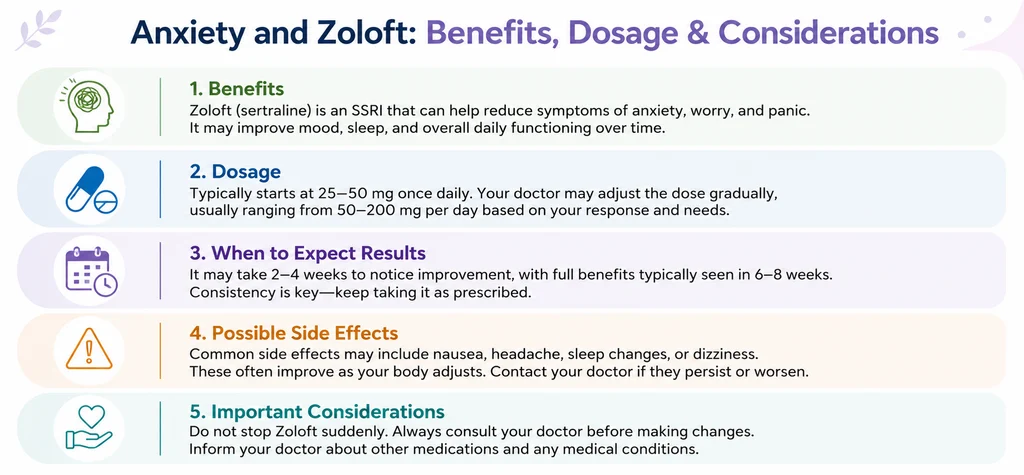
Wondering whether Zoloft might help with your anxiety symptoms? Zoloft works by affecting serotonin levels in the brain, which may help reduce excessive worry, panic symptoms, and ongoing anxiety over time when taken as prescribed. With regular use, you may notice better mood control, improved sleep, and reduced anxiety episodes. However, results vary from person to person, and proper medical supervision is important for safe and effective treatment outcomes.
If you are struggling with anxiety, you are not alone in this experience. Many people deal with constant fear and stress that affect daily life. With the right medical guidance, you may feel calmer, sleep better, and manage emotions in a better way. MindVita guides you at every step of your care journey. You get safe medication support, regular follow-ups, and therapy guidance to manage symptoms better. Schedule a consultation today and connect with licensed professionals who help you move toward better mental health and lasting emotional balance.
What Is Zoloft for Anxiety and How Does It Work?
Zoloft (sertraline) is a prescription medication commonly used to treat anxiety disorders. It belongs to a group of antidepressants known as selective serotonin reuptake inhibitors (SSRIs). Healthcare providers may prescribe it for conditions such as panic disorder, social anxiety disorder, and other anxiety-related conditions. The medication is often used as part of a long-term treatment plan to help manage symptoms and improve daily functioning.
According to HelpGuide.org [1], Zoloft (sertraline) belongs to a class of medications known as selective serotonin reuptake inhibitors (SSRIs), which work by affecting serotonin levels in the brain. Serotonin plays an important role in mood regulation and emotional well-being. As serotonin activity becomes more balanced, many people experience improvements in anxiety symptoms over time. Because Zoloft works gradually, consistent use and regular follow-up with a healthcare provider are important parts of treatment.
What Are the Benefits of Zoloft for Anxiety?
Many people take Zoloft for anxiety because it may help reduce symptoms that interfere with daily life. As treatment progresses, some people notice less excessive worry, fewer panic symptoms, and improved emotional stability. Zoloft may also help improve sleep quality, concentration, and the ability to manage stressful situations more effectively. Because the medication works gradually, these improvements often develop over several weeks rather than immediately after starting treatment.
When anxiety becomes easier to manage, everyday responsibilities may feel less difficult. Many people find it easier to focus at work or school, participate in social situations, and maintain a more consistent daily routine. While results vary from person to person, regular use and ongoing follow-up with a psychiatric provider can help support symptom improvement and better functioning over time.
What Is the Recommended Dosage of Zoloft for Anxiety?
Psychiatric providers usually decide the recommended dosage of Zoloft for anxiety based on your symptoms, age, and health condition. Treatment often starts with a low dose to reduce side effects and help your body adjust slowly. Over time, your psychiatric provider may increase the dose if needed. This careful approach supports safe anxiety control and better emotional balance during treatment.
Common Zoloft Dosage Guidelines for Anxiety
- The starting dose is usually 25 mg to 50 mg daily.
- Psychiatric providers may slowly increase the dose based on response.
- Typical maintenance dose ranges from 50 mg to 200 mg daily.
- You should take it at the same time every day.
- Never change or stop the dose without medical advice.
Proper dosage control is very important for safe and effective results. When you follow your psychiatric provider’s plan, Zoloft for anxiety works better, and side effects stay manageable. Regular check-ups help adjust treatment when needed. This steady approach improves mood, reduces anxiety symptoms, and supports long-term mental health stability and daily functioning.
Can Zoloft and Tylenol or Cold Medicine Be Taken Together?
Yes, sertraline can often be used with acetaminophen (Tylenol) when taken as directed. However, some over-the-counter cold and flu products contain ingredients that may interact with sertraline or increase the risk of side effects. Because formulations vary, it is important to review medication labels carefully and speak with a healthcare provider before combining treatments.
According to Medical News Today [2], sertraline may interact with certain over-the-counter cold and flu products, particularly those containing ingredients such as dextromethorphan. These combinations may increase the risk of side effects or serotonin-related complications. For this reason, it is important to discuss any cold, flu, or pain medications with your healthcare provider before combining them with sertraline.
Why Should You Avoid Zoloft and Alcohol During Anxiety Treatment?
You should avoid Zoloft and alcohol during anxiety treatment because alcohol can reduce the medicine’s benefits and increase side effects. It may worsen anxiety, affect mood stability, and disturb sleep. It can also make you feel more dizzy, tired, and less focused. This combination may slow your recovery and affect overall mental health progress over time.
Increased Drowsiness and Poor Focus
Alcohol with Zoloft for anxiety can increase sleepiness, dizziness, and poor concentration. As a result, you may feel less alert during daily tasks, work, or driving. This combination affects brain function and slows reaction time, making routine activities harder and less safe.
Worsening of Anxiety Symptoms
Alcohol may give short relief, but it often increases anxiety later. When combined with Zoloft and alcohol, mood swings can become stronger. This may reduce treatment progress and make emotional control more difficult, especially during stressful situations or recovery phases.
Reduced Effectiveness of Treatment
Alcohol can interfere with how Zoloft for anxiety works in the brain. It may reduce serotonin balance and slow improvement in symptoms. This means recovery may take longer, and medication may not deliver full benefits when alcohol is used regularly.
Higher Risk of Side Effects
Combining alcohol with Zoloft may increase nausea, headaches, and dizziness. It can also affect sleep quality and emotional stability. These side effects can feel stronger and may disturb your daily routine, making anxiety management more difficult and less predictable over time.
According to the National Center for Biotechnology Information (NCBI) [3], people taking sertraline are generally advised to avoid alcohol because it can interfere with how the medication works and may increase unwanted side effects. Avoiding alcohol while taking sertraline can help support a more consistent treatment experience and reduce the likelihood of medication-related complications.

Start Managing Anxiety with MindVita’s Online Psychiatry Services Today
You may feel stressed when anxiety affects your daily life. Simple tasks may feel hard, and constant worry can disturb your sleep, focus, and confidence. You might also feel unsure about the right treatment or afraid to seek help. These struggles can make you feel stuck, stressed, and emotionally drained every day.
At MindVita, you can connect with licensed professionals through online psychiatry from home. We guide you with safe treatment plans, medication support like Zoloft for anxiety, and regular follow-ups. As a result, you get clear direction, consistent care, and better control over your anxiety in a simple and supportive way. Contact us today to get expert help and start your recovery. We are here to guide you with safe and simple anxiety treatment support.
FAQS
How long does Zoloft for anxiety take to work?
Some people notice early improvements within 1–2 weeks, but full benefits often take 4–8 weeks or longer. Because Zoloft works gradually, symptom improvement usually occurs over several weeks rather than days. Taking your medicine regularly and following your psychiatric provider’s advice can help improve your mood, reduce stress, and support better daily life over time.
Can I stop taking Zoloft suddenly?
No, you should not stop taking Zoloft for anxiety suddenly without medical advice. Stopping medication too quickly may cause dizziness, mood changes, headaches, sleep problems, or anxiety symptoms. Instead, psychiatric providers usually lower the dose slowly and safely. Regular follow-ups and proper guidance help your body adjust better and support safer anxiety treatment recovery.
Is Zoloft effective for panic attacks?
Yes, Zoloft for anxiety can help reduce panic attacks over time. It increases serotonin in the brain, which supports calm thinking and emotional balance. As your body adjusts, panic symptoms become less intense and less frequent. Regular use, psychiatric guidance, and consistent treatment improve stability and support better long-term mental health outcomes.
Can online psychiatry help manage anxiety treatment?
Yes, online psychiatry can help manage anxiety treatment by providing easy access to licensed psychiatric providers. You get medication guidance, therapy support, and regular follow-ups. As care continues, your anxiety improves. It also helps you stay consistent, supported, and guided for better mental health recovery.
Can Zoloft and cold medicine interact?
Yes, Zoloft and cold medicine can sometimes interact. Some cold medicines may increase drowsiness, dizziness, or other side effects when taken with Zoloft. Before using any cold or flu medication, check the label carefully and speak with a psychiatric provider to make sure it is safe to use with your treatment plan.