

Why do you feel restless and struggle to sleep at night? Restlessness can make it hard for you to relax, fall asleep, or stay asleep. You may also notice racing thoughts, constant movement, or trouble focusing during the day. Stress, anxiety, ADHD, medical conditions, and poor sleep habits can all contribute to these symptoms.
If restlessness keeps affecting your sleep or daily life, do not ignore it. At MindVita, our psychiatric providers identify the underlying cause and create a treatment plan that fits your needs. With compassionate virtual care, you can sleep better, feel calmer, and improve your mental health. Schedule a consultation today to get the support you need for better sleep and lasting health.
Why Do You Feel Restless, Especially at Night?
You may feel more restless at night because your mind and body have fewer distractions. As a result, stress, anxiety, and racing thoughts become more noticeable. Poor sleep habits, caffeine, and some medical conditions can also make symptoms worse. These factors can make it harder to relax and fall asleep.
According to a review published in the Journal of Sleep Research [1], stress and hyperarousal can keep your brain active at night. As a result, you may feel more restless when you try to sleep. This can make it harder to fall asleep and stay asleep. Treating the cause can improve sleep quality over time.
How Can You Recognize the Symptoms of Restlessness?
You can recognize restlessness by noticing changes in how you feel, think, and act. You may find it hard to relax or stay still. Falling asleep may also become difficult. During the day, you may struggle to focus or complete everyday tasks. These symptoms can affect your daily routine. Recognizing them early can help you seek the right support.
Common signs of restlessness may include:
- Feeling unable to sit still: You may keep moving, fidgeting, or changing positions without feeling comfortable.
- Racing thoughts: Your mind may stay busy. As a result, it becomes difficult to relax or fall asleep.
- Difficulty concentrating: You may lose focus easily. Simple tasks may also feel harder to complete.
- Trouble falling or staying asleep: You may stay awake for a long time. You may also wake up often during the night.
- Feeling irritable or tense: Small problems may upset you more than usual. You may also feel constantly on edge.
If these symptoms happen often, do not ignore them. They may point to an underlying mental or physical condition. Early evaluation can help identify the cause. It also supports the right treatment plan. With proper care, you can improve your sleep, reduce restlessness, and feel better each day.
What Causes Restlessness and Poor Sleep?
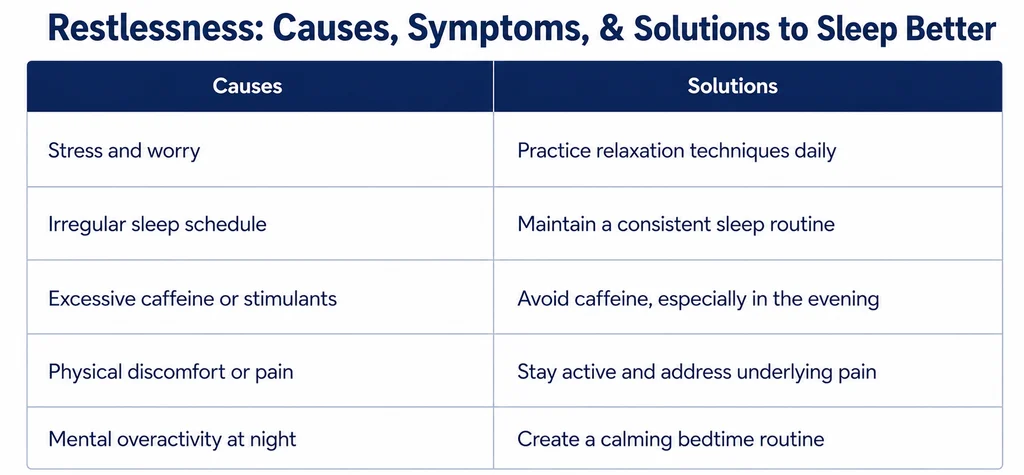
Restlessness and poor sleep can have many causes. Stress and anxiety are common triggers. ADHD, depression, and certain medical conditions may also play a role. Nicotine, some medications, and poor sleep habits can make symptoms worse. Finding the underlying cause is important because it helps guide the most effective treatment.
According to Healthline [2], stress and anxiety can cause restlessness and poor sleep. Caffeine, alcohol, and some medications may also trigger symptoms. Poor sleep habits can make them worse. Medical conditions may also play a role. Identifying these triggers can help improve sleep quality over time.
What Are the Best Ways to Reduce Restlessness and Sleep Better?
You can reduce restlessness by making small changes to your daily routine. Try to follow a regular sleep schedule. Relax your mind before sleeping and stay physically active during the day. These healthy habits can help your body relax, improve sleep quality, and reduce restless feelings over time.
Follow a Consistent Sleep Schedule
Go to bed and wake up at the same time every day. A regular routine helps your body’s internal clock work better. As a result, you may fall asleep more easily and enjoy deeper, more restful sleep.
Create a Relaxing Bedtime Routine
Spend time doing calming activities before bed. Read a book, listen to soft music, or practice deep breathing. Avoid using electronic devices. These simple habits can help your mind and body prepare for sleep.
Limit Caffeine and Alcohol
Caffeine and alcohol can affect your sleep quality. They may keep your body alert or interrupt your sleep during the night. Therefore, limit these drinks, especially during the evening, to support better rest.
Stay Physically Active
Regular exercise can reduce stress and improve sleep. Walking, stretching, or other light activities may help you feel calmer. However, avoid intense exercise close to bedtime because it may make falling asleep m[3] foundlt.
Manage Stress Every Day
Stress can increase restlessness and make sleep harder. Practice mindfulness, meditation, or gentle breathing exercises each day. These techniques can help calm your thoughts and support a more peaceful night’s sleep.
Research shows that healthy sleep habits can improve sleep quality. A review published in Sleep Medicine Reviews [3], found that keeping a regular sleep schedule supports better sleep. It also recommends a relaxing bedtime routine and a comfortable bedroom. Regular physical activity may also improve sleep. As a result, these habits may help reduce nighttime restlessness over time.
When Should You See a Psychiatric Provider for Restlessness?
You should see a psychiatric provider if restlessness does not improve after a few weeks. Get help if it affects your sleep, work, or daily life. You should also seek care if you feel anxious, have mood changes, or find it hard to concentrate. Early treatment can help you feel better sooner.
Research shows that ongoing sleep problems should not be ignored. The European Insomnia Guideline [4], published in the Journal of Sleep Research, recommends seeking professional help when sleep problems continue. An early assessment can identify the underlying cause. It can also guide the right treatment. As a result, early care may improve sleep and mental health.
Take the First Step Toward Better Sleep with MindVita
If restlessness keeps you awake, it can affect every part of your life. You may wake up feeling tired, struggle to focus, or feel more stressed during the day. Over time, poor sleep can impact your mood, work, and relationships. You do not have to face these challenges alone.
At MindVita, our psychiatric providers work to understand the cause of your restlessness. They create a personalized treatment plan based on your symptoms and needs. With compassionate virtual care, you can improve your sleep. Our psychiatric providers offer ongoing support at every step. They help you manage your symptoms and improve your mental health. Contact us today to learn how we can help you sleep better and feel your best.
FAQs
Why do I feel restless even when I am tired?
You may feel restless even when you are tired because your mind or body stays active. Stress, anxiety, ADHD, poor sleep, or certain medical conditions can all play a role. As a result, you may struggle to relax even when you need rest. A professional evaluation can help identify the cause.
Can ADHD cause restlessness at night?
Yes, ADHD can cause restlessness at night. You may find it hard to relax or quiet your mind. Racing thoughts and extra energy can delay sleep. As a result, you may stay awake longer. A proper evaluation can help identify the cause and improve sleep.
How long does restlessness usually last?
The duration of restlessness depends on its cause. It may last for a few hours during stressful situations or continue for weeks if linked to a mental health condition. If your symptoms do not improve or begin affecting daily life, seek a professional evaluation.
Can dehydration cause restlessness?
Yes, dehydration can affect how your body and brain work. It may cause tiredness, irritability, and difficulty relaxing. In some people, it can also disturb sleep. Drinking enough water throughout the day may help support better sleep and health.
Can therapy help reduce restlessness?
Yes, therapy can help reduce restlessness. It helps you understand what triggers your symptoms. You also learn healthy ways to manage stress and worry. These skills can improve your sleep. If your symptoms continue, psychiatric providers can create a treatment plan based on your needs.
References
- Dressle, R., & Riemann, D. (2023). Hyperarousal in insomnia. Journal of Sleep Research.
- Healthline. (n.d.). Tossing and turning: Causes and how to sleep better.
- Irish, L. A., Kline, C. E., Gunn, H. E., Buysse, D. J., & Hall, M. H. (2015). The role of sleep hygiene in promoting public health: A review of empirical evidence. Sleep Medicine Reviews, 22, 23–36.
- Riemann, D., Espie, C. A., Altena, E., Arnardottir, E. S., Baglioni, C., Bassetti, C. L. A., et al. (2023). The European insomnia guideline: An update on the diagnosis and treatment of insomnia 2023. Journal of Sleep Research, 32(6), e14035.