

An economic downturn does not necessarily affect people only financially but also influences their psychological state and well being. However, different levels of economic decline, recession vs depression in terms of finance, result in varying levels of negative outcomes on people’s mental health. Thus, it is critical to recognize these concepts, their distinctions and impacts on people’s psychological well being. This article discusses how to maintain mental health in relation to recession and depression economics definition.
This essay defines recession vs depression using relatable language and connects these economic concepts to emotional well being, stress and coping skills. This text uses authentic data, examples and academic literature to provide useful recommendations and valuable information. In general, the aim of this essay is to give readers practical information and advice.
Understanding recession versus depression helps individuals manage stress, uncertainty, and emotional health. Through awareness, coping strategies, and online psychiatry support, people can maintain mental well being during challenging economic periods.
Defining Recession vs Depression: Meaning and Implications
Criteria of Economic Recession
Economic recession is a broad decline in economic activity which typically lasts several months. Main indicators of recession include:
- Two consecutive quarters of GDP decline
- Increased unemployment
- Reduced spending on purchases and investments
Every country has its national institutions responsible for declaring recession (e.g., National Bureau of Economic Research (NBER) in the USA). Official indicators include employment, industrial production, income and expenditures.
During the 2008 economic downturn across the globe, the housing market declined, companies dismissed their employees and consumers decreased spending.
Understanding what constitutes a recession helps you separate normal economic bumps from deeper trouble. What constitutes a recession is not just one bad month of sales or a brief stock‑market dip. It is a broader, longer‑lasting slowdown in activity that affects jobs, income, spending and business investment at the same time. When you hear experts argue about whether the economy is “in a recession,” they are really debating what constitutes a recession according to official data and agreed‑upon signals. This clarity can ease your anxiety, because it reminds you that not every headline of bad news means a full‑blown crisis for your household.
The Meaning of Economic Depression
Depression is a more severe and extended type of economic depression crisis characterized by:
- Sudden fall of GDP (by more than 10%)
- High, prolonged unemployment
- Numerous business bankruptcies
- Systemic failure of monetary sector
The Great economic depression of the 1930s in the United States was characterized by GDP contraction by 27.1% and 24.9% unemployment.
When comparing recession vs depression on an emotional scale, the former resembles flu, which is unpleasant but temporary, while the latter resembles serious illness causing significant change in people’s lives.
Historical Examples of US Recessions
Among the latest US recessions are:
1980–1982 (2 years, -2.8% of GDP growth)
1990-1991 (8 months, -1.1% of GDP growth)
2001 (-0.3% of GDP growth)
2008-2009 (19 months, -4.6% of GDP growth)
During the last episode of the US recession, foreclosures increased, unemployment soared to 10% and many families lost their retirement savings. Therefore, recession vs depression does not merely affect the economy but influences people’s everyday experience.
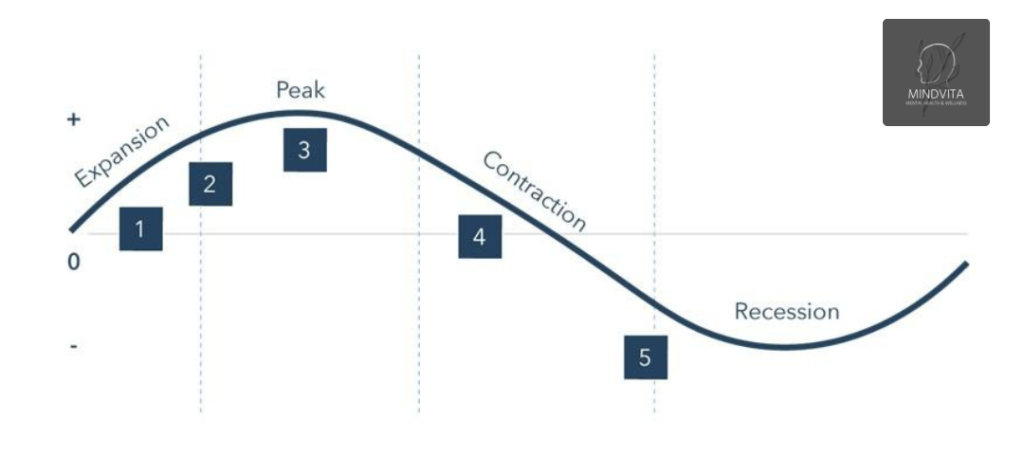
Negative Effects on Mental Health During Recession/Depression
Risk of Mental Issues During Economic Downturns
According to scientific research, people in recession become prone to various emotional issues, including stress and depression. Being fired from work, facing income reduction, experiencing financial issues, having debts, or becoming homeless can lead to the development of clinical disorders.
As a consequence of the economic crisis in 2008, the number of diagnosed cases of depression and anxiety increased, there were more suicides worldwide and people struggling financially started to consume alcohol excessively.
Therefore, recession vs depression negatively impacts the mental well being of millions of individuals.
Impact of Long term Downturns on Mental Health
Just as recession, depression economics definition can cause long lasting problems related to people’s psychology. For instance, in European countries suffering from recession between 2008 to 2010, there were additional cases of depression (19.5%), anxiety disorders (8.3%) and patients being hospitalized for mental health issues.
When recovery begins, people’s psychology can be marked by pessimism and caution.
Vulnerable Populations Experiencing Financial Difficulties and Their Characteristics
Some categories of people suffer more from economic downturns and are more sensitive to the mentioned psychological risks, such as:
People with poor financial background and job instability
Workers in gig economy and other vulnerable sectors
Patients with psychiatric disorders
Young adults and single parents
During recession vs depression periods, the edge of people’s protection decreases, thus leading to greater emotional strain.
Warning Signals of Emotional Problems Connected to Downturns
Common Warning Signals Related to Stress and Financial Worries
When there are financial difficulties, it can be expressed via behavioral characteristics:
- Racing thoughts when receiving invoices
- Insomnia associated with fear for job security
- Irritability due to worries discussed with relatives
These symptoms show stress caused by challenging life circumstances.
Symptoms of Depression Associated with Financial Struggle
In case of clinical depression, symptoms appear regularly for at least two weeks and influence the quality of interpersonal communication or professional work. Among them are:
Sadness and emptiness
Feelings of exhaustion
Lack of concentration
No interest in activities people previously enjoyed
Job loss, firing from the company, or ongoing depression related issues can exacerbate these symptoms.
Changes in Behavior and Their Interpretation
People’s behavior during recession vs depression can serve as an indicator of problems related to mental state. They can include excessive drinking or drug consumption, withdrawal from social relations and deterioration in appearance.
All these actions are not manifestations of poor character but coping mechanisms that require attention.
Recommendations for Maintaining Mental Well being While Facing Tough Financial Period
Taking Control of the Situation
During downturns, one can lose the feeling of being in control. However, there are simple practices to manage emotions.
Specific Tips for Coping with Downturns Emotionally
- Take stock of financial situation and reduce expenses
- Develop a budget and stick to it
- Automate savings or payments to reduce unnecessary decisions.
These actions can help one survive financially, similarly to patching up holes in a boat.
Developing Routine Focused on Predictability
During recession vs depression, it is essential to have some sort of routine to maintain people’s emotional balance.
Specific Recommendations to Develop Stable Schedule
- Sleep regularly and avoid oversleeping
- Eat meals at certain hours
- Make time for physical activity, even if it is 10 minutes per day.
Research proves that people need predictability and structure to feel more comfortable emotionally.
Managing Financial Rumination and Overthinking
Doubts about one’s ability to earn enough money is exhausting and causes increased stress.
Recommendations to Avoid Worrying
– Have a specific moment to think about bills and expenses for 15 to 20 minutes per day.
– Write down the issues and possible solutions; close the notebook afterward.
– Limit reading scary articles; get news once or twice per day from trusted sources.
Recession vs depression requires taking care of one’s own psychological well being and not getting overly stressed.
Using Mindfulness and Deep Breathing Techniques
Breathing exercises can relieve anxiety.
Specific Tools for Managing Anxiety via Breathing
4-7-8 breathing technique: inhale in 4 seconds, hold breath in 7 seconds and exhale in 8 seconds.
5-4-3-2-1 grounding method: list five items you see, four you can touch, three you can hear, two you smell and one you taste.
These techniques engage one’s parasympathetic nervous system, especially when thinking about job loss or economic downturn.
Coping with Isolation and Establishing Relationships
Why Relationships Are Critical During Economic Downturns
People with strong social connections have lower chances to develop depression and anxiety during recessions or depression economics definition .
Thus, during recession vs depression, people are encouraged to share their worries.
Suggestions for Conversing About Finances Calmly
“I am concerned about our budgeting. Can we handle this together?”
“Let’s discuss what can be reduced and saved.”
One needs to perceive budgeting as teamwork instead of confrontation and stress.
Guidelines for Discussing Money Problems With Children and Teenagers
It is crucial to explain everything honestly without causing too much fear in children.
Specific Advice for Speaking to Children and Teens About Money Difficulties
“Sometimes money can be difficult for us, which means some restrictions in everyday life.”
“We are trying to work out how to deal with this problem; however, we can enjoy ourselves.”
It is important to give simple explanations and follow a stable routine.
Managing Work and Career During Recession/Depression: Strategies
Impacts of Unemployment on People’s Well being and Identity
Unemployment and losing one’s career can significantly affect one’s self-esteem and sense of identity. A recession is no one’s fault; however, psychological issues can arise despite economic circumstances.
Impact of Ongoing Work on Employees’ Psychological State
Being fired is traumatic; however, those employees who have a job can also experience additional stresses, including burnout. Main symptoms include:
- Fatigue that cannot be alleviated even by resting
- Cynicism regarding work and colleagues
- Decreased productivity
One should identify signs of depression and take measures immediately.
Ways of Increasing People’s Psychological Resistance to Adversities
Increasing psychological resilience does not imply staying tough in every stressful situation.
Main Recommendations for Building Resistance
– Concentrate on what you can change (develop new skills and job search).
– Treat yourself kindly: “This situation is complicated, but I am doing my best.
– Give yourself a pat on the shoulder daily (application, learned new skills).
Psychological resilience can be developed during recession vs depression period.
Indications That Seeking Professional Help Might Be Necessary
Key Indicators of Psychological Issues Requiring Treatment
One does not need to wait until the very end to begin working with therapists. Some warning signs are:
- Unable to get out of bed or perform daily activities
- Persistent tears or despair
- Avoiding social interactions, hobbies, or work
- Suicidal thoughts.
If you experience these issues, contact a mental health specialist.
Professional Help: Therapy Methods and Online Options
Types of Therapy Today
Currently, there are multiple options available: face to face visits, video sessions, text consultations. Numerous studies prove that cognitive behavioral therapy and others are efficient in helping people with financial related anxiety and depression. During recession vs depression, people still can find professional assistance.
Mindvita: Resources for Managing Stress
Resources and Opportunities Provided by the Website
There are many exercises and tips offered to manage anxiety related to recession. Additionally, Mindvita gives information about how to cope with financial struggles emotionally.
During recession vs depression, one’s psychological well being is essential. Therefore, using tools provided by Mindvita would be beneficial.
Protecting One’s Well being On the Societal Level and Governmental Policies
Governmental Safety Nets for Supporting People’s Psychological Well being During Economic Crisis
Social services can significantly reduce psychological effects of economic downturns. In the countries where there are adequate unemployment benefits, health care services and housing policies, depression and anxiety are less pronounced among people experiencing financial struggles.
If people do not fear homelessness or lack of care, there will be fewer cases of depression and anxiety.
Programs Within Communities and Companies
Organizations also help their employees during recession by providing employee assistance programs, flexible work arrangements and training regarding mental well being. Community programs include support groups, sharing skills and resources.
Recession vs depression becomes more manageable when one feels protected by the society.
Practical Checklist for Every Day
5 Practical Steps Per Day to Stay Mentally Healthy in Hard Times
Use this daily checklist:
- Physical activity (10 to 20 minutes)
- Practice breathing or grounding exercises
- Contact at least one person
- Limit news about economic issues to one short session
- Appreciate one success of the day.
These actions can be helpful when dealing with recession vs depression.
Developing Your Own Plan for Hard Times
Consider the following questions:
– What can you afford to cut from your budget next week?
– Whom can you contact to discuss your problems?
– What will you do the next day to get better employment?
Creating a plan will assist people to manage financial struggle more easily.
Frequently Asked Questions About Recession vs Depression
How do I differentiate between typical worries and developing depression during economic decline?
If symptoms persist for more than 2 weeks daily, significantly interfering with work and relationships, this can be considered depression. Sadness, lack of energy and hopelessness are common characteristics. However, if you cannot overcome these symptoms, it is important to consult a professional.
What if I have been fired from work and cannot cope with the situation?
Do not neglect your mental well-being first. Communicate with your relatives, friends, or communities that can assist. Then come up with a strategy: write a new resume, define daily goals for job search, apply to unemployment or social services.
Financial downturns are extremely difficult and most people can recover soon.
How do I speak to children about financial hardships without frightening them?
Speak calmly and simply: “We need to be more economical now.” Explain the reason briefly, avoid providing too many details and stick to a stable routine for children.
How should I cope with excessive drinking or drug abuse?
Recognize it as your coping mechanism. Identify the reasons why you are doing so and consider contacting a doctor or a therapist.
When do I need to consult a specialist?
If you feel hopeless most of the day, cannot concentrate or sleep, or have suicidal thoughts, it is time to consult a specialist.
What exactly does “what constitutes a recession” mean in plain terms?
It means the official signs that show when an economy is in a broad, lasting downturn, such as months of shrinking output, rising unemployment and weaker spending. Knowing what constitutes a recession helps you see if the problem is mostly the economy or your personal situation.
This content is for educational purposes only and not medical advice. Always consult a doctor.