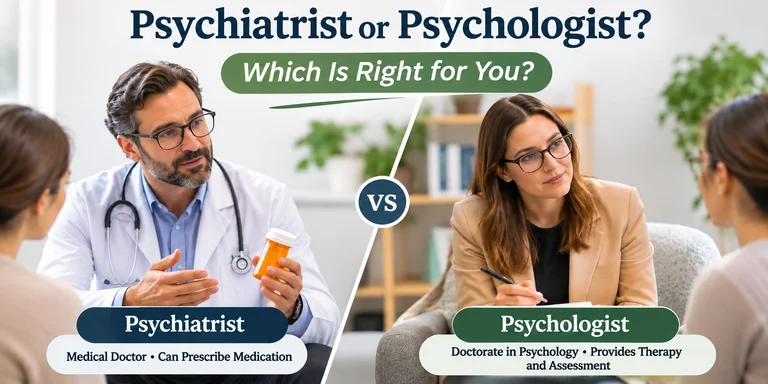

Are you wondering whether to see your primary care doctor or a psychiatrist for depression treatment? Many people are not sure where to start, and that is completely normal. Some people feel better with care from their primary care doctor, while others need more specialized support. Knowing the difference can help you find the care that best fits your needs.
You do not have to face depression on your own. At MindVita, we are here to listen, answer your questions, and help you find the care that is right for you. Our experienced psychiatric providers offer personalized online support in a safe and comfortable setting. Schedule a consultation today and start your journey toward better mental health.
Should You Start Depression Treatment With Your Primary Care Doctor?
Yes, many people start depression treatment with their primary care doctor because it is often the easiest place to get help. Your doctor can talk with you about your symptoms, screen for depression, rule out other health problems, and discuss treatment options. If you need more specialized care, your doctor may refer you to a psychiatric provider or another mental health specialist.
According to a review published in the Singapore Medical Journal [1], many people with mild to moderate depression can begin treatment with their primary care doctor. Primary care providers can assess symptoms, start treatment, monitor progress, and refer patients to a psychiatric provider when more specialized care is needed.
What Is the Difference Between Primary Care and Specialty Depression Care?
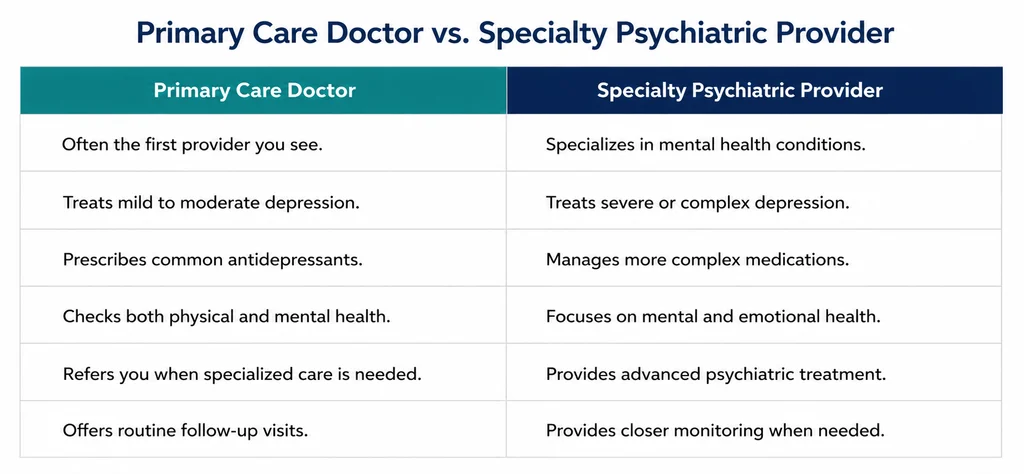
The main difference between primary care and specialty depression care is the type of support you receive. A primary care doctor can diagnose depression, start treatment, and manage mild to moderate symptoms. A mental health specialist has advanced training to treat more severe, long-lasting, or complex depression and can provide a wider range of treatment options.
Primary care is often the first place people seek help because it is easy to access and offers ongoing medical care. Specialty care becomes important when symptoms do not improve, return often, or need closer monitoring. In many cases, both providers work together to make sure you receive the right care at the right time.
When Should You See a Psychiatric Provider Instead of a Primary Care Doctor for Depression?
You should see a psychiatric provider if your depression does not improve with treatment, becomes more severe, or starts affecting your daily life. A psychiatric provider has specialized training to diagnose complex mental health conditions and create a treatment plan that fits your needs. They can also provide closer follow-up when extra support is needed.
You may benefit from seeing a psychiatric provider if you:
- Have severe depression that affects your daily life.
- Do not feel better after starting treatment.
- Have anxiety, ADHD, or another mental health condition.
- Experience frequent changes in your mood.
- Have thoughts of self-harm or suicide.
- Need a second opinion about your diagnosis or treatment.
- Need specialized medication management for ongoing depression treatment.
According to a study published in BMC Family Practice [2], primary care doctors often refer people to a psychiatric provider when depression is severe, does not improve with treatment, or involves a higher risk of suicide. Early referral helps people receive more specialized care, closer follow-up, and treatment that better matches their mental health needs.
Which Depression Treatment Option Is Right for You?
The right depression treatment depends on your symptoms, medical history, and how depression affects your daily life. Some people improve with care from a primary care doctor, while others need support from a psychiatric provider. A proper evaluation helps you choose a treatment plan that matches your needs and recovery goals.
Mild Depression
If your symptoms are mild, your provider may recommend healthy lifestyle changes, counseling, or regular follow-up visits. Many people improve with counseling and healthy daily habits, while others benefit from medication when appropriate.
Moderate Depression
Moderate depression often responds well to a combination of medication and therapy. Your provider will review your symptoms, discuss your preferences, and create a treatment plan that supports both your emotional health and daily routine.
Severe or Complex Depression
If depression makes it difficult to work, care for yourself, or maintain relationships, specialized psychiatric care may be the better option. A psychiatric provider can complete a detailed evaluation and discuss treatment options based on your individual needs.
Depression With Other Mental Health Conditions
Depression can occur alongside anxiety, ADHD, bipolar disorder, or other mental health conditions. Treating these conditions together can improve overall outcomes and help you achieve better long-term emotional health.
Ongoing Follow-Up Care
Recovery takes time, and regular follow-up appointments allow your provider to monitor your progress and adjust your treatment when needed. Staying engaged with your care plan can help reduce the risk of symptoms returning.
According to the National Institute for Health and Care Excellence (NICE) [3], the best depression treatment depends on the severity of your symptoms, your personal preferences, and your response to previous treatment. Working with your provider helps you choose a treatment plan that fits your individual needs.
Take the First Step Toward Better Mental Health With MindVita
Depression can affect every part of your life. You may feel tired, lose interest in things you enjoy, or find it hard to focus on everyday tasks. Some days, even getting out of bed can feel difficult. You do not have to keep living with these challenges when caring, professional support is available.
At MindVita, we are here to listen and support you with care that fits your needs. Our experienced psychiatric providers offer online evaluations, medication management, and ongoing support in a safe and private setting. Contact us today and discuss treatment options based on your needs.
FAQs
Can I start depression treatment without seeing a psychiatrist?
Yes, many people begin depression treatment with their primary care doctor. They can evaluate your symptoms, discuss your treatment options, and prescribe medication if needed. If you need more support or your symptoms become more complex, they can refer you to a psychiatric provider for specialized care.
How do I know if my depression is serious enough for specialty care?
If your symptoms make it hard to work, study, care for yourself, or enjoy daily life, it may be time to see a mental health specialist. You should also seek specialty care if your symptoms keep getting worse, return after treatment, or do not improve with the care you are already receiving.
What happens during a depression evaluation?
During a depression evaluation, your provider will ask about your symptoms, mood, medical history, and daily life. They may also ask how long you have felt this way and whether your symptoms affect work, school, or relationships. This helps them understand your needs and recommend the most suitable treatment plan.
Can I switch from primary care to specialty depression treatment later?
Yes, you can change your care at any time if your needs change. Many people start with their family doctor and later see a psychiatric provider if they are not feeling better or need more support. Your doctors can work together to make sure you get the care that is right for you.
Does online depression treatment provide the same level of care?
Yes, for many people online depression treatment allows you to meet with a licensed psychiatric provider, discuss your symptoms, receive medication management if appropriate, and attend follow-up appointments from home. It offers convenient, ongoing care without compromising quality.