

If a person is diagnosed with some medical illnesses, dysthymia and a chronic form of depression is likely to go unnoticed. Having a serious ailment such as heart disease, diabetes or renal failure will make constant sadness and weariness appear as part of it. However many people diagnosed with a specific medical issue also meet all the criteria for dysthymia treatment, a condition that requires a targeted therapy.
This paper explores the way dysthymia treatment is provided for those suffering from any chronic medical diseases. It will provide information about recognizing this condition, its connection to various ailments and disorders and effective therapy methods. The paper demonstrates the importance of providing dysthymia treatment and discusses how it affects both mood regulation and physical wellness of patients.
Dysthymia treatment in patients with chronic medical illness requires integrated care, combining medication, therapy, and lifestyle changes. With growing access to online psychiatry, patients receive continuous, personalized support effectively.
Recognizing dysthymia against the backdrop of chronic illness
The difference between dysthymia and depression among those diagnosed with some medical condition
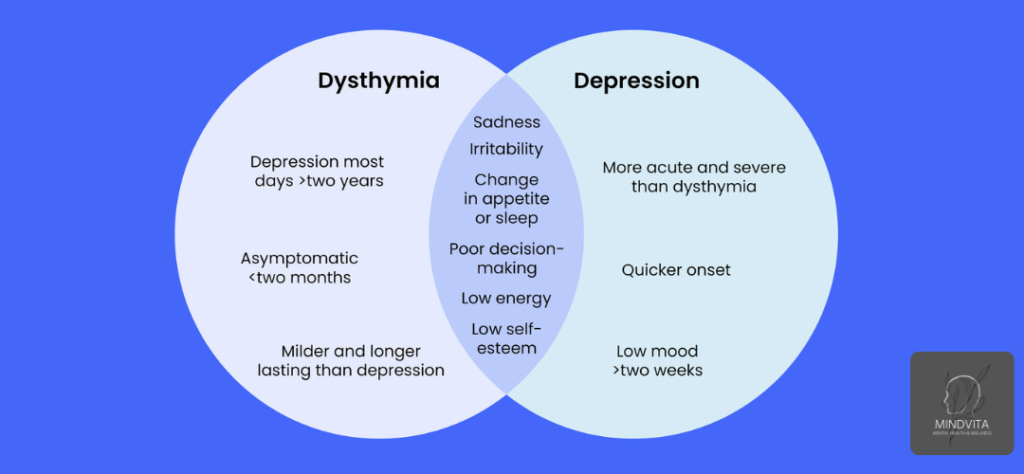
Understanding dysthymia vs depression is crucial to properly address the problem. While dysthymia is less severe but more long lasting major depression features intense episodes that come and go. A person with dysthymia experiences at least two years (one year in case of youth) of persistent low mood that causes considerable impairment or discomfort.
When a patient suffers from any chronic disease it can be difficult to determine whether the symptoms reflect dysthymia vs depression. For example a patient with heart failure might say “I feel blue all the time”. In such cases a dysthymia test or clinical evaluation performed at the office would help determine the condition and guide the development of an appropriate treatment plan.
Symptoms of dysthymia in the context of having some serious illness
In case a person is diagnosed with a chronic illness the signs of dysthymia can be slightly different:
- Constant tiredness and lack of energy can be considered symptoms of the disease
- Loss of interest in various activities can be associated with pain and limitations that patients experience
- Disturbed sleep can be regarded as aging related problem
Therefore a person with diabetes may express their dissatisfaction with mood with the phrase “I’m tired all the time.” With such a simple screening test a physician would be able to distinguish medical fatigue from a low mood.
The significance of treating dysthymia in patients with chronic disease
Untreated dysthymia can worsen the condition of a person because the lack of energy and enthusiasm would lead to a poor compliance to medical treatment plans. Patients may skip taking medicines and doing exercises. Moreover some research studies state that patients suffering from various diseases and dysthymia show higher rates of hospitalization. Dysthymia treatment will help to improve general health and disease control as well.
The role of dysthymia treatment in providing healthcare to those with medical problems
How dysthymia treatment can positively affect overall wellbeing
It should be said that dysthymia treatment in patients with various ailments is very important as it directly affects their health and should be included into any care plan:
- In diabetic patients mood improvement usually corresponds to reduced levels of HbA1c and lower chances of developing any complications
- In case of heart disease, treated mood disorders correspond with a decreased rate of hospitalization and mortality.
Therefore dysthymia should always be a part of any treatment plan aimed at fighting chronic diseases.
Additional benefits of dysthymia treatment
Patients experiencing some medical issues can gain other benefits by receiving proper dysthymia treatment for example:
- They will enjoy better sleep
- They will become more active in social life and interactions with family members
- They will pay closer attention to their health
As one sees any small improvements will definitely be beneficial for patients with serious illnesses.
Diagnosing dysthymia among people with chronic medical conditions
Using dysthymia screening test in primary care and specialties clinics
It is possible to perform a brief dysthymia test that will take little time. Such questionnaires as PHQ-9 and GDS can be used as a dysthymia screening tool during routine check ups.
For example in the outpatient department of nephrology a dysthymia screening can consist of only three questions and if the results indicate that the patient meets all the criteria then it is necessary to conduct further examination and treatment of the mood.
When dysthymia can be suspected versus depression in patients
Clinicians are concerned with differentiating between dysthymia vs depression: Does a patient have dysthymia or major depression?
Dysthymia usually is a chronic low intensity disorder characterized by stability.
Major depression often manifests with an obvious onset, severe symptoms and periods of remission.
Challenges in diagnosing dysthymia in medical practice
Sometimes it is rather complicated to diagnose dysthymia due to the fact that many symptoms are similar to those associated with a medical condition (sleep disorders, fatigue, lack of energy). Patients do not tend to reveal any emotional complaints and focus on physical manifestations.
Medication for treating dysthymia of patients with chronic diseases
Definition of “medication for dysthymia” for patients with chronic ailments
It can be understood as antidepressants such as selective serotonin reuptake inhibitors (SSRIs) and serotonin norepinephrine reuptake inhibitors (SNRIs). Most drugs of this type have few side effects when taken by medically ill patients and significantly increase the level of mood after some time.
For example a person with chronic pain and dysthymia treatment can be prescribed Duloxetine to treat their depression and neuropathy.
Safety concerns related to prescribing medication and potential drug interactions
When treating patients suffering from chronic illness with dysthymia special attention should be paid to:
- Possible interaction with other medicine for dysthymia
- Possible development of side effects related to heart rate, blood pressure and other vital signs;
- Specific metabolic processes associated with kidneys or liver dysfunction.
Usually physicians prescribe a low dose of drugs and gradually increase it.
Choosing a medicine for dysthymia in medically ill patients
Such factors are important when selecting an antidepressant:
- The list of other medicines taken;
- Comorbidities (cardiac diseases, renal failure, liver diseases);
- Patient’s preference and side effects.
Using decision making tools will help to find the most comfortable medicine for dysthymia patients.
Treatment of dysthymia without medications
Psychotherapy for patients with dysthymia
The second component of dysthymia treatment is psychotherapy. Cognitive behavioral therapy is aimed at changing negative beliefs regarding one’s illness and future expectations. In case of dysthymia treatment related to chronic obstructive pulmonary disease, IPT will help patients improve relationships with relatives and friends and avoid isolation.
Thus, with CBT it is possible to change a persons attitude and thinking that I’ll never breathe normally again.
Psychosocial interventions: supportive care and counseling
Even non intensive consultations can help improve the condition of a person with chronic illnesses and dysthymia. Supportive counseling would help to process grief related to the loss of functioning. The work of care managers would allow patients to remember the use of medicines and scheduled visits.
Lifestyle and behavioral interventions for dysthymia treatment
In addition various lifestyle modifications can be applied to improve the treatment of depression associated with chronic medical conditions. Regular exercises can help to raise mood and relieve pain. Better sleep contributes to better performance. Social activities prevent loneliness and motivate patients.
For instance, participating in a support group can improve mood among patients undergoing hemodialysis.
Approaches to organizing dysthymia treatment among chronically ill patients
Organizing collaborative care
Organized care i.e.collaborative or integrated, involves cooperation of primary care, medical specialists and psychiatric services in treating mood disorders. Thus the improvement of mood should be combined with the management of chronic illness. For example in heart failure departments there are care managers who monitor the mood of patients and remind them about taking medicines. Specialists are involved in monitoring patients’ progress.
Telehealth and online technologies
Modern technologies can play an important role in the treatment of depression in chronically ill patients. Telemedicine allows the delivery of care to rural areas where patients cannot visit clinics. Visits with a psychiatrist or psychologist can be held using video calls. Various data related to mood, medication intake and other symptoms can be monitored through applications and transmitted to the clinician.
Work of multidisciplinary teams
Healthcare specialists can provide treatment of mood disorders. Among them, there are social workers who can address financial or housing problems, physiotherapists who create exercise regimens, and others.
Safety measures, monitoring and crisis prevention plans
Evaluation of risk of suicide among patients with chronic diseases and dysthymia
Despite the existence of a chronic illness a suicide risk should be assessed regularly. In case of any suicidal ideation and hopelessness special attention should be given to patients as it indicates severe dysthymia. For instance a patient with liver cancer and dysthymia would be very hopeless in case of failure of the treatment plan.
Monitoring the development of adverse effects
All available dysthymia treatment options carry risks. Patients taking antidepressants experience some adverse effects like nausea, sexual problems or increased appetite. Psychotherapy may require additional efforts from patients.
Periodic follow-ups would help to adjust treatment.
Referral to psychiatric treatment centers
Sometimes it becomes necessary to refer patients for more intensive psychiatric care. Symptoms of severe depression, increased suicide risk and resistant symptoms make patients seek more effective treatment.
For instance a person with liver diseases and dysthymia treatment will require the help of a specialist familiar with mood and chronic disorders.
Guidance from relevant guidelines and literature
Recommendations of major associations regarding dysthymia treatment
Guidelines published by such organizations as American College of Physicians and American Psychological Association emphasize the need for routine mood testing among chronically ill patients and the combination of medication and psychotherapy for the treatment of moderate to severe symptoms. Reference to these guidelines makes it easier to apply a scientific approach to dysthymia treatment.
Applying evidence based approaches to treatment of dysthymia
Effective dysthymia treatment presupposes personalization of care plans. Minor symptoms are addressed by psychotherapy and lifestyle changes while more severe cases include antidepressants and psychological treatment. The involvement of shared decision making tools in selecting a treatment plan would allow providing effective and evidence based care.
Frequently Asked Questions
What are the best options for dysthymia treatment for patients with diabetes?
A comprehensive approach to dysthymia treatment includes a suitable medication with a minor effect on glucose and exercises with psychotherapy. Monitoring of symptoms helps to balance mood improvement and metabolic status.
How to know whether a person suffers from dysthymia or depression?
It is necessary to consider whether the symptoms occur periodically or constantly. A quick dysthymia test will help in this situation.
Can dysthymia be treated along with other heart disease medications?
Yes, patients can get dysthymia treatment and medicine for dysthymia that they have been prescribed. The selection of medicines and adjustment of doses are done carefully to avoid negative impact on mood.
Is it possible to use a quick dysthymia test at home?
Yes, self report measures can be conducted by patients. However their interpretation should be discussed with a clinician.
How can dysthymia treatment be improved with the help of lifestyle changes?
Exercise and sufficient sleep are the key components that could improve dysthymia treatment in patients with chronic disease.
This content is for educational purposes only and not medical advice. Always consult a doctor.