
Trusted psychiatry in VA helps you receive personalized mental health care that supports long-term wellness, symptom management, and better daily functioning. The right treatment plan addresses your unique needs rather than using a one-size-fits-all approach. As a result, you can build healthier coping skills, improve emotional well-being, and work toward lasting mental health stability.
At MindVita, our psychiatric providers help you understand your mental health concerns and create treatment plans that fit your goals. Through comprehensive evaluations, medication management, telepsychiatry services, and ongoing follow-up care, we support your progress at every stage of treatment. Early support can help you feel more confident, balanced, and prepared to manage life’s challenges.
What Does Quality Psychiatry in VA Look Like for Long-Term Mental Wellness?
Quality psychiatry in VA focuses on helping you achieve lasting mental wellness through accurate evaluation, consistent support, and treatment that adapts to your changing needs. Effective psychiatric care goes beyond symptom relief. It helps you understand your mental health, make informed decisions, and develop strategies that support long-term emotional and psychological well-being.
Several factors contribute to high-quality psychiatric care:
- Comprehensive Evaluation: A thorough evaluation helps identify symptoms, contributing factors, medical history, and treatment needs. This process creates a strong foundation for accurate diagnosis and effective care.
- Goal-Focused Treatment Planning: Effective treatment should align with your specific concerns and wellness goals. Your provider works with you to develop a plan that supports meaningful progress and realistic outcomes.
- Ongoing Monitoring and Support: Mental health needs can change over time. Regular follow-up visits help track improvement, address concerns, and make adjustments when necessary.
- Whole-Person Mental Health Care: Mental wellness involves more than symptoms alone. Quality care considers lifestyle habits, stress levels, relationships, physical health, and other factors that influence overall well-being.
According to the National Alliance on Mental Illness (NAMI) [1], mental health treatment works best when it reflects an individual’s needs, goals, and preferences. NAMI also notes that people who actively participate in treatment planning often experience better outcomes. Therefore, ongoing psychiatric care can support recovery, wellness, and long-term management of mental health conditions.
How Can Psychiatry in VA Help With Depression, ADHD, PTSD, and Other Mental Health Conditions?
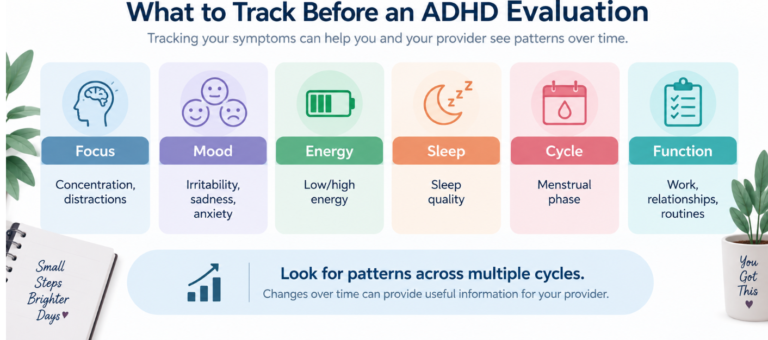
Psychiatry in VA can help you better understand your symptoms and find treatment that supports your mental health needs. Mental health conditions can affect your emotions, thoughts, behavior, and daily responsibilities. Therefore, psychiatric providers begin by identifying the factors contributing to your concerns and how they affect your life.
Different mental health conditions create different challenges. For example, some people struggle with persistent sadness, low motivation, or anxiety, while others have difficulty focusing, staying organized, or coping with the effects of trauma. Because symptoms vary from person to person, effective treatment starts with understanding your individual experiences rather than making assumptions based on symptoms alone.
The National Institute of Mental Health (NIMH) [2] explains that mental health conditions can affect how people feel, think, and manage everyday activities. NIMH also highlights the importance of treatment options such as medication and therapy for mental health conditions. Therefore, understanding your symptoms and seeking professional care can help you explore treatment options and improve daily functioning over time.
Why Is Medication Management Important for Safe and Effective Treatment?
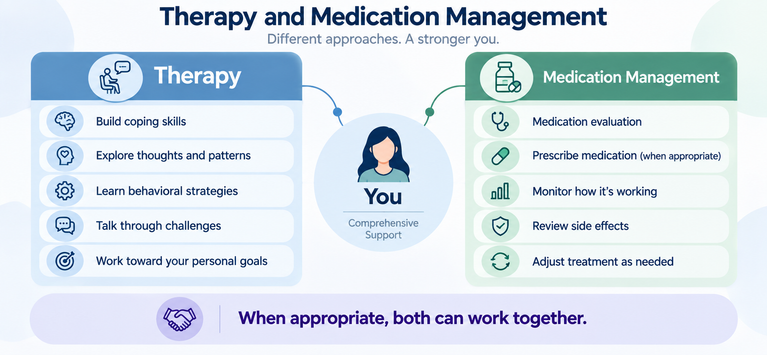
Medication management at the VA helps ensure that psychiatric medications continue working safely and effectively as your needs change over time. Starting a medication is only one part of treatment. Regular follow-up visits help psychiatric providers evaluate how well the medication is working, monitor side effects, and make adjustments when necessary. As a result, treatment remains aligned with your current symptoms and goals.
The table below shows why ongoing medication management is an important part of psychiatric care.
| Without Regular Monitoring | With Medication Management |
| Side effects may go unaddressed | Side effects can be identified and managed early |
| Medication may become less effective over time | Treatment can be adjusted when needed |
| Symptom changes may be overlooked | Progress is reviewed regularly |
| Questions may remain unanswered | Ongoing communication supports informed decisions |
| Treatment may not reflect current needs | Care adapts as circumstances change |
According to the American Psychiatric Association (APA) [3], mental health treatment is based on an individualized plan developed collaboratively between a clinician and the patient. APA also notes that treatment may include medication, therapy, or other approaches depending on a person’s needs. Therefore, ongoing communication with a psychiatric provider can help ensure that treatment remains aligned with your symptoms, goals, and overall well-being.
How Does Telepsychiatry Virginia Make Mental Health Care More Accessible?
Telepsychiatry Virginia makes mental health care more accessible by allowing you to meet with psychiatric providers through secure virtual appointments. Instead of traveling to an office, you can attend appointments from home or another private location. As a result, many people find it easier to start treatment and stay engaged in care.
Virtual care can also help people who face barriers to in-person appointments. Some individuals live far from mental health providers, while others have transportation challenges, mobility limitations, or demanding schedules. Telepsychiatry reduces these obstacles and makes it easier to attend evaluations, follow-up visits, and medication reviews without disrupting daily responsibilities.
A systematic review published in the World Journal of Psychiatry [4] found that telepsychiatry improves access to mental health services, produces high patient satisfaction, and achieves treatment outcomes comparable to face-to-face care. Therefore, virtual psychiatric services can provide an effective and accessible option for many individuals seeking mental health support.
How Do You Choose the Right Psychiatry Fairfax VA Provider for Your Needs?
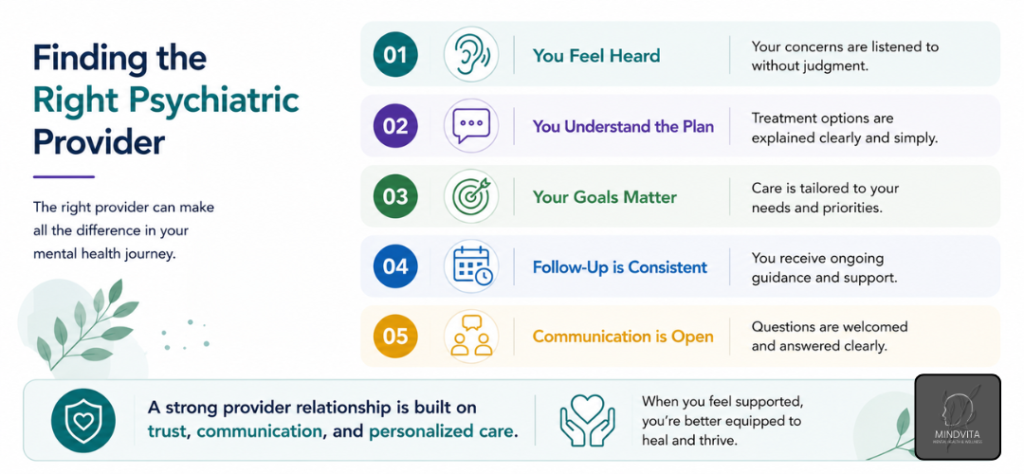
Choosing the right psychiatric provider in Fairfax, VA, involves finding someone with the experience, communication style, and treatment approach that match your needs. Mental health treatment often works best when you feel comfortable discussing concerns, asking questions, and participating in treatment decisions. Therefore, taking time to evaluate providers can help you make a more informed choice.
When comparing psychiatric providers, consider the following factors:
Experience With Your Concerns
Different providers may have experience treating different conditions. If you are seeking help for depression, ADHD, anxiety, trauma-related concerns, or other mental health challenges, look for a provider who regularly works with those issues.
Communication and Patient Education
A good provider should explain diagnoses, treatment options, and recommendations in an easy-to-understand way. Clear communication helps you stay informed and feel more confident about your care.
Accessibility and Follow-Up Care
Consistent access to care is important for long-term treatment. Consider appointment availability, follow-up support, and whether virtual visits are offered when needed.
Treatment Approach
Some providers focus primarily on medication management, while others take a broader approach that includes education, lifestyle factors, and ongoing treatment planning. Understanding a provider’s approach can help you determine whether it aligns with your preferences and goals.
Start Your Mental Wellness Journey With MindVita Psychiatric Providers
Living with untreated mental health concerns can affect your relationships, work performance, emotional well-being, and daily routines. You may feel overwhelmed by ongoing symptoms or uncertain about where to begin. Over time, these challenges can become more difficult to manage without professional guidance and personalized support.
At MindVita, our psychiatric providers offer comprehensive evaluations, medication management, telepsychiatry services, and individualized treatment plans designed around your needs. We focus on helping you build lasting wellness through consistent care and ongoing support. Contact us today to schedule your consultation and take the next step toward better mental health.
FAQs
What Happens During Your First Psychiatry Appointment?
Your first appointment usually focuses on understanding your mental health concerns, symptoms, medical history, and treatment goals. The provider may ask questions about your mood, sleep, stress levels, and daily functioning. This information helps create an accurate assessment and supports recommendations that fit your individual needs and circumstances.
How Long Does It Take to See Results From Psychiatric Treatment?
The timeline varies depending on your symptoms, diagnosis, and treatment approach. Some people notice improvements within a few weeks, while others need more time. Regular follow-up visits help monitor progress and make adjustments when needed. Consistent treatment and open communication often support better long-term outcomes and recovery.
Is Telepsychiatry as Effective as In-Person Psychiatric Care?
For many people, telepsychiatry can be just as effective as in-person care. Virtual appointments allow you to discuss symptoms, review medications, and receive professional guidance from home. In addition, telepsychiatry can make treatment more accessible, helping many individuals stay engaged with care and attend appointments consistently.
Can Family Members Be Involved in Psychiatric Treatment?
Family involvement depends on your preferences and treatment needs. In some situations, family members can provide helpful information and support during the treatment process. However, psychiatric providers respect patient privacy and confidentiality. Any involvement typically occurs with your permission and in a way that supports your treatment goals.
Is Everything Discussed With a Psychiatric Provider Confidential?
In most cases, conversations with a psychiatric provider remain private and confidential. This privacy helps you discuss concerns openly and honestly. However, providers may be required to take action in specific situations involving immediate safety risks. Your provider can explain confidentiality policies and answer any questions during your appointment.