
ADHD can affect attention, organization, time management, and daily responsibilities. However, many people do not recognize the signs right away. Symptoms are often mistaken for stress, personality traits, or a busy lifestyle. As a result, both children and adults may struggle for years before seeking answers about what is causing their challenges.
If you frequently lose focus, miss deadlines, forget important tasks, or feel overwhelmed by everyday responsibilities, an ADHD test may help provide clarity. At MindVita, our psychiatric providers conduct comprehensive evaluations to better understand your symptoms and concerns. With an accurate diagnosis and personalized guidance, you can take meaningful steps toward improving focus, productivity, and overall quality of life.
When Should You Consider ADHD Testing?
You should consider ADHD testing if ongoing difficulties with attention, organization, time management, or impulsive behavior are affecting your daily life. Many people struggle with these challenges at work, school, or home without realizing that ADHD may be contributing to their difficulties. An ADHD test can help identify whether symptoms require further evaluation.
ADHD testing is not a single test. Instead, it is part of a comprehensive evaluation that reviews your symptoms, medical history, daily functioning, and overall experiences. If you have often wondered, “ADHD: how to test,” it is important to know that qualified mental health professionals use multiple sources of information to better understand your concerns and determine whether ADHD may be present. Research in Oxford Journals [1] found that ADHD affects approximately 5.3% of children worldwide. This finding underscores the need for accurate assessment and diagnosis rather than relying on symptoms alone.
Many people do not seek help until symptoms begin affecting their performance, relationships, or confidence. Because ADHD symptoms can develop gradually and look different from person to person, they are sometimes overlooked for years. Seeking an evaluation can provide answers, help explain ongoing challenges, and guide you toward appropriate next steps.
What Signs and Symptoms Can an ADHD Test Help Identify?
An ADHD test can help identify patterns of inattention, hyperactivity, and impulsivity that may affect your daily life. These symptoms can appear differently from person to person and often vary with age. Because they can interfere with work, school, relationships, and responsibilities, recognizing them is an important step toward an accurate ADHD diagnosis.
Some of the most common signs and symptoms include:
Inattention Symptoms
- Difficulty staying focused on tasks
- Frequently losing or misplacing items
- Forgetting appointments or responsibilities
- Making careless mistakes
- Struggling to follow instructions
- Difficulty completing tasks on time
Hyperactivity Symptoms
- Feeling restless or unable to sit still
- Talking excessively
- Difficulty relaxing during quiet activities
- Constantly feeling the need to stay busy
Impulsivity Symptoms
- Interrupting conversations
- Speaking before thinking
- Difficulty waiting for your turn
- Making quick decisions without considering consequences
Common Symptoms in Adults
- Poor time management
- Difficulty staying organized
- Trouble meeting deadlines
- Frequently switching between tasks
- Challenges managing daily responsibilities
As a result, ADHD symptoms can affect many areas of life. Some people struggle to stay productive at work or school, while others experience difficulties with relationships, finances, or everyday organization. Because symptoms can look different in adults and children, an ADHD test for adults or younger individuals can help determine whether ADHD may be contributing to these ongoing challenges.
How Is an ADHD Diagnosis Made Using ADHD DSM 5 Guidelines?
An ADHD diagnosis involves a thorough evaluation rather than a single test. Mental health professionals review your personal history, current challenges, and how attention-related difficulties affect different areas of your life. This process helps determine whether ADHD may be contributing to the concerns you are experiencing.
The evaluation process typically includes several important steps:
Clinical Interviews
Providers ask questions about your daily routines, school or work experiences, and overall functioning. These discussions help create a clear understanding of your concerns and how they affect everyday life.
Symptom History
Attention and behavior-related challenges often begin early in life, even if they are not recognized until adulthood. Reviewing past experiences helps providers understand when difficulties started and how they have changed over time.
Functional Impairment
Providers assess whether these challenges are creating meaningful difficulties at work, school, home, or in relationships. This helps determine the overall impact on daily functioning.
Mental health professionals use the ADHD DSM-5, which provides standardized criteria used during comprehensive evaluations. ADHD is a clinical diagnosis that requires a thorough assessment rather than a blood test or brain scan. Additionally, the American Health Information Management Association [2] notes that healthcare professionals use ADHD ICD 10 codes for medical documentation and classification. Because other conditions can cause similar symptoms, a careful evaluation helps improve diagnostic accuracy and provides a clearer understanding of your challenges.
What Is the Difference Between ADD vs. ADHD Today?
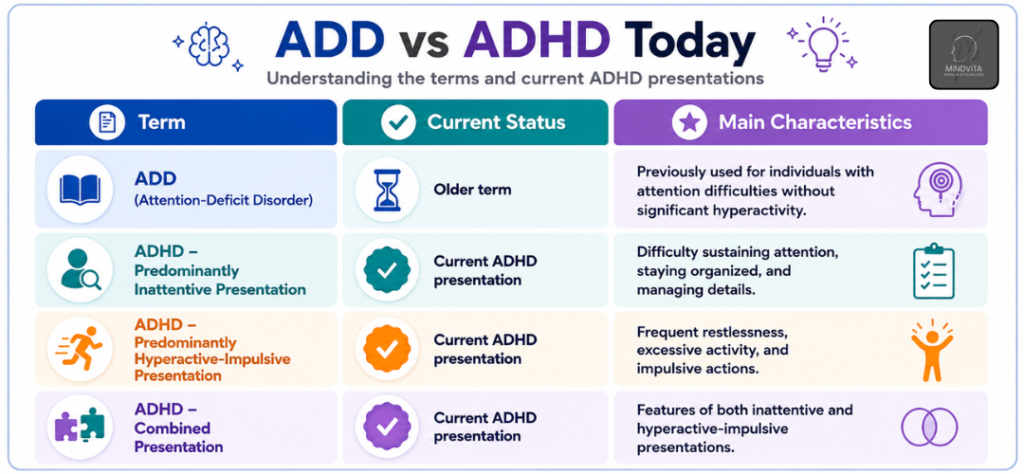
Many people still use the term ADD, which can create confusion when discussing attention-related conditions. However, ADD is no longer an official medical diagnosis. Today, healthcare professionals use the term ADHD for all presentations of the condition. Understanding the difference between ADD vs. ADHD can help you better understand current diagnostic language and evaluation results.
Although the name has changed, ADHD does not look the same in everyone. Some people primarily experience attention-related difficulties, while others show more hyperactive or impulsive behaviors. In some cases, individuals experience a combination of both. Healthcare professionals use these different presentations to describe how ADHD appears in each person.
What Happens After ADHD Testing and Diagnosis?
After ADHD testing, your provider reviews the results and explains what they mean for your daily life. This helps you understand how ADHD may affect your focus, organization, productivity, and daily responsibilities. A clear explanation of the results can also help you make informed decisions about the support and resources that may benefit you moving forward.
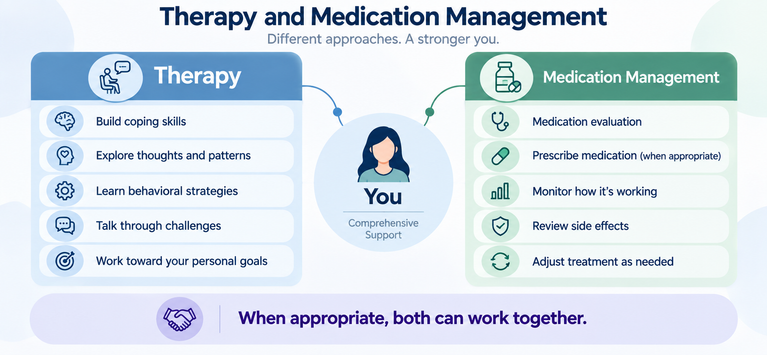
The next step is creating a personalized plan that fits your needs and goals. Depending on your situation, this may include ADHD therapy, lifestyle changes, academic or workplace accommodations, and ADHD meds when appropriate. The American Academy of Pediatrics [3] explains that treatment plans should be tailored to each person’s needs and may combine different types of support to improve daily functioning and long-term outcomes. Consistent follow-up also helps ensure that your plan continues to meet your needs as circumstances change.
Schedule an ADHD Evaluation With MindVita
Struggling to stay organized, meet deadlines, or stay focused can affect many areas of your life. Over time, these challenges may lead to frustration, lower confidence, and misunderstandings at work, school, or home. If you have been wondering whether ADHD may be contributing to these difficulties, a professional evaluation can provide the clarity you need.
At MindVita, our psychiatric providers offer comprehensive evaluations to better understand your symptoms and daily challenges. We provide personalized recommendations, ADHD testing for adults, and ongoing support based on your unique needs. If attention-related difficulties are affecting your quality of life, schedule an appointment today and take the first step toward gaining answers and moving forward with confidence.
FAQs
Can ADHD Symptoms Change With Age?
Yes. ADHD symptoms often change over time. Children may appear more physically active, while adults may experience difficulties with organization, focus, or time management. Although symptoms can look different at different ages, they may continue to affect daily life if left unaddressed. Regular support can help manage changing needs.
Can Someone Have ADHD and Still Perform Well at Work or School?
Yes. Many people with ADHD perform well academically or professionally. However, they may need to spend extra time and effort staying organized, meeting deadlines, or managing responsibilities. Success does not rule out ADHD. Some people seek evaluation only after challenges become harder to manage over time.
Is ADHD a Lifelong Condition?
ADHD often continues into adulthood, although symptoms and their impact may change over time. Some people develop effective coping strategies that help them manage daily responsibilities more successfully. With appropriate support and ongoing guidance, many individuals learn to navigate challenges and maintain productive, fulfilling lives.
Can ADHD Affect Self-Esteem and Confidence?
Yes. Repeated struggles with focus, organization, or task completion can sometimes affect confidence and self-esteem. Over time, people may become frustrated when they feel they are not meeting expectations. Understanding the cause of these challenges can help build self-awareness and support positive long-term growth.
Can ADHD Occur Alongside Other Mental Health Conditions?
Yes. ADHD can occur alongside other mental health conditions such as anxiety, depression, or learning-related difficulties. Because symptoms may overlap, a thorough evaluation is important. Identifying all contributing factors helps providers develop recommendations that address your specific needs and support overall well-being.