

Are you wondering how to manage a midlife crisis in a healthy way? Start with simple habits that support your daily routine while giving yourself time to understand what is changing. Regular sleep, physical activity, supportive relationships, enjoyable activities, and thoughtful self-reflection can provide stability during uncertain periods. Focus on gradual changes rather than making several major decisions at once.
If difficult feelings continue or begin affecting your work, relationships, or daily routine, professional support may be worth considering. At MindVita, our providers listen to your concerns, explore the changes affecting your life, and discuss care based on your individual needs. Schedule a consultation today to talk about what you are experiencing and explore appropriate next steps with professional guidance.
What Midlife Crisis Symptoms Should You Pay Attention To?
Midlife crisis symptoms may include restlessness, irritability, regret, low motivation, or losing interest in activities you once enjoyed. You may question past decisions, personal achievements, relationships, or your sense of purpose. Some people also feel a strong urge to make sudden changes involving work, appearance, relationships, or lifestyle. Persistent patterns deserve closer attention, especially when they affect everyday functioning.
According to HelpGuide [1], signs associated with a difficult midlife period may include sadness, regret, restlessness, irritability, impulsive behavior, and changes in ambition. Some people may also spend more time thinking about earlier experiences or feel pressure to make major life changes. Paying attention to persistent patterns can help you decide whether careful reflection or additional support may be useful.
How Can Daily Self-Care Help You Through a Midlife Crisis?
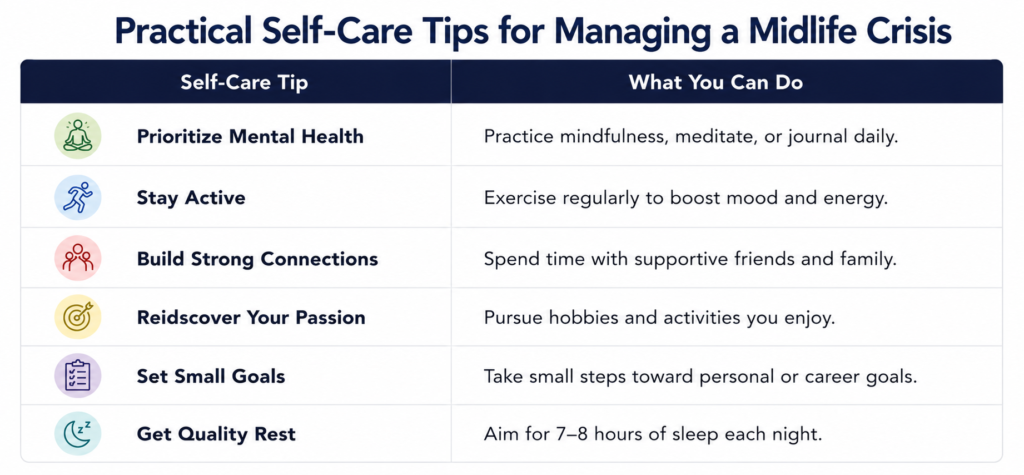
Daily self-care can provide structure when a midlife transition makes parts of life feel uncertain. Rather than trying to change everything at once, focus on manageable habits that support your physical needs, personal time, and social connections. A realistic routine can create space to respond thoughtfully to current challenges instead of reacting to every difficult feeling with an immediate major decision.
Consider these practical self-care habits as you build a routine that works for your current needs:
- Follow a Regular Sleep Routine: Keep your sleep and wake times as consistent as possible. A predictable schedule can give your day more structure.
- Stay Physically Active: Choose movement that suits your interests and routine, such as walking, cycling, swimming, or stretching.
- Set Healthy Boundaries: Notice where unnecessary demands take up your time. Make reasonable space for rest and personal priorities alongside responsibilities.
- Spend Time on Things You Enjoy: Return to an old interest or explore something new without expecting it to become another achievement or obligation.
- Connect With People You Trust: Make time for supportive relationships where you can talk openly, share experiences, or simply enjoy time together.
- Review Your Current Priorities: Look at where your time and energy currently go. Identify small adjustments that better reflect what matters to you now.
Self-care does not require rebuilding your entire routine at once. Choose one or two changes that feel realistic and notice how well they fit your daily life before adding more. When overcoming a midlife crisis, a gradual approach gives you time to understand what is genuinely useful. The goal is to create sustainable habits rather than add another source of pressure.
How Can Self-Reflection Help You Navigate a Midlife Transition?
Self-reflection can help you examine how your priorities, expectations, and goals may have changed during midlife. Journaling, quiet reflection, or thoughtful conversations can help you separate temporary frustration from concerns that deserve more attention. Instead of immediately acting on dissatisfaction, you can consider what has changed, what still matters to you, and which decisions require more time.
An article from Wish on Wildflowers [2] describes midlife as an opportunity to reconsider personal values, purpose, and future direction. Reflection may help you examine whether your current priorities still match what matters to you. It can also create space to reconsider earlier goals, explore new interests, and make future decisions more deliberately rather than responding immediately to temporary dissatisfaction.
When Should You Consider Midlife Crisis Therapy or Professional Support?
You should consider midlife crisis therapy when ongoing emotional or behavioral changes begin interfering with your responsibilities, relationships, or ability to make thoughtful decisions. Professional support may also be useful when you feel stuck despite trying changes on your own. Therapy provides a structured setting to examine current concerns, recognize patterns, and develop coping strategies suited to your circumstances.
When Emotional Changes Affect Your Daily Life
Persistent sadness, worry, irritability, or low motivation can interfere with ordinary responsibilities and routines. If these changes continue, a mental health professional can assess your concerns and discuss appropriate options.
When Your Relationships Become More Difficult
Frequent conflict, emotional distance, or difficulty communicating your needs can place pressure on important relationships. Therapy can provide space to examine these patterns and practice more constructive communication.
When You Feel Uncertain About Your Career
Career dissatisfaction may lead you to question whether your work still matches your priorities or future plans. Therapy can help you examine these concerns before making major professional changes.
When You Feel Unsure About Your Purpose
Questions about meaning, achievement, and future direction can become more noticeable during midlife. Midlife transition counseling offers space to examine your current values and consider realistic future goals.
When Your Usual Coping Methods No Longer Work
If rest, social support, or changes to your routine no longer feel sufficient, additional guidance may be appropriate. Professional care can provide structured support based on the concerns affecting you now.
According to an article published in Harvard Health [3], midlife can be a period when some people become more open to psychotherapy and reconsider earlier experiences from a different perspective. Greater life experience may provide new context for examining long-standing patterns and current concerns. Therapy can offer a structured setting for this process while supporting thoughtful decisions about relationships, priorities, and future direction.
Take the First Step Toward Greater Clarity and Balance with MindVita
Midlife can bring questions about direction even when your life appears stable from the outside. Changes in relationships, career expectations, family responsibilities, or personal goals may leave you uncertain about what comes next. When several concerns overlap, it can be difficult to separate temporary frustration from issues that need more attention or decide which changes deserve careful consideration.
At MindVita, our providers take time to listen to your concerns and understand how current changes are affecting your daily life. Care is based on your individual experiences, needs, and goals. You can discuss difficult emotions, recurring patterns, and current challenges in a supportive setting. Contact us today to explore appropriate care options and discuss your next steps.
FAQs
How long can a difficult midlife transition last?
There is no fixed timeline for a difficult midlife transition. For some people, uncertainty may last a few months, while others need more time to adjust. The length often depends on personal circumstances, major life changes, and available support. Healthy routines, honest reflection, and professional guidance can make this period easier to manage.
What is the first step in overcoming a midlife crisis?
The first step is to understand what is making you feel unhappy, restless, or uncertain. Give yourself time to think before making major changes. Writing down your concerns or talking with someone you trust can bring clarity. If these feelings continue, midlife crisis therapy may help you find a healthier way forward.
What is the difference between a midlife transition and a midlife crisis?
A midlife transition happens when you begin thinking differently about your goals, priorities, or future. A midlife crisis may involve stronger feelings of stress, confusion, or dissatisfaction. The main difference is how much the experience affects your daily life, work, relationships, and ability to make thoughtful decisions.
Is it normal to question your career during middle age?
Yes, questioning your career during middle age is common, especially when your goals, responsibilities, or priorities change. You may wonder whether your work still feels meaningful or fits your future plans. Instead of making sudden decisions, review your values, financial needs, strengths, and long-term goals before choosing a new direction.
Can women and men experience midlife changes differently?
Yes, midlife experiences can differ from person to person based on relationships, family roles, career demands, physical changes, and personal expectations. For example, concerns related to a midlife crisis in men over 40 may involve career progress, aging, relationships, or a changing sense of purpose. However, individual experiences vary, and concerns should be understood within each person’s circumstances.