

Are you looking for therapy for yourself, your child, or your teen? Therapy can help children, teens, and adults understand difficult feelings, manage stress, and deal with personal challenges. Since people face different problems at different stages of life, therapy provides a supportive place to talk about concerns, understand what is happening, and learn practical ways to cope.
Finding the right support starts with care that focuses on you as an individual. At MindVita, your care begins with a clear understanding of your current concerns, history, and goals. Your provider uses this information to recommend an approach that fits your situation. As treatment continues, your progress and changing needs can guide the next steps. Schedule a consultation today to discuss your concerns and learn which type of support may be appropriate for your needs.
How Can Therapy Support Different Needs at Every Stage of Life?
Therapy can support you at every stage of life by focusing on the challenges you face at that time. Children may need help understanding their feelings, while teens may struggle with school or social pressure. Adults often face work, family, or relationship stress. Older adults may deal with loss or loneliness. The type of support you need may therefore change with your age, circumstances, and current concerns.
According to a meta-analysis published in JAMA Psychiatry [1], psychotherapy can help people with depression across different stages of life. The study reviewed 366 clinical trials involving children, teens, young adults, middle-aged adults, and older adults. Researchers found benefits across age groups, although the results varied between them. This suggests that age is an important factor when planning care.
When Should You Consider Child and Teen Therapy in Arlington, VA?
You should consider professional support when changes in your child’s mood, behavior, or daily habits continue over time, become more intense, or begin affecting school, relationships, or family life. In these situations, child and teen therapy in Arlington, VA can provide a setting to explore what may be contributing to these changes and offer age-appropriate support for emotional expression, coping skills, and everyday functioning.
Some signs are easy to notice, while others may develop slowly. Common changes to look for include:
- Worry or fear: Your child may worry often, ask for reassurance, or avoid places and activities that make them feel nervous.
- Strong emotions: They may become angry, sad, or upset more often and find it difficult to calm down.
- School problems: You may notice lower grades, poor focus, missed school days, bullying, or problems getting along with classmates.
- Spending more time alone: Your child may avoid friends and family or stop enjoying activities they once liked.
- Changes after a difficult event: Loss, divorce, moving, or a frightening experience may affect their sleep, mood, confidence, or usual routine.
- Behavior changes: Frequent arguments, sudden outbursts, risky actions, or breaking rules may show that your child is having a hard time.
Children and teens may express distress differently depending on their age, personality, and circumstances. Looking at patterns over time can help you notice whether changes are temporary or beginning to interfere with everyday life. A therapist can consider these patterns alongside your child’s experiences and help determine what kind of support may be appropriate.
How Does Trauma Therapy in Arlington, Address the Effects of Distressing Events?
Trauma therapy helps you deal with the lasting effects of a painful or frightening experience. You may feel nervous around certain people, places, or situations that remind you of what happened. During therapy, you can understand these reactions, talk about difficult memories when you feel ready, and work on fears or negative thoughts linked to the past.
According to a 2024 review published in the Journal of Anxiety Disorders [2], trauma-focused treatments helped reduce PTSD symptoms. The review looked at 23 studies and found no evidence that treatment made PTSD or depression symptoms worse during care. These findings provide useful evidence about symptom changes during trauma-focused treatment and may address concerns about whether symptoms worsen during the treatment process.
Which Type of Therapy May Match Your Main Concern?
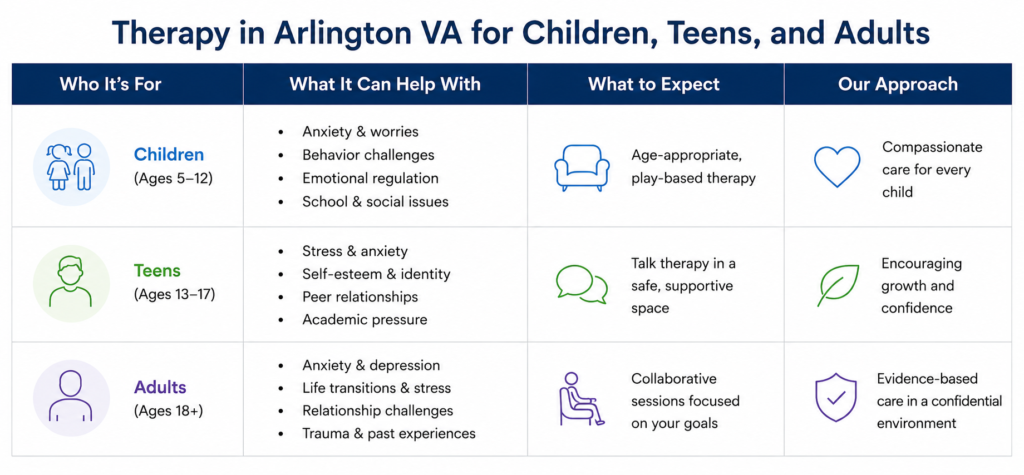
The type of therapy that may be right for you depends on the problem you want help with. Different approaches can help with fear, difficult thoughts, strong feelings, relationship problems, or past experiences. A therapist can learn about your concerns and goals before suggesting an option. Knowing what each approach focuses on can help you understand what to expect.
Speaking Therapy for Personal and Emotional Concerns
Speaking therapy gives you time to talk openly about thoughts, feelings, and personal concerns. Through regular conversations, you can understand patterns, look at problems differently, and work toward changes that matter to you.
Cognitive Behavioral Therapy for Unhelpful Thinking Patterns
Cognitive Behavioral Therapy, or CBT, looks at the connection between thoughts, feelings, and actions. It helps you notice unhelpful thinking patterns and practice more useful ways of responding to challenging situations.
EMDR Therapy in Arlington, VA for Trauma-Related Concerns
EMDR is a structured approach for people affected by traumatic experiences. During sessions, you briefly focus on a difficult memory while following guided eye movements or another form of bilateral stimulation.
Relationship Counseling for Couples and Families
Relationship counseling helps couples or family members work on problems that affect their connection. Sessions may focus on communication, trust, boundaries, repeated arguments, and finding better ways to understand and respond to each other.
DBT for Managing Strong Emotions
Dialectical Behavior Therapy, or DBT, teaches practical skills for handling strong emotions and stressful situations. It can also help you improve relationships, stay present, and respond more carefully instead of acting without thinking.
According to Medical News Today [3], different types of therapy use different methods and may help with different concerns. For example, some approaches focus on thoughts and behavior, while others deal with emotions, relationships, or past experiences. Since each method has a different purpose, learning about the available options can make it easier to discuss suitable care with a mental health professional.
Start Personalized Mental Health Care With MindVita
When emotional concerns begin affecting sleep, school, work, relationships, or everyday responsibilities, it can be difficult to know what kind of support may help. You may notice changes in yourself or someone in your family but feel unsure whether those concerns are temporary or need professional attention. Speaking with a mental health provider can help you understand the options available.
At MindVita, we take time to understand what you are experiencing and how it affects your daily life. Your provider considers your concerns, circumstances, and goals when recommending an appropriate approach to care. As treatment continues, you can work on practical ways to manage current challenges and review your progress over time. Contact us today to discuss your concerns and explore the next steps for your care.
FAQs
How do I know if I should consider therapy?
You may consider therapy when emotional stress starts affecting your sleep, work, studies, relationships, or daily routine. You might also notice ongoing sadness, anger, or difficulty coping with change. If these concerns continue or feel harder to manage alone, speaking with a mental health professional can provide useful guidance.
Is therapy different for children and adults?
Yes, therapy is different for children and adults because they understand and express feelings in different ways. Children may show their feelings through behavior, play, or changes in daily habits. Adults can often talk about their concerns more directly. Therefore, therapists choose methods that suit each person’s age, needs, and situation.
Can EMDR help with PTSD?
Yes, EMDR can help reduce PTSD symptoms and make painful memories easier to cope with. During treatment, a trained therapist guides you through a structured process while you think about a difficult experience. However, everyone has different needs. Therefore, a therapist will first decide whether EMDR is a suitable option for you.
What is the difference between talk therapy and trauma-focused care?
Talk therapy helps you discuss your thoughts, feelings, and daily problems with a therapist. Trauma-focused care focuses on the effects of painful or frightening experiences. It helps you understand how past events may affect your emotions and daily life. The right choice depends on your concerns, experiences, and personal needs.
Can therapy help if I cannot clearly explain what is wrong?
Yes, you can start therapy even if you are unsure what is bothering you. A therapist can help you explore your feelings, thoughts, and recent changes in your daily life. As you talk openly over time, you may begin to understand your concerns better and find practical ways to manage them.




One Response