
Have you been feeling tired for weeks without knowing why? You may have noticed that your healthcare provider documented your symptoms using a fatigue ICD-10 code. This medical code helps record fatigue in your health records, supports accurate documentation, and assists with treatment planning and insurance claims. Before any diagnosis is confirmed, however, your provider must first identify the reason behind your symptoms.
Feeling tired every day can make it difficult to concentrate, complete routine tasks, or enjoy activities you normally manage with ease. If fatigue continues despite getting enough rest, a thorough medical evaluation can help identify possible causes. At MindVita, our experienced psychiatric providers help you understand possible causes through a thorough evaluation. Schedule a consultation today and get the support you deserve.
Why Is It Important to Find the Real Cause of Fatigue?
Fatigue may be caused by physical illnesses, mental health conditions, sleep problems, medication side effects, or a combination of several factors. A proper fatigue diagnosis helps your healthcare provider understand what is causing your symptoms. It also supports accurate medical records and helps avoid delays in appropriate treatment.
Research shows that fatigue often has more than one cause. A review published in American Family Physician [1] found that ongoing fatigue may be linked to medical conditions, mental health disorders, sleep problems, or certain medications. Therefore, a careful evaluation is essential before making a diagnosis or assigning a medical code.
How Is Fatigue Diagnosed?
Fatigue is diagnosed through a detailed medical evaluation. Your healthcare provider asks about your symptoms, daily routine, sleep habits, and medical history. They also perform a physical examination. If needed, they may recommend tests to identify possible health conditions. This process helps determine the reason behind your fatigue and guides the next steps.
To better understand your symptoms, your healthcare provider may:
- Review your medical history: They ask about past illnesses, current medications, and any long-term health conditions that may affect your energy levels.
- Discuss your symptoms: They ask when the fatigue started, how long it lasts, and how it affects your daily activities.
- Evaluate your sleep habits: They check your sleep schedule and look for signs of sleep disorders or poor sleep quality.
- Perform a physical examination: They examine your overall health and look for signs of an underlying medical condition.
- Recommend laboratory tests: Blood tests or other investigations may help rule out conditions such as anemia, thyroid disorders, or vitamin deficiencies.
A complete evaluation helps your healthcare provider understand the full picture instead of focusing only on fatigue. It also helps identify physical or mental health conditions that may need treatment. As a result, you receive appropriate care based on your symptoms, medical history, and examination findings.
When Should Chronic Fatigue Be Evaluated Further?
If chronic fatigue continues for several months, you should not ignore it. Feeling tired most days can affect your work, relationships, and daily routine. Symptoms that do not improve with rest need further attention. A timely fatigue diagnosis helps identify the cause and supports appropriate care.
Research from the Centers for Disease Control and Prevention (CDC) [2], explains that chronic fatigue syndrome (ME/CFS) causes severe fatigue that does not improve with rest. The CDC recommends a thorough medical assessment to rule out other conditions before confirming the diagnosis. This approach supports accurate clinical documentation and appropriate treatment.
How Is Fatigue Documented and Coded?
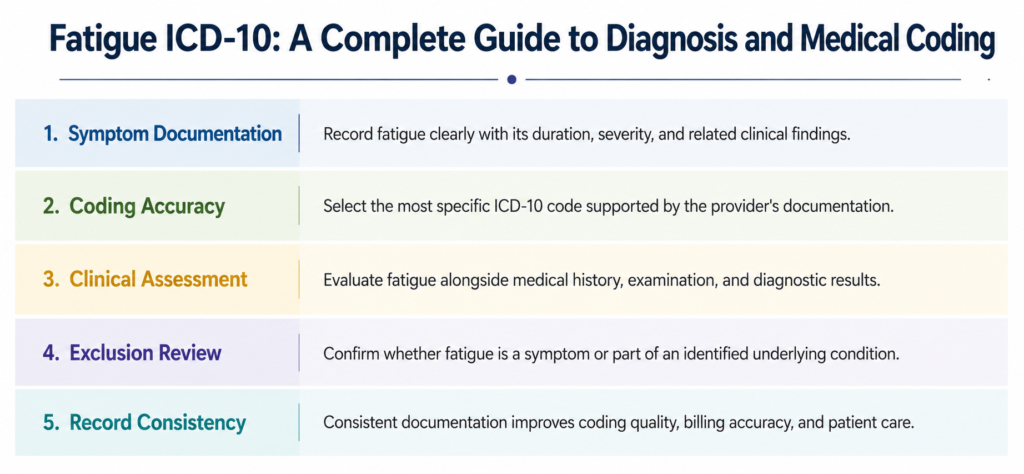
Healthcare providers record your symptoms before assigning a code. They review your health history, physical examination, and test results. Clear documentation supports accurate ICD-10 coding for fatigue. It also improves communication between healthcare teams. Accurate records help maintain complete and reliable medical information.
Note Your Symptoms
Your provider records when the tiredness started. They note how long it lasts. They also explain how it affects your daily routine. Any related concerns are included to present a complete clinical picture.
Add Examination and Test Results
Next, physical findings and laboratory reports are added to your medical record. These details explain your condition. They also support accurate medical coding for fatigue ICD-10 when the provider assigns the final code.
Choose the Appropriate ICD-10 Code
After reviewing the available information, the provider selects the correct code from the ICD-10 manual. The selected code must match the documented condition. It should also follow official coding standards.
According to a study published in Ophthalmology Science [3], accurate and complete clinical documentation improves the quality of diagnosis coding. It also reduces coding errors and supports consistent medical records. As a result, healthcare providers can communicate patient information more effectively and maintain reliable health records.
Take the First Step Toward Managing Fatigue with MindVita
Living with ongoing fatigue can make each day more difficult. You may struggle to stay focused, complete daily tasks, or enjoy activities you once loved. Even after enough rest, you may still feel tired. Over time, these symptoms can affect your work, relationships, and quality of life.
At MindVita, our experienced psychiatric providers are ready to help. They carefully assess your symptoms and create a treatment plan based on your needs. You will receive compassionate, personalized care at every step. Contact us today and take the first step toward feeling better.
FAQs
Can fatigue be the primary diagnosis?
Yes, fatigue can be the main diagnosis when the exact cause is still unknown. Your doctor may use it until further tests provide more answers. If another health condition is found later, the diagnosis may change. This helps keep your medical records accurate and guides the right care.
Can your diagnosis change after medical tests?
Yes, your diagnosis can change after medical tests provide more information. Blood tests, imaging, or other evaluations may reveal an underlying condition. As a result, your medical records may be updated. This helps ensure you receive care that matches your confirmed diagnosis.
Is there a difference between short-term and chronic fatigue?
Yes, short-term fatigue usually improves with rest or by treating its cause. Chronic fatigue lasts much longer and may affect your daily life. It often requires a detailed medical evaluation. Early assessment helps identify possible health concerns and supports timely care.
Can depression or anxiety cause ongoing fatigue?
Yes, depression and anxiety can cause ongoing fatigue. They may affect your sleep, energy, and ability to focus. As a result, you may feel tired even after getting enough rest. A healthcare provider can identify the cause and recommend the right treatment based on your symptoms.
When should you seek medical care for ongoing fatigue?
You should see a healthcare provider if fatigue lasts for several weeks. Seek help if it affects your daily life. Also, watch for symptoms like fever, chest pain, or shortness of breath. Unexplained weight loss is another warning sign. Early care helps find the cause and start the right treatment.