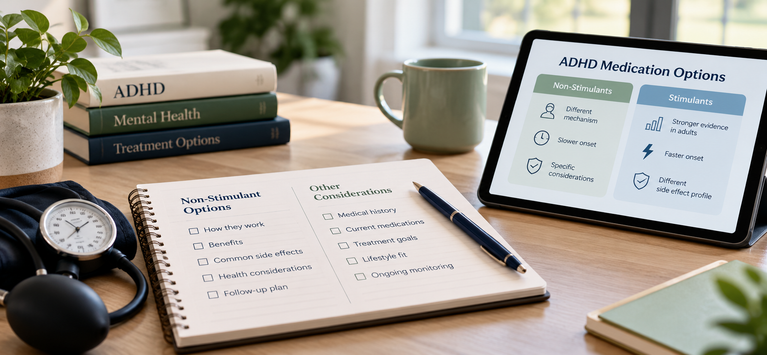

Do you spend hours trying to start an important task, feel constantly anxious, struggle to stay focused at work, or experience mood changes that make daily responsibilities harder to manage? Mental health symptoms can make it difficult to meet deadlines, manage responsibilities, maintain relationships, and feel like yourself. Psychiatric medications are one treatment option that may help reduce these symptoms and make everyday life easier to manage when prescribed as part of a personalized treatment plan.
If anxiety, depression, mood changes, attention difficulties, or emotional overwhelm are affecting your daily life, professional support can help. At MindVita, our psychiatric providers carefully listen to your concerns, and you receive therapy options, professional advice, and safe treatment planning when needed. Schedule a consultation through secure online psychiatry today and connect with a qualified expert for personalized care, emotional support, and better mental health recovery.
How Do Psychiatric Medications Support Different Mental Health Conditions?
Mental health conditions often show up as everyday struggles. You may find yourself constantly worrying, avoiding social situations, losing focus during important tasks, acting impulsively, or feeling emotionally drained. Psychiatric medications are designed to target specific symptoms that interfere with daily life. When treatment is matched to your individual needs, medications may help improve focus, reduce emotional distress, and make it easier to manage work, school, relationships, and routine responsibilities.
A 2023 study in The Lancet Psychiatry [1] shows that properly prescribed psychiatric medications may help reduce symptoms of depression, anxiety, and related mental health conditions when combined with ongoing medical care. The study also highlights the importance of continued treatment and regular follow-up care to reduce relapse risk and support long-term emotional stability.
What Types of Psychiatric Medications Are Commonly Used Today?
Different psychiatric medications are used to address different challenges. Someone struggling with panic attacks and constant worry may need a different treatment approach than someone experiencing ADHD symptoms, severe mood swings, or persistent depression. Psychiatric providers evaluate your symptoms, medical history, and treatment goals to determine which medication may provide the most benefit while minimizing side effects.
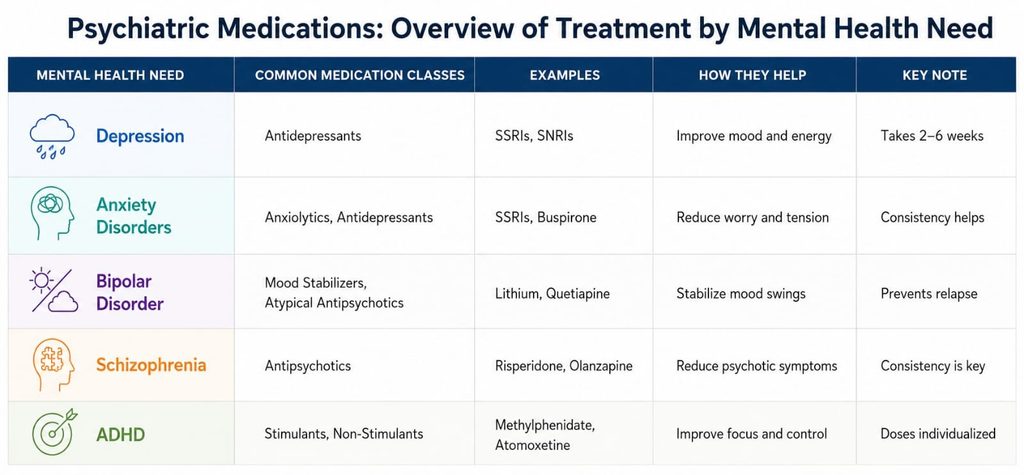
Some commonly used psychiatric medications include:
- Antidepressants help improve low mood, sadness, and anxiety by balancing serotonin and norepinephrine levels in the brain.
- Anti-anxiety medications reduce fear, panic, and constant worry by calming the nervous system.
- Mood stabilizers help control strong mood swings in conditions like bipolar disorder and support emotional stability.
- Antipsychotic medications help manage hallucinations, delusions, and severe thinking problems by affecting dopamine activity.
- Stimulant medications help improve focus, attention, and impulse control in ADHD by increasing dopamine and norepinephrine activity.
According to National Institute of Mental Health (NIMH) [2], psychiatric medications are often used alongside therapy and ongoing medical support as part of a comprehensive treatment plan. The organization also highlights the importance of treatment plans based on each person’s individual needs. Regular follow-up appointments allow providers to monitor progress, address side effects, and make treatment adjustments when necessary. Ongoing care also helps ensure that medications continue supporting the symptoms that matter most in everyday life.
How Do Antipsychotic Medications Help in Mental Health Treatment?
Some mental health conditions can make it difficult to tell what is real, organize thoughts clearly, or manage everyday responsibilities. Antipsychotic medications are often used to help reduce symptoms such as hallucinations, delusions, and severe disruptions in thinking, allowing many people to function more effectively in daily life.
These medications primarily work by regulating dopamine activity in the brain. When dopamine levels become imbalanced, people may struggle to distinguish reality, organize their thoughts, and respond appropriately to everyday situations. By helping regulate this activity, antipsychotic medications may reduce symptoms and support more stable day-to-day functioning.
Like all medications, antipsychotics may cause side effects such as drowsiness, weight gain, or metabolic changes in some individuals. Regular monitoring helps psychiatric providers evaluate treatment effectiveness while reducing potential risks.
How Effective Are Psychiatric Medications for Long-Term Mental Health Care?
Many people worry that medications will stop working over time or wonder whether long-term treatment is necessary. The answer depends on the condition being treated, symptom severity, and individual response to care. For some people, psychiatric medications help prevent symptoms from returning, while others may use them for shorter periods under medical supervision. Regular follow-up appointments allow providers to monitor progress and make treatment adjustments when needed.
Research published in the Journal of Affective Disorders [3] shows that combining psychiatric medication with psychotherapy may improve long-term treatment results compared to medication alone. The study also found that continued treatment may help lower the risk of symptoms returning. Ongoing monitoring helps providers identify early warning signs, address side effects, and adjust treatment when life circumstances or symptoms change.
Is Adderall a psychiatric medication, and how do they work?
Yes, Adderall is a psychiatric medication commonly prescribed to treat attention-deficit/hyperactivity disorder (ADHD). It belongs to a group of medications called stimulants and works by increasing dopamine and norepinephrine levels in the brain. As a result, it may help improve attention, focus, organization, and impulse control in people with ADHD.
1. Effects of Adderall on Brain Chemicals and Activity
Many people with ADHD know exactly what needs to get done but still struggle to start tasks, stay organized, meet deadlines, or finish projects once they begin. Adderall may help improve attention, reduce impulsive behavior, and make it easier to stay engaged long enough to complete important responsibilities.
2. Effect of Psychiatric Medications on brain chemicals and activity
Psychiatric medications change how brain chemicals work, especially dopamine and serotonin. They help improve communication between brain cells. As a result, mood, focus, and behavior become more balanced, supporting better emotional control and daily mental functioning.
3. Medical supervision and safe use of Adderall in treatment
Medical supervision is very important when using Adderall. A psychiatrist checks your condition and changes the dose if needed. This keeps you safe, reduces side effects, and helps improve ADHD symptoms in a better and controlled way.
Stimulant medications like Adderall may help people stay engaged with tasks, manage responsibilities more consistently, and reduce ADHD-related difficulties when used under proper medical supervision. Treatment often works best when combined with behavioral therapy and structured support.
Why Do Many People Benefit From Both Therapy and Medication?
Many people seek treatment because they feel stuck in patterns that are difficult to change on their own. You may struggle with constant anxiety, racing thoughts, procrastination, low motivation, feeling mentally exhausted by everyday tasks. While psychiatric medications may help reduce these symptoms, they do not always address the habits, thought patterns, and coping challenges that contribute to daily stress.
Therapy helps you develop practical strategies for managing emotions, handling stress, improving relationships, and responding to challenges in healthier ways. When symptoms become easier to manage through medication, many people find it easier to apply what they learn in therapy. Together, these approaches can help improve daily functioning, emotional stability, and long-term mental health outcomes.
Take the Next Step Toward Better Mental Health with MindVita
If stress, anxiety, depression, or mood changes are affecting your daily life, early support can improve recovery. Psychiatric medications and therapy may help reduce anxiety, improve focus, stabilize mood, and make everyday responsibilities feel more manageable. With ongoing support, many people find it easier to stay productive, maintain relationships, and feel more in control of their mental health.
At MindVita, you receive safe and personalized care based on your needs. Our expert psychiatrists guide you through psychiatric medications, therapy options, and personalized treatment plans. Our secure and flexible online appointments make it easier for you to receive professional mental health support from a safe and comfortable place. Contact us today and connect with a qualified professional for proper diagnosis, treatment planning, and long-term mental health recovery support.
FAQS
What are psychiatric medications used for?
Psychiatric medications are used to treat mental health problems like anxiety, depression, ADHD, and bipolar disorder. They help balance chemicals in your brain, so your mood becomes more stable. As a result, you feel better and handle daily tasks more easily. Moreover, they work best with therapy and proper medical care.
Are psychiatric medications safe?
Psychiatric medications are safe when a psychiatric provider prescribes them and checks your progress. They are tested before use. At first, you may feel some side effects, but they usually go away. Moreover, regular follow-ups help you stay safe and get better results for your mental health and daily well-being.
How do psychiatric medications work in the brain?
Psychiatric medications work by balancing chemicals in your brain called neurotransmitters. These chemicals control mood, focus, and behavior. As a result, your thoughts and emotions become more stable. Moreover, different medicines target different brain functions. With regular use and guidance from a psychiatric provider, you may experience better control over symptoms and daily life.
Why do people respond differently to treatment?
People respond differently to psychiatric medications because every brain is unique. Genetics, health conditions, and lifestyle all affect results. As a result, one medicine may work fast for some but slower for others. Moreover, psychiatric providers adjust treatment plans to match your needs, ensuring safer and more effective mental health care.
When do psychiatric medications start working?
Psychiatric medications start working at different times depending on the type and your condition. Some medicines may show effects within a few days, while others can take several weeks to provide noticeable benefits. Improvement is often gradual, so it is important to take medication as prescribed and attend follow-up appointments. Regular monitoring helps your psychiatric provider assess your progress and make any necessary adjustments to support better treatment outcomes.
Can I stop psychiatric medications suddenly?
No, you should not stop psychiatric medications suddenly without consulting your psychiatric provider. Stopping too fast can cause side effects or make symptoms come back. As a result, you may feel low. Moreover, psychiatric providers often reduce the dose gradually to help your body adjust safely and lower the risk of withdrawal symptoms or symptom recurrence.
Do psychiatric medications have side effects?
Yes, side effects vary depending on the medication and the individual. Some people may experience drowsiness, nausea, headaches, appetite changes, or sleep disturbances. Most side effects can be managed through dosage adjustments and regular follow-up care with a psychiatric provider.
References
- The Lancet (2003).Relapse prevention with antidepressants.
- National Institute of Mental Health. (n.d.). Mental health medications.
- Journal of Affective Disorders (2015). Depression relapse prevention meta-analysis.
This content is for educational purposes only and not medical advice. Always consult a doctor.