

Are you finding it hard to stay focused, finish tasks, or manage your daily routine? These challenges may be related to ADHD. A complete psychiatric evaluation helps identify the cause of your symptoms and guides the right treatment. With ongoing support, you can improve focus, stay organized, and manage everyday responsibilities more easily.
If unfinished tasks, forgotten responsibilities, or constant distractions are making everyday life more difficult, professional support can help you understand why these patterns keep happening. At MindVita, our psychiatric providers take time to understand your symptoms and create a treatment plan that fits your needs. Schedule a consultation today to take the first step toward better focus and daily functioning.
How Can Psychiatric Services Help You Manage ADHD?
ADHD can affect much more than attention. You may struggle to finish projects, forget appointments, lose important items, or feel overwhelmed by simple daily responsibilities. Psychiatric services help identify how ADHD is affecting your life and create a treatment plan that addresses your specific challenges.
According to a 2026 study published in Australasian Psychiatry [1], people with ADHD benefit from regular assessment, personalized treatment, and ongoing follow-up through mental health services. The study also highlights that coordinated care and support from trained psychiatrists can improve long-term ADHD management.
What Happens During an ADHD Evaluation?
An ADHD evaluation helps your psychiatrist understand your symptoms and how they affect your daily life. It is not just a quick test. Your psychiatric provider will ask about your health, daily routine, and past experiences. This helps find the real cause of your symptoms and decide on the right treatment.
During your appointment, you can expect the following steps:
- Talk about your symptoms: You will explain the problems you face with focus, attention, and daily tasks.
- Review your health history: Your psychiatrist will ask about your medical history, medicines, and family history.
- Complete ADHD screening: You may answer simple questions or forms about your symptoms.
- Discuss your daily life: You will talk about how ADHD affects work, school, home, or relationships.
- Check for other conditions: Your psychiatrist will make sure another mental or physical health condition is not causing your symptoms.
Each step of the evaluation gives your psychiatric provider a clearer picture of your needs. As a result, you can better understand your symptoms and discuss the most suitable care options. This process also gives you the confidence to make informed decisions and move forward with the right support.
Is ADHD a Psychiatric Disorder and What Treatment Options Are Available?
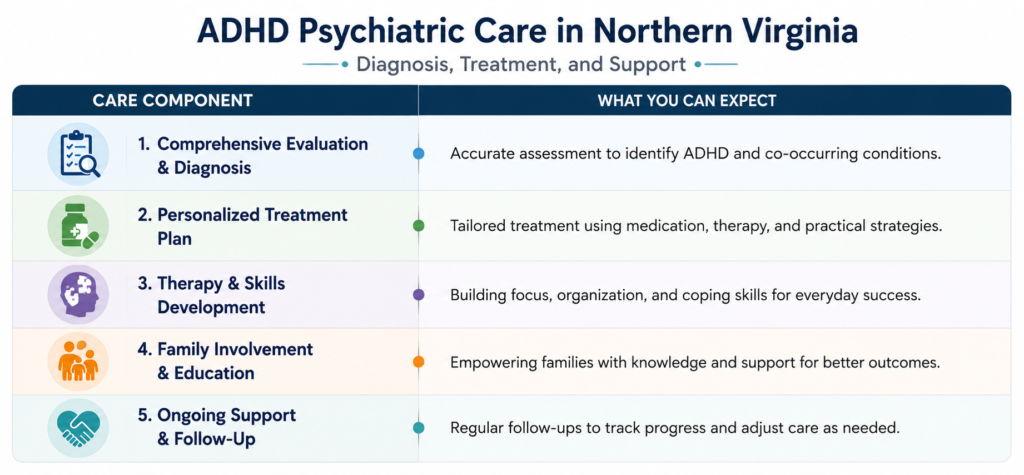
Yes, ADHD is a psychiatric condition that can make it difficult to stay organized, manage time, control impulses, and maintain attention. These challenges often affect work performance, school responsibilities, relationships, and everyday routines. Treatment depends on your symptoms and may include medication, therapy, healthy daily habits, or a combination of these approaches.
According to the National Institute of Mental Health (NIMH) [2], ADHD treatment often includes medication, psychotherapy, and behavioral support. Many people benefit from using more than one treatment because each approach helps in a different way. A personalized care plan can reduce symptoms, improve daily functioning, and support long-term health.
How Can an ADHD Treatment Plan Support Long-Term Success?
An ADHD treatment plan helps you manage symptoms and stay on track every day. It combines the right treatment, healthy habits, and regular follow-up care based on your needs. This plan helps you improve focus, stay organized, complete daily tasks, and build skills that support long-term success.
Follow Your Treatment Plan
Take your medication as directed and attend regular follow-up appointments. These visits help your psychiatrist check your progress, answer your questions, and make changes to your treatment if needed.
Build Healthy Daily Habits
Getting enough sleep, eating balanced meals, exercising regularly, and following a daily routine can improve focus and energy. These simple habits also make everyday tasks easier to manage.
Practice Daily ADHD Skills
Therapy can teach you practical ways to improve time management, stay organized, reduce distractions, and handle everyday challenges. Using these skills regularly can help you feel more confident.
Stay Connected With Your Support System
Family, friends, teachers, or coworkers can encourage and support you throughout your treatment. Talking openly about your needs can help you stay motivated and continue making progress.
According to a systematic review published on PubMed [3], people with ADHD often achieve better long-term results when treatment includes medication, behavioral therapy, and ongoing support. This combined approach can improve daily functioning, relationships, and overall quality of life while helping people manage symptoms more effectively.
Take the First Step Toward Better ADHD Care with MindVita
If ADHD is making everyday life feel harder, you are not alone. You may find it difficult to stay organized, finish tasks, or keep up with work or school. You may know exactly what needs to be done but still struggle to get started. Deadlines, forgotten appointments, unfinished tasks, or constant distractions can gradually affect your confidence, work, school, and relationships. When these patterns continue, getting professional support can help you understand what is contributing to them.
At MindVita, our psychiatric providers take time to understand how ADHD is affecting your daily life before recommending treatment. Depending on your needs, your care may include a comprehensive ADHD evaluation, medication management, behavioral strategies, ongoing follow-up, or a combination of these approaches. Contact us today and discuss the right ADHD treatment for your needs.
FAQs
Can anxiety, depression, or other mental health conditions occur alongside ADHD?
Yes, anxiety, depression, and other mental health conditions can occur alongside ADHD. In fact, they often affect attention, mood, and daily functioning together. Therefore, a complete psychiatric evaluation helps identify all contributing conditions. With an accurate diagnosis, you can receive a personalized treatment plan that addresses your symptoms more effectively.
What should I bring to my first ADHD psychiatric appointment?
Bring a list of your symptoms, current medications, and medical history to your first ADHD psychiatric appointment. If possible, include school records, previous evaluations, or notes about daily challenges. Additionally, write down your questions before the visit. This information helps your psychiatric provider understand your concerns and recommend the most appropriate care.
Does insurance typically cover ADHD psychiatric evaluations and treatment?
Yes, many insurance plans cover ADHD psychiatric evaluations and treatment. However, coverage depends on your insurance plan. So, check with your insurance provider before your appointment. Ask about your benefits, referral rules, and any costs you may need to pay. This helps you avoid surprises and plan your care with confidence.
Can ADHD treatment improve work, school, and relationship challenges?
Yes, ADHD treatment can improve challenges at work, school, and in relationships. It helps you stay focused, manage your time, and control your emotions more effectively. As a result, daily tasks become easier, and communication often improves. A personalized treatment plan can also help you build healthy habits and gain confidence over time.
How do I choose the right ADHD psychiatric provider in Northern Virginia?
Choose an ADHD psychiatric provider who has experience diagnosing and treating children, teens, or adults with ADHD, depending on your needs. Also, look for clear communication, personalized care, and regular follow-up visits. Reading patient reviews and checking accepted insurance plans can also help you make a confident and informed decision.