

Anxiety and Wellbutrin:
Do you find yourself constantly overthinking, feeling on edge, struggling to focus, or lacking the energy to get through daily tasks? Anxiety can affect your mood, motivation, sleep, and overall quality of life. Wellbutrin (bupropion) is a medication that affects dopamine and norepinephrine activity in the brain and may be prescribed in certain situations when anxiety symptoms occur alongside depression or low energy. Because treatment responses vary, working with a psychiatric provider can help determine whether Wellbutrin is an appropriate option for your needs.
If anxiety makes daily tasks hard, professional help can really support you. At MindVita, our online psychiatry services give care from licensed psychiatric providers. We help you understand treatment choices, check your progress, and change care if needed. So, you can follow a simple plan for better mental health and steady relief from anxiety over time. Schedule a consultation today and take your first step toward better mental health and a calmer, more balanced life.
Can Wellbutrin for Anxiety Help Reduce Symptoms and Improve Daily Life?
Wellbutrin contains bupropion, a medication that affects dopamine and norepinephrine levels in the brain. These neurotransmitters play an important role in mood, motivation, and emotional regulation. As a result, some people notice improvements in anxiety-related symptoms, especially when low energy and poor concentration occur alongside anxiety.
According to a review published in the National Center for Biotechnology Information (NCBI) [1], bupropion works by affecting dopamine and norepinephrine activity in the brain while having minimal effects on serotonin. The review explains that these neurotransmitters are involved in mood, motivation, and attention. Because of this unique mechanism, bupropion differs from many traditional antidepressants and may support improvements in daily functioning when used under medical supervision.
What Potential Benefits May Some People Experience While Taking Wellbutrin?
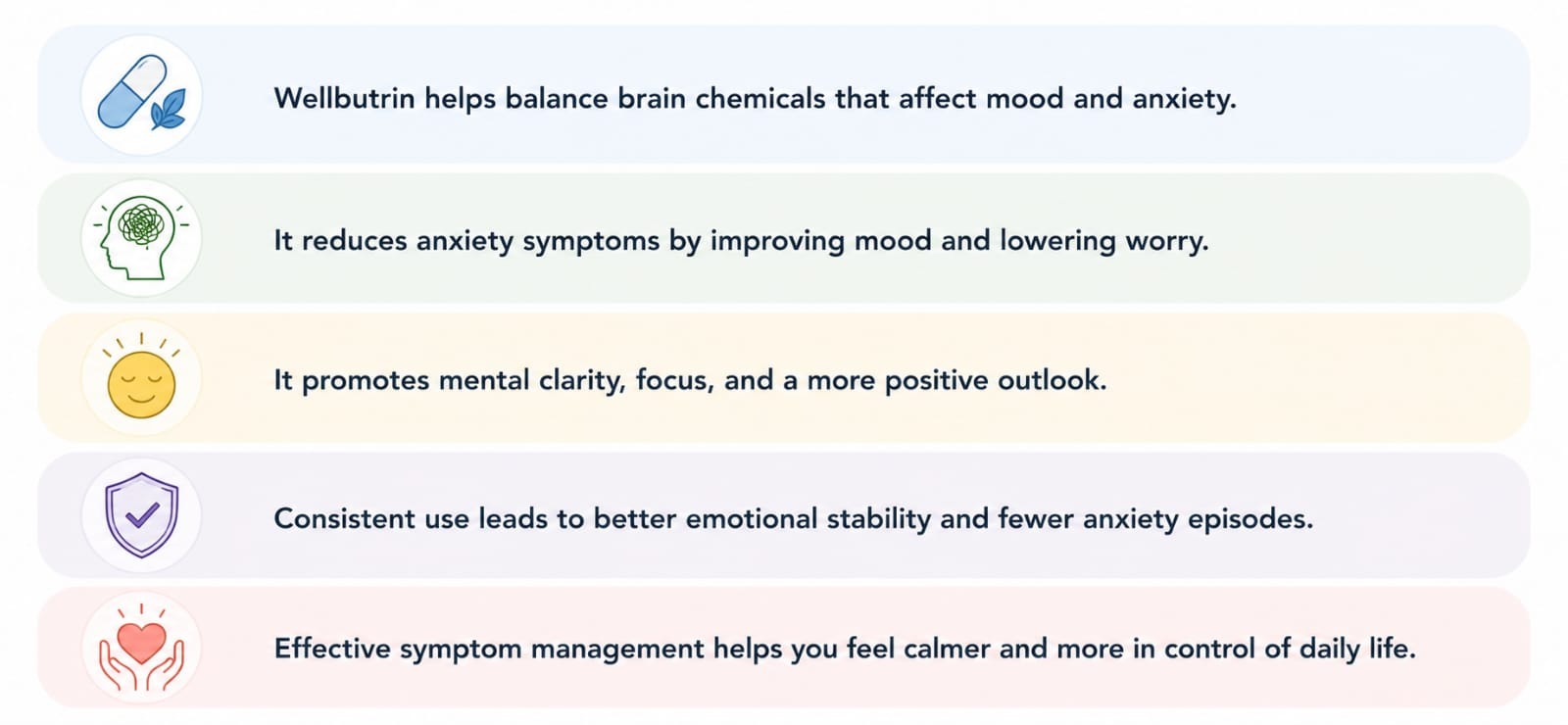
Some people prescribed Wellbutrin may notice improvements in mood, energy, focus, or anxiety-related symptoms over time. It may reduce feelings of anxiety while also increasing motivation and daily activity levels. Unlike some medications, it often causes less drowsiness. However, results vary, so medical guidance is important for safe and effective treatment planning.
Potential benefits include:
- May reduce anxiety symptoms in some individuals
- Helps improve energy and daily motivation
- Supports better focus and mental clarity
- Often causes less daytime sleepiness
- May improve overall mood stability
- Can support people with fatigue-related anxiety
These potential benefits may make Wellbutrin a treatment option worth discussing with a psychiatric provider. However, it is not appropriate for everyone, and treatment decisions should always be based on individual symptoms and medical history. So, regular monitoring through online psychiatry is important to track progress, manage side effects, and ensure safe and effective long-term anxiety treatment.
What Are the Signs Wellbutrin Is Working for Anxiety?
Some people may notice signs that Wellbutrin is working, such as improved mood, better focus, increased energy, or anxiety symptoms that feel easier to manage over time. These changes happen slowly, so you should track symptoms carefully and stay consistent with treatment.
You may also notice better sleep, less stress in small situations, and more interest in social activities. Daily tasks may feel easier and less heavy. You may also feel more in control of your emotions. These changes show progress, but they vary for each person. So, regular check-ups help you stay safe and improve steadily.
How Long Does Wellbutrin Take to Work and What Is the Bupropion Withdrawal Timeline?
Wellbutrin does not work instantly, and your body needs time to respond. Some people may notice small changes in mood, energy, and anxiety within a few weeks. Full improvement may take longer with steady use, so consistency matters. The Bupropion Withdrawal Timeline is the period after stopping treatment when symptoms like irritability, anxiety, sleep issues, and headaches may appear and last for days or weeks.
Some people notice improvements in energy, motivation, and concentration within the first few weeks of treatment. Changes in mood and anxiety-related symptoms may take longer and vary from person to person. Regular follow-up with a psychiatric provider can help evaluate progress and determine whether treatment adjustments are needed.
According to a report published in The Primary Care Companion to The Journal of Clinical Psychiatry [2], some people may experience irritability, anxiety, sleep difficulties, and headaches after discontinuing bupropion. The case report noted that symptoms developed several days after the medication was stopped and improved after treatment was restarted. The authors recommend reducing the medication gradually with healthcare provider guidance to help minimize these effects and support a smoother transition off treatment.
What Side Effects and Safety Considerations Should You Know About Wellbutrin?
Wellbutrin affects dopamine and norepinephrine activity in the brain, which can influence mood, energy, and concentration. While many people tolerate the medication well, some may experience side effects, especially during the early stages of treatment. Understanding these effects and staying in regular contact with your psychiatric provider can help support safer and more effective treatment.
Common Side Effects of Wellbutrin
Some people experience side effects such as insomnia, headache, agitation, dry mouth, or increased heart rate while taking Wellbutrin. These effects are often mild and may improve as the body adjusts to treatment. However, any persistent or bothersome symptoms should be discussed with a healthcare provider.
Why Monitoring Is Important
Regular follow-up appointments help healthcare providers evaluate how well the medication is working and identify any side effects early. Monitoring also allows dosage adjustments when needed and helps ensure treatment remains appropriate for your symptoms and overall health.
When to Contact Your Healthcare Provider
You should contact your healthcare provider if you notice worsening symptoms, significant sleep disturbances, severe agitation, or other concerning reactions. Early communication can help prevent complications and improve your treatment experience.
According to the U.S. Food and Drug Administration (FDA) [3], Wellbutrin XL (bupropion) may cause side effects such as insomnia, agitation, increased heart rate, and other nervous system-related symptoms in some individuals. The prescribing information also notes that patients should be monitored during treatment, particularly when starting the medication or adjusting the dose. Because responses and tolerability can vary between individuals, regular follow-up with a healthcare provider helps support safe and effective medication use.

Take Control of Anxiety Symptoms With MindVita Today
You may feel stressed, low on energy, and unable to focus. Daily tasks can feel hard for you, and even small things may seem difficult. Sleep problems and stress can also affect your routine. Over time, anxiety can make life feel out of control, and you may struggle to stay calm and balanced and handle normal daily work with ease.
At MindVita, we understand what you are going through. Our online psychiatry services give you care from licensed psychiatric providers. We help you understand your symptoms, guide your treatment, and track your progress step by step. So, you can feel supported, take control, and move toward a calmer, healthier, and more balanced life with proper care and guidance. Contact us today and start your journey toward better mental health.
FAQS
Is Wellbutrin approved specifically for anxiety?
No, Wellbutrin is not FDA-approved specifically for anxiety. However, psychiatric providers sometimes prescribe Wellbutrin for anxiety when they believe it may help. It works by affecting certain brain chemicals linked to mood and energy. Some people notice reduced anxiety symptoms, but results vary. Therefore, a healthcare provider should guide your treatment.
What are the common signs Wellbutrin is working?
Some people may notice signs that Wellbutrin is working, such as improved mood, increased energy, better focus, or anxiety symptoms that feel easier to manage over time. You may also feel more motivated and productive during the day. These changes usually happen gradually. Therefore, tracking your symptoms can help you notice steady progress over time.
How long does Wellbutrin take to work?
Some people notice improvements in energy, concentration, or daily functioning within the first few weeks. Changes in anxiety symptoms may take longer and vary from person to person. Regular follow-up with a psychiatric provider can help evaluate progress and determine whether treatment adjustments are needed.
Can Wellbutrin and Adderall be taken together?
Yes, Wellbutrin and Adderall can sometimes be taken together, but only under psychiatric care. Both affect brain chemicals, so you may feel more focus and energy. However, you may also feel side effects like anxiety or fast heartbeat. So, you should always follow medical guidance for safety.
What is the bupropion withdrawal timeline?
The bupropion withdrawal timeline varies from person to person. You may first feel mild symptoms like irritability, fatigue, or mood changes within a few days. These effects may continue for a short time. So, you should reduce medicine slowly under psychiatric guidance and support your body during this adjustment period.
How can online psychiatry help with anxiety treatment?
Online psychiatry helps you manage anxiety by giving easy access to licensed psychiatric providers from home. You can get proper diagnosis, treatment, and follow-ups. It also helps adjust medicine when needed. So, you feel supported, guided, and more in control. This makes anxiety treatment simple, safe, and more consistent over time.