Do you find yourself forgetting important tasks, losing focus during meetings, or putting off projects until the last minute? Many people struggle with procrastination, mental fatigue, difficulty staying organized, and trouble following through on responsibilities, even when they genuinely want to succeed. These challenges can affect work performance, academic success, relationships, and overall confidence in daily life.
These difficulties are often linked to cognitive skills, which help you focus, remember information, manage time, and complete tasks effectively. When cognitive skills are not working efficiently, everyday responsibilities can feel much harder to manage. At MindVita, our mental health professionals help individuals identify factors affecting focus, memory, and productivity and develop practical strategies to support lasting improvement and daily functioning. If these challenges are affecting your daily life, book an appointment with our team to receive personalized support and guidance.
Why Do Some People Struggle With Focus, Organization, and Follow-Through?
Cognitive skills influence how well you manage daily responsibilities, stay focused, and follow through on important tasks. If you often miss deadlines, struggle to prioritize your workload, forget appointments, or feel overwhelmed by simple responsibilities, cognitive challenges may be contributing to those difficulties. These skills help you process information, make decisions, solve problems, and stay organized throughout the day.
Research also highlights the important role cognitive skills play in everyday functioning. According to a 2025 study published in the Journal of Cognitive Enhancement [1], researchers found that working memory supports the storage and processing of information, helping people manage activities such as learning, decision-making, and problem-solving. When these abilities are weaker, staying organized and following through on responsibilities may become more difficult.
Why Are Memory Skills, Attention, and Focus Important?
Have you ever walked into a room and forgotten why you went there? Do you lose track of conversations, struggle to stay engaged during meetings, or find yourself rereading the same paragraph several times? Memory, attention, and focus are essential cognitive skills that help you absorb information, stay productive, and complete daily responsibilities.
When these skills are weak, everyday life can become frustrating. You may start projects but never finish them, forget important details, struggle to stay organized, or spend hours trying to focus on a task that should take minutes. These challenges can affect work performance, academic success, relationships, and self-confidence.
Several important skills help us learn, communicate, make decisions, and function in our daily lives:
- Memory Skills: Help you remember all the information that you need to learn and communicate.
- Attention: This skill helps you focus on relevant information and ignore distractions around you.
- Focus: This is an important skill that enables you to stay attentive to something for a longer period of time.
- Information Processing: This skill allows your brain to process information effectively.
- Problem Solving: Helps you make logical decisions and think.
Difficulties with memory, attention, and focus often show up as real-life challenges rather than obvious cognitive problems. Some people constantly procrastinate despite good intentions, while others struggle with task paralysis, managing multiple priorities, or completing work on time. In some cases, these difficulties may be associated with ADHD, executive dysfunction, chronic stress, or other mental health concerns. For some adults, particularly women who were never diagnosed during childhood, these challenges may be mistaken for stress, disorganization, or lack of motivation.
Can Cognitive Skills Therapy Help Strengthen Cognitive Function?
Yes, cognitive skills therapy can help people who struggle with focus, procrastination, forgetfulness, organization, and task completion. Many individuals seek support because they know what needs to be done but find it difficult to stay focused, manage their time effectively, or follow through consistently on responsibilities.
According to a systematic review and meta-analysis published in Ageing Research Reviews [2], the analysis included 31 randomised controlled trials with 1,806 participants. It is shown that cognitive training enhances working memory, processing speed, memory performance, and the overall cognitive function of the subjects. Some of the benefits were observed to last for up to six months.
Which Cognitive Skills Activities Can Support Better Memory and Focus?

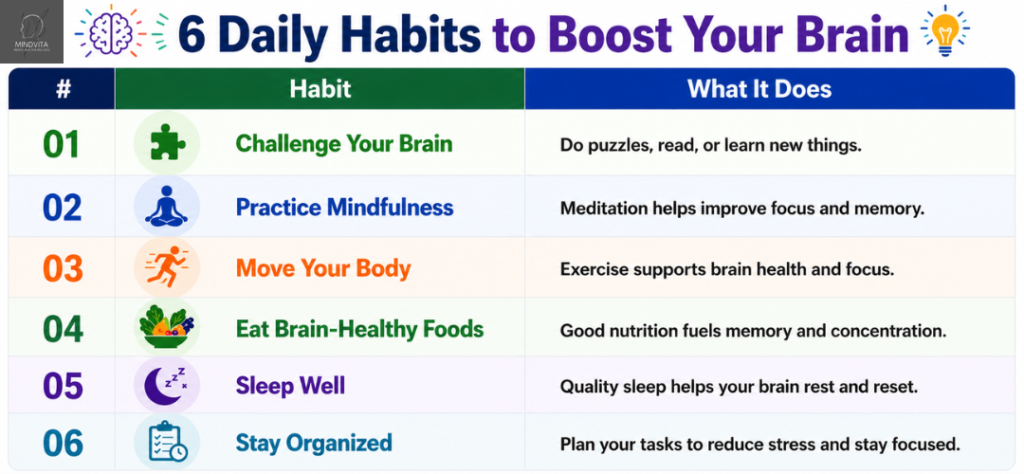
There are some types of cognitive skill exercises that can help in developing the mental capacities required for concentration, memorization, organization, and task completion. Such exercises enhance your ability to pay attention, learn, solve problems, and process information. By practicing the exercises, you will be able to stay more organized, remember important facts and concentrate on daily activities.
Memory Exercises
If you frequently forget names, misplace important items, or struggle to remember information from conversations and meetings, memory exercises may help improve recall. Activities such as flashcards, word association techniques, and memory games can strengthen your ability to store and retrieve information more effectively.
Puzzles and Brain Games
If you find yourself zoning out during conversations, struggling to stay focused on detailed tasks, or becoming mentally drained after short periods of concentration, brain-training activities may help. Crossword puzzles, Sudoku, and logic games encourage problem-solving, pattern recognition, and mental flexibility, which can support stronger attention and concentration over time.
Reading and Comprehension Activities
Reading can be especially helpful for people who lose track of information easily or struggle to stay engaged with lengthy content. Books, articles, and educational materials encourage the brain to process information, build vocabulary, and improve memory retention while strengthening the ability to focus on a single task for an extended period.
Learning New Skills
The learning of a new language, playing a musical instrument or any hobby activates other parts of the brain. This makes the brain flexible, creates more neural pathways, and enhances concentration, memory and thinking skills.
Attention and Focus Training
If distractions constantly pull your attention away from important work, focus training exercises may help. Mindfulness practices, concentration exercises, and meditation can improve your ability to stay engaged with tasks, reduce mental clutter, and maintain attention for longer periods without becoming overwhelmed.
Research suggests that cognitive training may help strengthen several important mental abilities over time. According to Medical News Today, engaging in brain-stimulating activities may be beneficial for retaining information and concentrating on various tasks. This is because the brain becomes more stimulated and flexible through such exercises. It may be useful when focusing and processing information. Consequently, people will be able to carry out various activities with effectiveness.
Take Action to Strengthen Your Cognitive Skills with MindVita Today
If you regularly miss deadlines, struggle to start important tasks, lose focus during work, forget responsibilities, or feel overwhelmed by everyday demands, you are not alone. These challenges can affect productivity, relationships, and self-confidence, making even simple responsibilities feel difficult to manage. With the right support and practical strategies, many people learn to improve focus, organization, and daily functioning over time.
At MindVita, we know that each cognitive journey is different. With our caring staff, we provide tailored services to boost your memory, attention span, and overall performance. By implementing proven methods, we will work with you to improve your cognitive skills and overcome any challenges that stand in your way. Contact us today to take the first step toward improved focus and lasting cognitive growth.
FAQS
What is the cognitive thinking definition in simple terms?
Cognitive thought is defined as the ability of the brain to learn, memorize, understand, reason, and make decisions. With cognitive thought, you can be able to manage information and respond to situations in your environment. Cognitive skills can be developed at any age and enhanced through regular practice, healthy living, and learning within a couple of weeks.
What causes a cognitive skills disorder?
Cognitive skill disorder may be caused by different factors, such as developmental problems, brain injury, neurological problems, or medical conditions that influence the brain’s ability to work. It is possible that symptoms become apparent right from birth or they emerge with time. Early detection and treatment make things easier.
How long does it take to improve cognitive performance?
In most cases, a person begins to notice improvement in concentration and clarity of mind within 4 to 6 weeks of continued practice. Improvements in other areas, such as memory, concentration, and problem-solving, usually take 8 to 12 weeks. Nevertheless, continued progress requires constant training and good practices.
Are cognitive challenges always a sign of a medical condition?
No, cognitive problems may not be associated with any form of health condition. Sometimes, due to stress, inadequate sleep, emotional distress, or mental fatigue, a person’s concentration and memory can be adversely affected for several days or even weeks. But if such a problem persists, it is better to seek expert advice.
Can children and adults both benefit from cognitive training?
Yes, both children and adults can benefit from cognitive training. Many individuals experience improved concentration, memory, and problem-solving abilities within a few weeks after regularly doing this type of mental exercise. This can be helpful for kids in studying and learning. Meanwhile, for adults, cognitive training usually boosts their day-to-day performance and focus.