

ADHD can affect how you focus, plan, and complete important responsibilities. Because of this, managing time, staying organized, and maintaining consistent routines may feel challenging. ADHD therapy helps you develop practical skills that support attention, emotional regulation, and behavior management. In Tysons Corner, experienced ADHD therapy providers teach strategies you can apply in everyday situations, from breaking large projects into manageable steps to minimizing distractions and staying on track. Over time, these skills can help make work, school, and personal responsibilities feel more organized and manageable.
Mental health challenges can impact many areas of life, including relationships, sleep patterns, concentration, emotions, and daily routines. If these struggles continue over time, they may become difficult to manage without the right support. At MindVita, our psychiatric providers deliver secure online mental health care with personalized treatment approaches, including medication management, ADHD support, therapy, and treatment for anxiety and depression. With convenient virtual appointments, we help make quality psychiatric care more accessible from the comfort of your home.
What Is ADHD Therapy and How Does It Help You Manage Daily Life Better?
ADHD therapy helps you understand how attention, planning, and behavior challenges affect your daily functioning. It focuses on building practical skills that improve focus, organization, and emotional regulation. You learn how to manage time more effectively, reduce distractions, and complete tasks with better consistency. It also helps you create simple routines that make your day more structured and less overwhelming. Over time, these strategies strengthen confidence and improve control during stressful situations.
Research published in Internet Interventions [1] found that adults with ADHD who received structured internet-based cognitive behavioral therapy experienced improvements in ADHD symptoms, daily functioning, and quality of life compared with usual care alone. The benefits remained noticeable during long-term follow-up, suggesting that therapy can play an important role in helping people manage ADHD more effectively over time.

Which ADHD Therapies Work Best for Adults and Children?
The most effective ADHD therapies are those that address the challenges people face in everyday life. While children and adults share some symptoms, their needs are often different. Children may benefit more from behavioral therapy, parent training, and school-based support, while adults often respond well to cognitive behavioral therapy (CBT), skills coaching, and strategies that improve organization and time management. The goal is not simply to reduce symptoms but to build practical skills that make daily life easier and more manageable.
Behavioral Therapy for Children
Behavioral therapy helps children develop positive habits and improve self-control. Therapists work with children, parents, and sometimes teachers to create consistent routines, encourage positive behaviors, and address challenges at home and school. These strategies can support better classroom performance, stronger social skills, and improved daily functioning.
Parent Training and Family Support
Parents play an important role in ADHD treatment. Parent training programs teach practical ways to manage routines, set clear expectations, and respond effectively to challenging behaviors. When families use consistent strategies, children often experience greater stability and support in their daily lives.
Cognitive Behavioral Therapy for Adults
Cognitive behavioral therapy (CBT) is one of the most widely used therapies for adults with ADHD. It helps people recognize unhelpful thought patterns, improve organization, manage distractions, and develop more effective coping strategies. Many adults also use CBT to strengthen time management skills and handle everyday responsibilities with greater confidence.
Skills-Based Strategies for Daily Life
ADHD therapy often includes practical techniques that can be applied right away. These may include planning tools, task-management systems, reminder strategies, and methods for reducing distractions. Over time, these skills can help improve productivity, focus, and consistency at work, school, and home.
Research supports the use of these approaches. A review published in the Journal of Attention Disorders [2] analyzed multiple randomized controlled trials and found that cognitive behavioral therapy significantly reduced ADHD symptoms in adults. The review concluded that CBT consistently performed better than both waiting-list and active control groups, supporting its role as an effective treatment option for improving ADHD symptom management and everyday functioning over time.
How Do ADHD Medications and Therapy Work Together for Better Results?
ADHD medications and therapy work together because they address different parts of the condition. Medication can help improve attention, reduce impulsivity, and make it easier to stay focused throughout the day. Therapy focuses on building practical skills that support long-term success, such as managing responsibilities, improving organization, handling stress, and creating healthier routines. When used together, these approaches often help people manage ADHD more effectively than either treatment alone.
Research supports this combined approach. A randomized controlled trial published in BMC Psychiatry [3] evaluated cognitive behavioral therapy (CBT) in adults who were already receiving ADHD medication. The study found that participants who received both CBT and medication experienced greater improvement in ADHD symptoms than those receiving medication alone. Researchers also found that these benefits were maintained during follow-up, suggesting that combining therapy with medication can provide meaningful and lasting support for ADHD management.
Can Home Remedies for ADHD and Lifestyle Changes Support Therapy Progress?
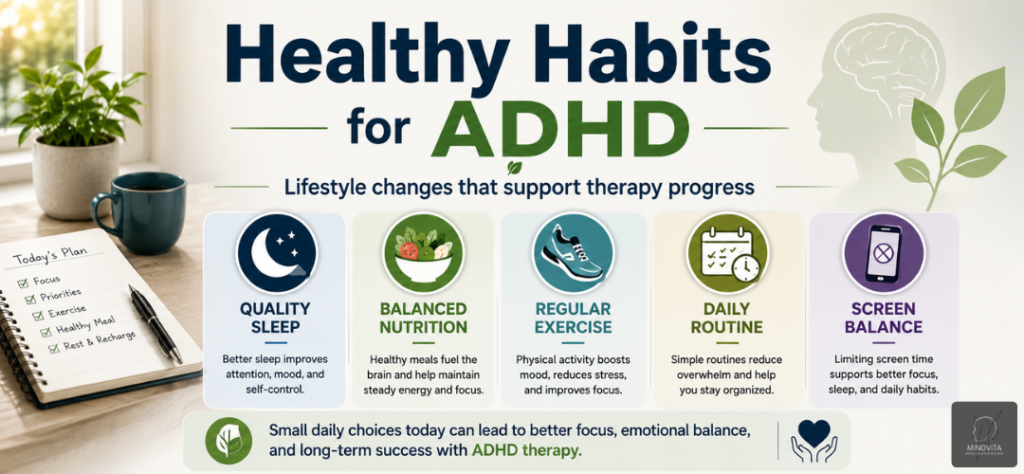
Yes, home remedies and lifestyle changes can support ADHD therapy, but they are most effective when used alongside professional treatment. Healthy daily habits can make it easier to stay focused, manage emotions, and follow through on responsibilities. While these strategies do not replace therapy or medication, they can strengthen the progress you make during treatment and support better day-to-day functioning.
- Healthy Sleep Routine: Getting enough quality sleep is one of the most important lifestyle habits for managing ADHD symptoms. A consistent sleep schedule can improve alertness, emotional balance, and self-control throughout the day. Poor sleep, on the other hand, may increase distractibility, irritability, and difficulty concentrating.
- Balanced Nutrition Habits: Healthy eating supports overall brain function and energy levels. Regular meals that include protein, whole grains, fruits, and vegetables can help maintain steady energy and reduce fluctuations that may affect focus and mood. Good nutrition also supports overall physical and mental well-being.
- Regular Physical Activity: Exercise can be a valuable part of an ADHD management plan. Physical activity helps release brain chemicals that support attention, motivation, and emotional regulation. It can also reduce restlessness, improve mood, and make it easier to manage daily stress.
- Structured Daily Routines: Simple routines create predictability and reduce the mental effort required to stay organized. Using schedules, reminders, planners, and consistent daily habits can help make tasks feel more manageable and reduce feelings of overwhelm.
- Reduced Screen Exposure: Too much screen time, especially before bedtime, may interfere with sleep and make it harder to stay focused. Creating healthy boundaries around digital devices can support better concentration, improve sleep quality, and encourage more balanced daily habits.
Research published in the American Journal of Psychiatry [4] reviewed a range of nonpharmacological ADHD interventions, including behavioral and dietary approaches. The authors found that several non-medication strategies showed benefits for ADHD symptom management, although the strength of evidence varied between interventions. These findings suggest that supportive lifestyle and behavioral changes can complement professional ADHD treatment and contribute to better long-term outcomes when combined with therapy and other evidence-based care.
Start ADHD Therapy With Mind Vita Psychiatric Providers for Practical Daily Life Improvement
Daily life can feel overwhelming when ADHD affects your focus, organization, and emotional regulation. You may struggle to complete tasks on time, manage responsibilities, or maintain consistent routines. Over time, this can lead to stress, reduced productivity, and mental fatigue in both personal and professional life.
At MindVita, our psychiatric providers offer structured ADHD Therapy designed to improve focus, behavior control, and daily functioning. We provide personalized treatment plans that may include therapy, medication management, and practical coping strategies. With online access and professional guidance, you can build stable routines, improve productivity, and regain better control over your daily life in a simple and supportive way.
Start ADHD Therapy With Mind Vita for Better Daily Life Management
Living with ADHD can make everyday responsibilities feel more challenging than they should. Difficulties with focus, organization, time management, and emotional regulation can affect your performance at work or school, your relationships, and your overall well-being. With the right support, however, it is possible to develop practical skills that make daily life more manageable and less stressful.
At MindVita, our psychiatric providers offer personalized ADHD therapy and treatment plans tailored to your unique needs. Through evidence-based therapy, medication management when appropriate, and practical coping strategies, we help you build skills that support focus, organization, and long-term success. With convenient online care and ongoing professional guidance, you can take meaningful steps toward greater confidence, improved daily functioning, and a better quality of life.
FAQs
How long does ADHD Therapy usually take to show results?
ADHD Therapy results vary from person to person. Many people start noticing small improvements in focus and routine within a few weeks. However, long-term behavior change usually takes consistent sessions over several months. Progress depends on symptom severity, support system, and how regularly you apply learned coping strategies.
Is ADHD Therapy effective without medication?
Yes, ADHD Therapy can be effective without medication in mild to moderate cases. It helps you build structure, improve focus, and manage emotions through behavioral strategies. However, some individuals may need combined treatment. A mental health professional helps decide the best approach based on daily functioning needs.
Can ADHD be completely cured with therapy?
ADHD cannot be fully cured, but it can be effectively managed. Therapy helps reduce symptoms and improves daily functioning by teaching coping skills. With consistent treatment, you can build strong routines, improve attention control, and handle responsibilities better. The goal is long-term symptom management, not complete elimination.
What type of ADHD Therapy is most commonly used?
Cognitive Behavioral Therapy (CBT) is the most commonly used ADHD Therapy. It helps you identify negative thinking patterns and replace them with structured behaviors. It improves planning, focus, and emotional control. In children, behavioral parent training is also commonly used to support consistent routines and positive behavior development.
Can lifestyle changes replace ADHD medication or therapy?
No, lifestyle changes cannot replace ADHD medication or therapy. However, they play an important supportive role. Healthy sleep, exercise, and structured routines improve focus and emotional balance. These changes work best when combined with professional ADHD Therapy and, when needed, medication for better symptom control.
When should someone start ADHD Therapy?
You should start ADHD Therapy when symptoms begin affecting your daily life, work, studies, or relationships. Difficulty focusing, poor organization, and emotional stress are common signs. Early therapy helps you develop coping skills sooner, preventing long-term challenges and improving overall daily functioning and stability.