

You may need a bipolar disorder test if your moods change often and affect your daily life. For example, you may feel unusually energetic, restless, or overly confident for days. Then, you may suddenly feel sad or exhausted. In addition, bipolar disorder symptoms can include less sleep, risky behavior, and signs of mania. Therefore, early support can improve emotional balance and daily functioning.
At MindVita, our mental health experts help you understand mood swings, emotional highs, and low energy periods that can impact your personal and work life. Through tailored assessments, medication plans, therapy, and regular follow-up, we support your mental well-being over the long term. Book your appointment today to help you create healthier habits, control your emotions better, and handle daily challenges with more confidence and stability.
What Is Bipolar Disorder and Why Are Early Symptoms Important?
Bipolar disorder is a mental health condition that causes major shifts in mood, energy, and behavior. These shifts can affect sleep, focus, relationships, and everyday responsibilities. In many cases, warning signs develop slowly and become harder to manage over time. Therefore, early care and professional guidance can help you manage bipolar disorder symptoms before they seriously affect your personal and professional life.
Here are some important facts about early bipolar disorder symptoms and their effect on daily functioning.
Daily Impact
Bipolar disorder can affect the way you think, feel, and respond to everyday situations. Some people become unusually confident, talk very fast, or make impulsive decisions during high-energy periods. During low moods, even simple tasks may feel difficult. As a result, work performance, family responsibilities, and social interactions may suffer.
Hidden Signs
Many people overlook early warning signs because they often resemble stress, burnout, or personality changes. In some cases, mood shifts happen gradually over several years. Therefore, people may not realize they need professional help until emotional and behavioral problems become more noticeable.
Sleep Problems
Sleep disturbances are common in people with bipolar disorder. For example, you may feel energetic after only a few hours of sleep. At other times, you may sleep longer but still feel exhausted. Over time, poor sleep can affect concentration, emotional control, and decision-making.
Early Care
Early treatment can help you understand mood triggers and manage emotional highs and lows more effectively. In addition, professional care may improve communication, daily routines, and long-term stability. Many people experience better emotional balance when they receive consistent support and follow a personalized treatment plan.
Proper Evaluation
A mental health evaluation helps professionals understand your mood history, behavior changes, and emotional patterns more clearly. It also helps rule out other conditions with similar signs. Therefore, timely evaluation can lead to accurate diagnosis, proper treatment, and better long-term symptom control.
What Are the Most Common Bipolar Disorder Symptoms?
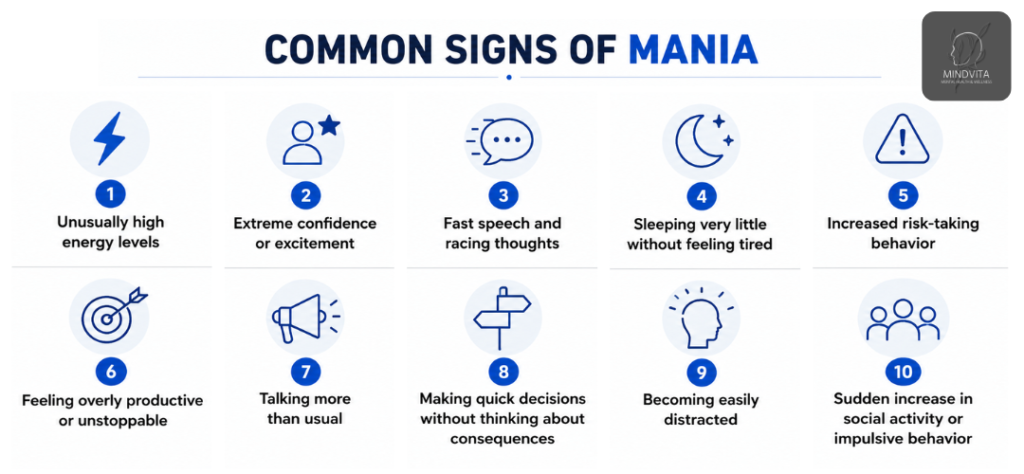
Bipolar disorder symptoms can affect emotions, behavior, physical health, and thinking patterns. Common signs of mania include unusually high energy, fast speech, impulsive decisions, and less need for sleep. Some people also experience depressive episodes with sadness, low motivation, and social withdrawal. Symptoms may look different in teenagers, adults, and older adults. In addition, stress and lifestyle factors can affect symptom intensity over time.
Common Bipolar Disorder Symptoms
There are several emotional, physical, and behavioral warning signs linked to bipolar disorder:
Emotional Symptoms
- Sudden mood swings
- Ongoing sadness or hopelessness
- Irritability or frustration
- Feeling emotionally disconnected
- Loss of interest in normal activities
- Emotional outbursts or anger
Physical Symptoms
- Reduced need for sleep
- Low energy or mental exhaustion
- Changes in appetite
- Restlessness or increased activity levels
- Difficulty relaxing or slowing down
Behavioral Symptoms
- Impulsive spending or risky decisions
- Withdrawal from family or friends
- Trouble managing work or daily responsibilities
- Increased talkativeness
- Poor judgment during high-energy periods
- Difficulty staying organized or focused
Teenagers with bipolar disorder may show irritability, emotional outbursts, or sudden behavior changes. Meanwhile, adults often struggle with relationships, finances, or work responsibilities during manic episodes. In older adults, symptoms may appear as confusion, isolation, or severe mood instability. Therefore, recognizing these warning signs early can support accurate diagnosis and proper treatment. It can also help improve long-term symptom control and daily functioning.
How Does a Bipolar Disorder Test Work and What Should You Expect?
A bipolar disorder test usually involves a detailed mental health evaluation instead of a single medical test. Mental health professionals review your mood patterns, emotional changes, energy levels, and daily behavior over time. According to the National Institute of Mental Health (NIMH) [1], a bipolar disorder diagnosis depends on the severity, length, and frequency of symptoms, along with personal and family history. This process helps identify bipolar disorder more accurately.
During the mental health evaluation, psychiatric providers may ask questions about your thoughts, reactions, sleep habits, and recent life changes. In addition, they often review how symptoms affect work, school, or relationships. A bipolar affective disorder test may also include symptom tracking and discussions about emotional highs and lows. The NIMH also explains that reviewing symptom patterns over time helps reduce the risk of misdiagnosis and supports more accurate care.
There is currently no brain scan, blood test, or lab test that can directly confirm bipolar disorder. However, doctors may order medical tests to rule out other health conditions with similar symptoms. Therefore, psychiatric providers carefully review personal history, sleep changes, and behavior shifts before making a diagnosis. The NIMH notes that conditions like thyroid disease and some medications can mimic bipolar disorder symptoms, which makes careful evaluation especially important.
When Should You Take a Test for Bipolar Disorder or Talk to a Doctor?
You should consider a test for bipolar disorder when mood changes begin affecting your behavior, judgment, relationships, or daily responsibilities. Some people experience sudden energy bursts, impulsive spending, risky decisions, or periods of deep sadness that last for days or weeks. According to the National Alliance on Mental Illness (NAMI) [2], bipolar disorder symptoms may worsen without proper treatment and support. Therefore, early evaluation can help improve diagnosis, treatment planning, and long-term symptom management.
There are several warning signs that may show it is time to speak with a mental health professional.
| Warning Sign | Example |
| Mood Swings | Sudden emotional highs and lows |
| High Energy | Feeling overly active or restless |
| Impulsive Spending | Risky or unnecessary purchases |
| Risky Behavior | Unsafe or reckless decisions |
| Less Sleep | Sleeping little without tiredness |
| Fast Speech | Talking unusually quickly |
| Racing Thoughts | Difficulty slowing thoughts down |
| Emotional Withdrawal | Avoiding people or activities |
| Irritability | Frequent anger or frustration |
| Poor Focus | Trouble managing responsibilities |
| Overconfidence | Feeling unusually powerful |
| Behavior Changes | Sudden personality shifts |
Family members should encourage someone to seek help when emotional or behavioral changes become more intense or difficult to manage. In many cases, loved ones notice warning signs before the individual does. However, self-diagnosing bipolar disorder symptoms online can lead to confusion or delayed treatment. Mental health conditions often share similar symptoms. Therefore, professional evaluation is the safest and most accurate way to understand mood changes and receive proper care.
What Support and Treatment Options Are Available After a Bipolar Disorder Test?
After a bipolar disorder test, mental health professionals develop a care plan based on your symptoms, lifestyle, and emotional needs. Treatment may include therapy, medication, or lifestyle changes. Many people benefit from combining these approaches. According to the Mayo Clinic [3], long-term treatment helps many people manage mood episodes more effectively and maintain healthier daily routines. Therefore, early and consistent care can improve long-term mental health outcomes.
Several treatment strategies can help reduce bipolar disorder symptoms and support emotional balance. Psychotherapy helps people understand thoughts, behaviors, and emotional triggers more clearly. Medications such as mood stabilizers may help control severe mood shifts. In addition, healthy habits can improve symptom management. Regular sleep, physical activity, stress reduction, and structured routines often help people maintain better focus and emotional control throughout daily life.
Psychiatric providers also play an important role in long-term bipolar disorder care. They monitor symptom changes, adjust medications safely, and help prevent future manic or depressive episodes. Regular follow-up visits can also help identify early warning signs before symptoms become severe. Family support, mood tracking, and treatment consistency may further improve recovery and help people manage daily responsibilities more confidently over time.
Take the First Step Toward Better Mental Health Support
Living with ongoing mood swings, sudden energy changes, or emotional lows can affect your relationships, work performance, and daily routines. You may feel confused about your emotions or struggle to understand why your behavior changes so quickly. Over time, these challenges can become harder to manage without professional guidance, especially when symptoms begin affecting your sleep, focus, and emotional control.
At MindVita, our psychiatric providers offer personalized mental health care through comprehensive evaluations, medication management, psychotherapy, and telepsychiatry services. Our team also provides ongoing follow-up care, collaborative treatment planning, and support tailored to your individual needs. In addition, we help patients build healthier routines and long-term coping strategies for better emotional wellness. Contact us today to schedule your consultation and take the next step toward balanced mental health.
FAQs
Can bipolar disorder symptoms come and go over time?
Yes, bipolar disorder symptoms can change over time. Some people experience long periods with mild or no symptoms. However, mood episodes may return suddenly and affect daily life again. Therefore, regular follow-up care and symptom monitoring are important for long-term mental health management and early intervention when mood changes become more noticeable.
Can stress make bipolar disorder symptoms worse?
Yes, high stress levels can trigger or worsen bipolar disorder symptoms in some people. Stress may affect sleep, emotional control, and daily routines. As a result, mood changes may become more intense or harder to manage. Healthy coping strategies, structured routines, and professional support can help reduce stress-related symptom triggers over time.
Can bipolar disorder affect school or job performance?
Yes, bipolar disorder can affect concentration, decision-making, attendance, and emotional control at school or work. During manic episodes, some people may take impulsive risks or struggle with focus. During depressive episodes, motivation and productivity may decrease significantly. Therefore, early treatment and ongoing support can help improve daily performance and stability over time.
Can children and teenagers develop bipolar disorder?
Yes, bipolar disorder can affect children and teenagers, although symptoms may appear differently than in adults. Younger people may show irritability, emotional outbursts, sudden behavior changes, or trouble focusing. In some cases, symptoms may look similar to other mental health conditions. Therefore, professional evaluation is important for accurate diagnosis and proper treatment planning.
How long does bipolar disorder treatment usually last?
Bipolar disorder often requires long-term treatment and regular mental health support. Treatment length depends on symptom severity, response to care, and overall mental health needs. Many people continue therapy, medication management, and follow-up visits for years. Consistent care can help reduce mood episodes, improve stability, and support healthier daily routines over time.