

Have you ever stepped outside on a sunny day only to notice your skin becoming red, itchy, or painful much faster than usual? If you recently started medication for depression, anxiety, bipolar disorder, or another mental health condition, your medication could be increasing your skin’s sensitivity to sunlight. Understanding this side effect can help you continue treatment safely while enjoying everyday activities.
The good news is that you do not have to choose between protecting your mental health and enjoying time outdoors. At MindVita, our psychiatric providers help you understand how your medications may affect your body, including your skin’s response to sunlight. We also provide practical guidance to help you lower your risk without interrupting the treatment that supports your mental health. If you have noticed unusual skin changes after sun exposure, we are here to help you find answers and create a plan that fits your needs.
What Is Photosensitivity and Why Can Psychiatric Medications Trigger It?
You may have wondered what photosensitivity is or why certain medications make your skin more sensitive to sunlight. Photosensitivity means your skin reacts more strongly to ultraviolet (UV) rays than it normally would. As a result, even limited sun exposure can lead to redness, burning, itching, or a rash. Some people notice symptoms after sitting near a sunny window, while others develop skin irritation during everyday activities such as walking the dog or driving to work.
According to the U.S. Food and Drug Administration (FDA) [1], certain medications can make your skin more sensitive to the sun by causing phototoxic or photoallergic reactions after exposure to UV light. This is why it is important to understand how your medication may affect your skin and to take simple precautions when spending time outdoors. If you notice unusual skin changes after sun exposure, speak with your psychiatric provider instead of stopping your medication on your own.
What Symptoms Should You Watch for, and When Should You Be Concerned?
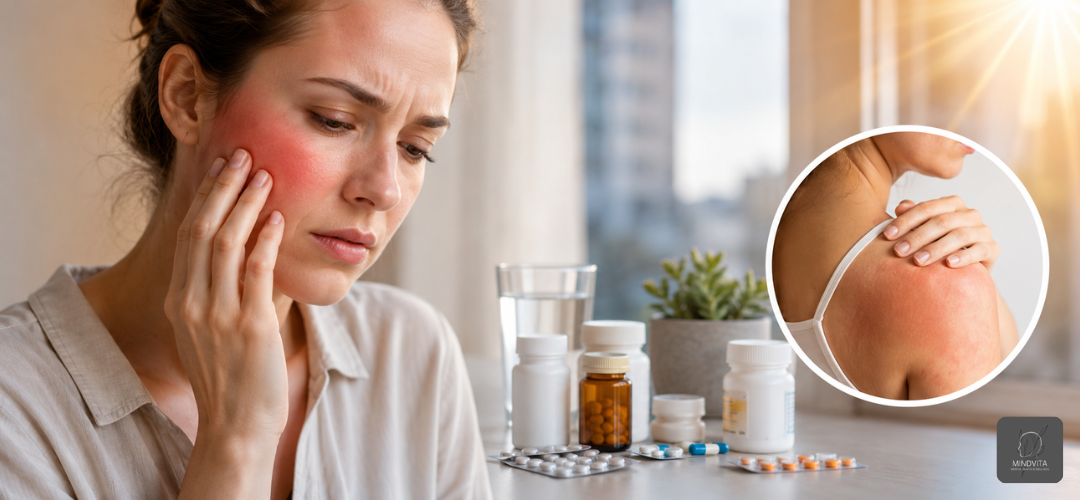
Medication-related sun sensitivity does not affect everyone in the same way. Some people develop mild redness that fades quickly, while others experience burning, swelling, or blisters after only a short time outdoors. Because these reactions often resemble a normal sunburn, many people overlook the role of their medication. Recognizing symptoms early can help prevent more severe reactions.
You may notice one or more of the following symptoms:
- Redness that appears soon after sun exposure.
- Burning or stinging sensations.
- Itchy or tender skin.
- Swelling in exposed areas.
- Blisters in more severe cases.
- A sun allergy rash.
- Skin discoloration after the rash heals.
- Increased sensitivity even on cloudy days.
Although these symptoms may improve once you get out of the sun, you should not ignore them if they keep coming back. Repeated reactions can become more uncomfortable over time and may interfere with your daily routine. If you notice that your skin regularly becomes red, painful, or irritated after sun exposure, talk to your psychiatric provider. They can determine whether your medication is contributing to the problem and recommend ways to protect your skin while continuing your treatment safely.
Which Mental Health Medications May Increase Your Skin’s Sensitivity to Sunlight?
You may notice that your skin only started burning, itching, or developing a rash after beginning treatment for depression, anxiety, bipolar disorder, or another mental health condition. If these reactions happen after only a short time outdoors, your medication could be increasing your skin’s sensitivity to sunlight. Although this side effect does not affect everyone, recognizing it early can help you protect your skin while continuing the treatment that supports your mental health.
Healthcare providers have long recognized that certain psychiatric medications can increase the skin’s sensitivity to sunlight. A 2021 review published in Pharmaceuticals [2] found that several psychotropic medications are associated with phototoxic and photoallergic skin reactions after ultraviolet (UV) exposure. Understanding this potential side effect allows you to take simple precautions while continuing your treatment safely.
How Can You Protect Yourself While Taking Mental Health Medications?
Taking psychiatric medication does not mean you have to avoid outdoor activities. Whether you enjoy walking your dog, gardening, exercising, or simply commuting to work, a few simple habits can lower your risk of medication-related sun reactions. Daily sun protection and monitoring your skin can help you continue treatment safely.
Use Sunscreen Every Day
Apply a broad-spectrum sunscreen with SPF 30 or higher before going outside, even on cloudy days. Reapply it every two hours if you remain outdoors or after swimming or sweating to maintain effective protection.
Wear Protective Clothing
Choose lightweight long-sleeved clothing, wide-brimmed hats, and UV-blocking sunglasses whenever possible. These simple barriers reduce direct exposure to ultraviolet rays and provide extra protection for areas that are most vulnerable to sun damage.
Limit Time in Direct Sunlight
Try to schedule outdoor activities during the early morning or late afternoon. Avoid prolonged sun exposure between 10 a.m. and 4 p.m., when ultraviolet radiation is usually at its strongest.
Stay Hydrated During Hot Weather
Drinking enough water helps your body regulate its temperature and supports overall health. It may also reduce your risk of heat-related illness, especially during the summer months or while spending time outdoors.
Check Your Skin for Changes
Pay attention to redness, burning, itching, or a sun allergy rash after sun exposure. Recognizing these symptoms early allows you to protect your skin and seek medical advice before the reaction becomes more severe.
Talk to Your Psychiatric Provider
Do not stop taking your medication if you notice increased skin sensitivity. Instead, discuss your symptoms with your psychiatric provider. They can determine whether your medication is contributing to the problem and recommend the safest next steps.
Research published in Clinical Dermatology [3] describes drug-induced photosensitivity as a common but often underrecognized medication side effect that can cause phototoxic or photoallergic skin reactions after sun exposure. Recognizing symptoms early and following recommended sun-protection measures may help reduce your risk. If symptoms persist or worsen, consult your psychiatric provider before changing your medication.
Take Steps to Protect Your Skin Without Interrupting Your Mental Health Care
Managing your mental health should not prevent you from enjoying everyday life. If your skin suddenly starts burning, itching, or developing a rash after routine activities like walking outside or driving in the sun, do not assume it is simply caused by the weather. Your psychiatric provider can help determine whether your medication may be contributing to these reactions and recommend ways to protect your skin without interrupting your treatment.
At MindVita, our psychiatric providers take the time to explain medication side effects in a way that is easy to understand. We also help you develop practical strategies for summer medication safety so you can continue your treatment with confidence. If you have questions about mental health medications and sunlight or have experienced repeated skin reactions, contact us today. We’re here to support both your mental and physical health.
FAQs
Can psychiatric medications make your skin more sensitive to the sun?
Yes, some psychiatric medications can make your skin more sensitive to sunlight, causing redness, burning, or a rash after even a short time outdoors. This side effect may appear soon after starting a new medication or increasing your dose. If you notice these changes, speak with your psychiatric provider for guidance instead of stopping your medication.
What should I do if I develop a sun allergy rash while taking medication?
If you develop a sun allergy rash while taking medication, move out of direct sunlight as soon as possible and keep the affected area cool. Avoid scratching the rash, and contact your psychiatric provider if the symptoms persist, worsen, or return after future sun exposure. Do not stop your medication without medical advice.
Should I stop taking my medication if I experience photosensitivity?
No, do not stop taking your medication on your own if you experience photosensitivity. Instead, reduce your sun exposure and contact your psychiatric provider as soon as possible. They can evaluate your symptoms, recommend protective measures, and decide whether your medication or dosage needs to be adjusted safely.
Can I still spend time outdoors while taking psychiatric medication?
Yes, you can usually spend time outdoors while taking psychiatric medication, but it is important to protect your skin if your medication increases sun sensitivity. Wear sunscreen, choose protective clothing, stay hydrated, and avoid prolonged sun exposure during peak afternoon hours. These simple steps can help reduce your risk.
Is photosensitive epilepsy the same as medication-related photosensitivity?
No, these are different conditions. Photosensitive epilepsy involves seizures triggered by flashing lights or visual patterns, while medication-related photosensitivity affects how your skin reacts to sunlight. If you experience either condition or are unsure about your symptoms, consult your healthcare provider for an accurate diagnosis and appropriate care.