

Do you find yourself constantly overthinking, feeling tense throughout the day, struggling to relax, or lying awake at night because your mind will not slow down? Anxiety can affect your sleep, focus, work performance, and ability to enjoy everyday life. Pristiq (desvenlafaxine) is an SNRI medication that affects serotonin and norepinephrine levels in the brain. While it is FDA-approved for major depressive disorder, some psychiatric providers may prescribe it off-label when anxiety symptoms occur alongside depression or other mental health concerns. Over time, some people may notice improved emotional stability, better focus, and greater ability to manage daily stress as part of a provider-guided treatment plan.
If you are dealing with anxiety, it can feel heavy and hard to manage every day. Many people experience ongoing stress, overthinking, and emotional discomfort that affects sleep, focus, and daily life. With MindVita, you get access to trusted online psychiatry support that focuses on your needs. Licensed professionals understand anxiety care and build a treatment plan made for you. Schedule a consultation today, and we will track your progress, adjust care when required, and guide you step by step toward better control of anxious thoughts.
What Is Pristiq for Anxiety and How Does It Support Emotional Balance?
If anxiety leaves you feeling emotionally drained, constantly worried, or unable to relax, your brain’s stress-response system may be working overtime. Pristiq (desvenlafaxine) is a prescription SNRI medication that affects serotonin and norepinephrine, two brain chemicals involved in mood and emotional regulation. Although it is primarily approved for major depressive disorder, some psychiatric providers may prescribe it when anxiety symptoms are affecting daily functioning and emotional health.
According to a clinical review published in The Primary Care Companion for CNS Disorders [1], desvenlafaxine acts as a serotonin-norepinephrine reuptake inhibitor (SNRI), increasing the availability of serotonin and norepinephrine in the brain. The review notes that these neurotransmitter systems are involved in emotional and psychological functioning and may become dysregulated in mood disorders. By affecting both serotonin and norepinephrine pathways, desvenlafaxine may help improve symptoms when used as part of a provider-guided treatment plan.
How Does Pristiq Anxiety Treatment Work in the Brain?
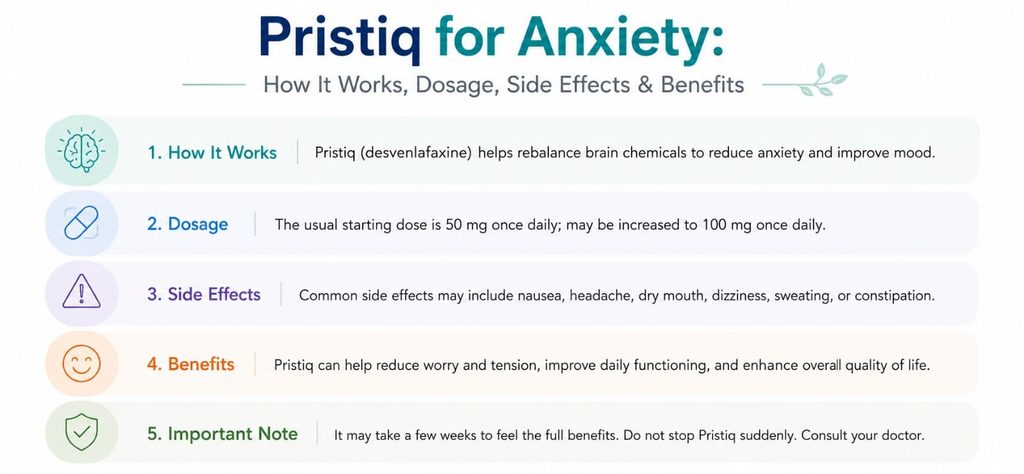
When prescribed for anxiety-related symptoms, Pristiq affects serotonin and norepinephrine activity in the brain. These neurotransmitters play important roles in mood regulation, stress response, and emotional processing. When they become more stable, anxiety symptoms often reduce. Over time, your brain responds better to stress, and you feel more in control of thoughts, emotions, and daily situations.
Pristiq for anxiety works mainly by balancing key neurotransmitters in the brain, as explained in the points below:
- Serotonin levels increase, which helps reduce constant worry and supports a calmer emotional state during stressful situations.
- Norepinephrine regulation improves focus, attention, and mental energy, which helps you think more clearly under pressure.
- Physical anxiety symptoms like restlessness, muscle tension, and rapid heartbeat may decrease with consistent treatment.
- Brain signaling becomes more stable over time, which helps reduce frequent anxiety spikes and emotional overwhelm.
Pristiq anxiety treatment works gradually, not instantly. You need regular use and medical guidance for best results. With consistent care and online psychiatry support, you can track progress safely, manage symptoms better, and improve long-term emotional balance and anxiety control.
How Do Psychiatric Providers Determine Pristiq Dosage?
When Pristiq is prescribed for anxiety-related symptoms, psychiatric providers typically start with a low daily dose and adjust treatment based on symptom response, side effects, and clinical needs. However, the exact plan can change based on your symptoms, medical history, and how your body responds. You should always follow your psychiatric provider’s advice and attend regular check-ups during treatment.
According to a Medical News Today [2] review on Pristiq dosage, the typical starting dose of desvenlafaxine is 50 mg once daily. The article explains that healthcare providers monitor treatment response and may adjust the dosage when needed. It also notes that doses higher than 50 mg per day have not been shown to be more effective and may increase the risk of side effects. Because of this, regular follow-up and communication with your healthcare provider are important to help ensure safe and effective treatment.
How Long Does Pristiq Take to Work for Anxiety Symptoms?
Pristiq does not provide immediate relief from anxiety symptoms. Some people may notice small improvements in sleep, energy levels, or mood within the first few weeks of treatment. However, meaningful changes in anxiety symptoms often take longer and may develop gradually with consistent use.
Because Pristiq affects serotonin and norepinephrine activity in the brain, it takes time for these changes to influence emotional regulation and stress responses. Regular use, follow-up appointments, and communication with your psychiatric provider can help ensure treatment remains safe and effective throughout the adjustment period.
What Side Effects Can Occur When Taking Pristiq?
Pristiq for anxiety may cause some side effects, especially in the early weeks of treatment. These effects happen as your body adjusts to changes in brain chemicals. Most symptoms are mild and temporary. However, some people may experience stronger reactions. Regular monitoring and proper medical guidance help reduce risks and ensure safer, more effective anxiety treatment outcomes.
- Nausea and Stomach Upset: Some patients feel nausea, stomach upset, or reduced appetite when starting Pristiq. These symptoms usually appear in the first days or weeks. They often improve as your body adjusts to the medication and treatment continues regularly.
- Sleep Disturbances and Fatigue: Pristiq for anxiety may affect sleep patterns. Some people experience insomnia, while others feel tired during the day. These effects depend on how your body responds and may reduce with consistent use and medical supervision.
- Dizziness and Headache: Dizziness and mild headaches can occur during early treatment. These symptoms are usually temporary and linked to brain chemical adjustment. Staying hydrated and following your psychiatrist’s instructions may help reduce their intensity over time.
- Mood or Physical Changes: Some patients may notice mood shifts, restlessness, or increased sweating. These changes are often temporary. However, if symptoms continue or worsen, it is important to consult a healthcare provider for proper dose adjustment.
According to a review published in the National Center for Biotechnology Information (NCBI) [3], side effects of desvenlafaxine are more common at higher doses and tend to occur most frequently during the early weeks of treatment. The review found that many of these effects decrease over time as treatment continues. It also notes that patients starting antidepressant therapy should be monitored for side effects and symptom changes, helping healthcare providers make appropriate treatment decisions throughout the course of care.

Start Your Pristiq Anxiety Treatment With MindVita Today
You may find yourself constantly overthinking, struggling to relax, lying awake at night, or feeling anxious even when there is no clear reason. Constant worry, low mood, and emotional imbalance can make it hard to stay focused or calm. Over time, these symptoms can affect your work performance, relationships, sleep quality, and ability to enjoy everyday life.
With MindVita, you can take control of your mental health through trusted online psychiatry support. You connect with licensed professionals who understand anxiety treatment and medication like Pristiq for anxiety. They create a personalized plan, guide your progress, and adjust care when needed. As a result, you get structured support, better symptom control, and a clearer path toward emotional stability and recovery. Contact us today to get the support you need for anxiety care.
FAQS
How long does Pristiq for anxiety take to work?
When Pristiq is prescribed for anxiety-related symptoms, some people notice small improvements within the first few weeks, while more significant changes may take longer. Treatment response varies from person to person, and regular follow-up helps determine whether the medication is working effectively.
Can Pristiq help with social anxiety?
Yes, some psychiatric providers may prescribe Pristiq when social anxiety symptoms occur alongside depression or other mental health concerns. Treatment effectiveness varies from person to person, and a psychiatric provider can determine whether Pristiq is appropriate based on your symptoms and medical history.
What are the common Pristiq side effects that anxiety patients experience?
Common Pristiq side effects in anxiety patients include nausea, headache, dizziness, dry mouth, and sleep problems. Some people may also feel tired or restless at the start. These effects often get better as the body adjusts. If side effects continue or worsen, you should contact your psychiatrist for safe guidance.
Can I stop Pristiq suddenly?
No, you should not stop Pristiq for anxiety suddenly. It can cause dizziness, mood swings, nausea, and sleep problems. These effects may feel uncomfortable and affect your daily routine. Psychiatrists usually lower the dose slowly. Always follow your psychiatrist’s advice to stop safely and keep your anxiety under control.
Is online psychiatry useful for anxiety treatment?
Yes, online psychiatry for anxiety is very useful. It gives easy access to psychiatrists, safe medication guidance, and regular follow-ups from home. As treatment continues, anxiety becomes easier to manage. Online care helps you stay consistent, get professional support, and improve mental health in a simple, comfortable, and reliable way.




2 Responses