
What can help people with ADHD and autism manage daily life? The right rehabilitation, helpful resources, and a strong support system can make everyday life easier. They help you build important skills, handle daily challenges, and become more independent. Early support also improves confidence and helps you achieve better long-term results.
Everyone’s needs are different, and the right support can make daily life easier. At MindVita, we listen to your concerns and provide care that fits your situation. Our team is here to help you with practical guidance and ongoing support. Schedule a consultation to begin your journey toward better mental health and lasting support.
Why Does Rehabilitation Matter for ADHD and Autism?
Rehabilitation plays an important role in helping people with ADHD and autism manage everyday challenges. It helps you develop communication, social, and daily living skills while improving confidence and independence. Instead of focusing on limitations, rehabilitation supports your strengths and helps you become more successful at home, school, work, and in the community.
According to a case report published in Cureus [1], rehabilitation can improve attention, daily functioning, and independence in people with ADHD. The study found that a personalized rehabilitation plan helped improve functional abilities and supported better participation in everyday activities. It also highlights the value of early and consistent care to achieve better long-term outcomes.
Which Evidence-Based Therapies Help People With ADHD and Autism?
The best therapy depends on your symptoms, age, and daily needs. There is no single treatment that works for everyone. A combination of therapies often helps you improve communication, behavior, attention, and everyday skills. A healthcare professional can recommend a treatment plan that matches your goals and supports long-term progress.
Healthcare professionals may recommend one or more of the following therapies based on your needs and goals:
- Behavioral Therapy: Helps you develop positive behaviors, improve self-control, and manage daily challenges more effectively.
- Occupational Therapy: Builds everyday living skills, improves fine motor abilities, and helps manage sensory sensitivities.
- Speech and Language Therapy: Strengthens communication, social interaction, and language skills for children and adults.
- Executive Function Coaching: Teaches planning, organization, time management, and problem-solving skills.
- Medication Management: May help reduce ADHD symptoms when prescribed and monitored by a qualified healthcare provider.
- Parent Training Programs: Give parents practical ways to support learning, behavior, and healthy routines at home.
- Cognitive Behavioral Therapy (CBT): Helps manage anxiety, stress, and negative thinking patterns that may occur alongside ADHD or autism.
Using the right mix of therapies can improve your quality of life and help you reach personal goals. Regular follow-up appointments allow your treatment plan to change as your needs change. Working with experienced mental health professionals also helps you receive the right support at every stage of life.
What Resources and Support Systems Can Improve Daily Life?
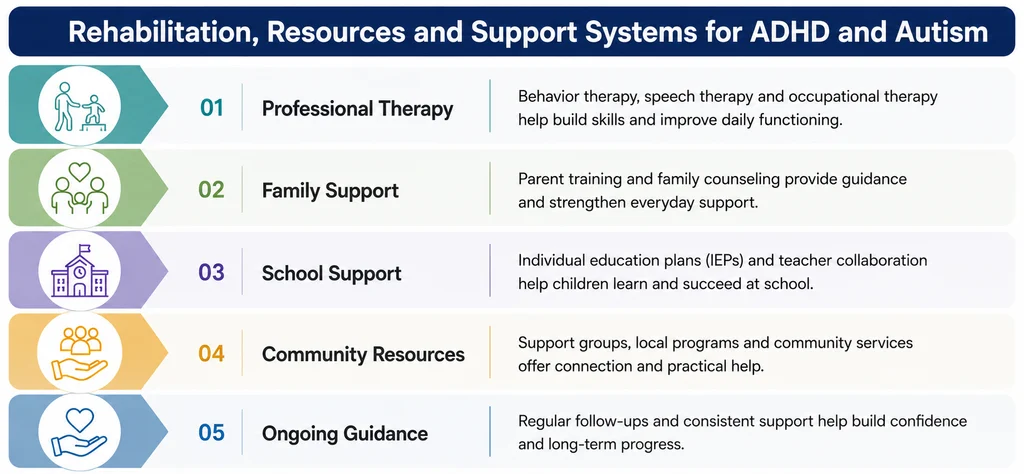
The right resources and support can make daily life easier. They help you manage everyday challenges with greater confidence. Family members, healthcare professionals, schools, workplaces, and community programs all play an important role. Together, they help you build new skills, stay organized, and become more independent over time.
According to PubMed [2], a systematic review found that support from parents, healthcare professionals, and other services helps children with ADHD and autism take part more actively in everyday activities. The review also highlights that working together across different settings gives families better guidance and supports children’s participation in daily life.
How Can You Build a Long-Term Support Plan for ADHD and Autism?
A long-term support plan should match your needs, strengths, and goals. It helps you manage daily challenges while building important life skills over time. As your needs change, your plan should also change. Regular updates and the right guidance help you continue making steady progress.
Set Clear and Realistic Goals
Start with small and realistic goals that match your daily needs. Breaking larger goals into simple steps makes them easier to achieve. This approach also helps you stay motivated and recognize your progress over time.
Create Healthy Daily Habits
Build a daily routine that includes regular sleep, meals, school or work, exercise, and relaxation. Simple habits bring structure to your day, reduce stress, and make it easier to manage everyday responsibilities with confidence.
Track Your Progress Regularly
Take time to review what is working well and what needs improvement. Keeping notes or discussing your progress during follow-up visits helps you adjust your plan and continue moving toward your goals.
Adjust Your Plan When Needed
Your needs may change as you grow or face new responsibilities. Updating your support plan helps you receive the right care, learn new coping skills, and stay prepared for different stages of life.
Stay Connected With Your Care Team
Keep regular contact with your healthcare providers and attend follow-up appointments. They can answer your questions, monitor your progress, recommend helpful changes, and provide guidance that matches your current needs and future goals.
According to Cambridge University Press [3], planning ahead helps young people with autism move more smoothly into adult life and healthcare services. The study explains that support should continue as life changes so each person can receive care that matches their changing needs and future goals. This approach helps improve confidence, independence, and health.
Take the Next Step Toward Better ADHD and Autism Support with MindVita
Living with ADHD or autism can make everyday life more challenging than it seems. You may find it hard to stay organized, manage emotions, keep up with school or work, or handle social situations. Over time, these struggles can leave you feeling frustrated and unsure about where to find the right help.
At MindVita, we listen to your concerns and understand your unique needs. Our team provides personalized care through therapy, medication management when needed, and practical support for everyday challenges. Contact us today to learn how we can help you or your loved one build skills, gain confidence, and live a healthier, more balanced life.
FAQs
Can adults receive an ADHD or autism diagnosis later in life?
Yes. Many people are diagnosed with ADHD or autism as adults after they begin to understand the challenges they have faced for years. A proper evaluation can provide clear answers. It also helps you find the right treatment, support, and practical strategies to manage daily life with more confidence.
How do I know if my child needs rehabilitation services?
Your child may need rehabilitation services if everyday tasks, communication, learning, or social interactions become difficult. Early support can help build important life skills and improve confidence. If you notice ongoing challenges at home or school, a professional evaluation can identify your child’s needs and recommend the most suitable support plan.
Does insurance cover rehabilitation and support services?
It depends on your insurance plan and the type of services you need. Many plans cover certain rehabilitation and mental health services when they are medically necessary. Checking your benefits or speaking with your insurance provider can help you understand what is covered and whether you need a referral.
How long does rehabilitation usually take?
Rehabilitation does not follow the same timeline for everyone. The length of support depends on your needs, goals, and progress. Some people benefit from short-term therapy, while others need ongoing care. Regular follow-ups help adjust the treatment plan and support steady improvement over time.
How can schools and families work together to provide better support?
Schools and families can support a child better by working as a team. They should share regular updates, discuss challenges, and follow similar strategies at home and school. This helps the child feel supported, build new skills, and make steady progress in learning, behavior, and everyday life.
References
- Desai, S., Sharath, H. V., Qureshi, M. I., & Raghuveer, R. (2024). Effect of pediatric rehabilitation on children with attention deficit hyperactivity disorder (ADHD): A case report. Cureus, 16(6), e62739.
- Coussens, M., et al. (2020). Parents’ perspectives on participation of young children with attention deficit hyperactivity disorder, developmental coordination disorder, and/or autism spectrum disorder: A systematic scoping review. Child: Care, Health and Development, 46(2), 232–243.
- King, C., Merrick, H., & Le Couteur, A. (2020). How should we support young people with ASD and mental health problems as they navigate the transition to adult life including access to adult healthcare services? Epidemiology and Psychiatric Sciences, 29, e90.