
Have you noticed that your restlessness is becoming harder to ignore? If you constantly feel on edge, struggle to relax, or find that restlessness is affecting your sleep, concentration, or daily routine, it may be a sign that something more than temporary stress is contributing to your symptoms. Understanding when restlessness is serious can help you recognize the warning signs and know when it is time to seek professional support.
If restlessness is affecting your sleep, focus, work performance, or overall well-being, it may be time to seek professional support. At MindVita, our psychiatric providers help identify the factors contributing to your symptoms and develop personalized treatment plans designed to improve emotional balance, sleep quality, and daily functioning. Through convenient online psychiatry services, you can receive professional support from the comfort of your home and take meaningful steps toward lasting relief. Schedule a consultation today and get expert help for restlessness.
What Can Persistent Restlessness Tell You About Your Overall Health?
Feeling restless most days can affect more than your comfort. You may find it harder to concentrate, stay productive, manage your emotions, or get quality sleep. Over time, ongoing restlessness can interfere with work, relationships, and daily activities, making it difficult to maintain your mental health.
According to ScienceDirect [1], restlessness is a symptom that can occur alongside psychological, neurological, and medical conditions. The platform highlights associations with anxiety disorders, medication-related effects, and other health concerns. Because of this, persistent restlessness may sometimes signal an underlying issue that requires proper medical evaluation and treatment.
When Does Restlessness Stop Being Normal and Become a Concern?
Restlessness stops being normal when it becomes frequent, long-lasting, and starts affecting your daily life. If you struggle to sleep, focus, or stay calm even in relaxed situations, it may signal an underlying issue. When restlessness continues without a clear reason, it can point toward anxiety, sleep disturbance, or other health concerns that need proper attention instead of being ignored.
As restlessness becomes more severe, you may begin noticing changes such as:
- Restlessness that lasts for weeks without improvement.
- Difficulty sleeping or staying asleep regularly.
- Trouble focusing on daily tasks or work.
- Constant inner tension or uneasiness.
- Increasing feelings of anxiety, worry, or emotional distress.
- Physical signs like fatigue, racing thoughts, or irritability.
When these signs appear together, your condition may be more than temporary stress. Understanding when restlessness is serious can help you recognize when it is time to seek professional support. You should not ignore ongoing restlessness, especially when it affects sleep, emotional balance, or daily functioning. Early attention helps prevent symptoms from becoming more severe and supports better long-term health.
Why Do Restlessness and Insomnia Often Occur Together?
Restlessness and insomnia often occur together because anxiety can keep both your mind and body in a heightened state of alertness. When it becomes difficult to relax, falling asleep and staying asleep can also become more challenging. This creates a cycle where each problem feeds the other, affecting your mood, focus, and daily energy levels over time.
According to research published in PubMed Central [2], insomnia is linked with higher physical and mental alertness in the body. The study explains that when the brain stays too active, it becomes hard to fall asleep and stay asleep. This constant state of alertness disturbs normal sleep patterns and can lead to ongoing sleep problems along with feelings of restlessness over time.
What Red Flags Suggest Your Restlessness Needs Medical Attention?
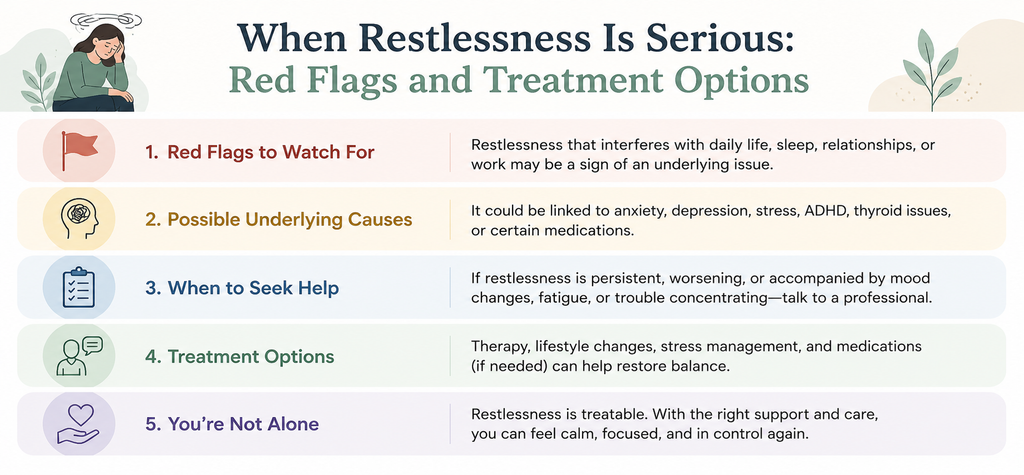
Restlessness becomes concerning when it no longer stays mild or temporary and starts interfering with your normal functioning. If it feels constant, hard to control, or keeps returning without a clear trigger, it may point to an underlying condition. When these changes begin affecting your sleep, attention, or emotional stability, it is important to take the symptoms seriously and seek professional guidance early.
Sudden Onset Without Any Clear Trigger
If restlessness starts suddenly without stress, caffeine, or lifestyle change, it may not be simple anxiety. This pattern can suggest a medical or neurological factor that is affecting your nervous system activity and needs proper assessment.
Ongoing Sleep Disruption With Increasing Agitation
When sleep issues continue with restlessness, your body struggles to recover properly. This ongoing disturbance increases mental fatigue, raises irritability, reduces concentration, and gradually makes it harder for you to handle daily tasks with focus and emotional stability over time.
Restlessness Accompanied by Physical or Neurological Symptoms
When restlessness appears with physical or neurological signs like tremors, numbness, imbalance, or confusion, it may suggest a deeper nervous system issue. These symptoms should not be ignored because they often indicate conditions that need timely medical evaluation and proper clinical attention.
Loss of Control Over Daily Routine and Focus
When restlessness starts affecting your ability to manage daily tasks, maintain focus, or make decisions, it signals a serious concern. This disruption shows that symptoms are interfering with normal functioning and may require structured care and professional guidance for improvement.
According to Verywell Health [3], restlessness may become a concern when it is persistent, intense, or linked with other health symptoms. The article explains that ongoing restlessness can be associated with anxiety, sleep problems, thyroid disorders, medication side effects, or neurological conditions. It also highlights that when symptoms begin to interfere with daily life, sleep, or emotional stability, medical evaluation becomes important to identify the underlying cause and start appropriate treatment.
Can Online Psychiatry Help Treat Serious Restlessness More Effectively?
If restlessness is becoming difficult to manage on your own, online psychiatry can provide convenient access to professional support. A psychiatric provider can evaluate your symptoms, identify possible causes, and recommend treatment options that address both the emotional and physical factors contributing to your condition.
Through online psychiatry, care is planned according to your personal condition and needs. Psychiatric providers evaluate your symptoms, sleep patterns, medical history, and emotional health to develop a treatment plan that fits your needs. This structured approach helps calm anxiety and restlessness, improves sleep quality, and supports a more stable and balanced daily routine.
Let’s Break the Cycle of Restlessness and Sleepless Nights With MindVita
Living with ongoing restlessness can be exhausting. You may feel mentally drained, find it difficult to relax, or stop enjoying everyday activities. Sleep may become disrupted, leaving you tired and low in energy throughout the day. Over time, these symptoms can affect your relationships, work performance, and quality of life.
At MindVita, we help you break this cycle through expert care and online psychiatry support made for your needs. Our team takes time to understand your symptoms, identify contributing factors, and develop a treatment plan tailored to your needs. With the right support, you can improve sleep, reduce restlessness, and feel more in control of your daily life. Contact us today and take the next step toward calm and better sleep.
FAQS
Can restlessness be a side effect of medications?
Yes, restlessness can sometimes appear as a side effect of certain medications. Some antidepressants, steroids, or stimulant medicines may increase nervous system activity. As a result, you may feel unusually active, restless, or unable to calm your body and mind. However, symptoms often improve after dosage adjustment or medical review by a professional.
Can restlessness happen even without stress or anxiety?
Yes, restlessness can occur even without stress or anxiety. It may result from sleep disturbance, hormonal imbalance, nutritional deficiencies, or nervous system changes. Sometimes the body stays overactive without a clear trigger. Therefore, symptoms can appear suddenly and affect your comfort, focus, and ability to relax throughout the day.
Is constant restlessness linked to physical health problems?
Yes, constant restlessness can be linked to physical health problems. Conditions like thyroid imbalance, iron deficiency, or neurological issues may affect the nervous system. As a result, your body feels tense and unsettled. For this reason, proper medical evaluation is important to identify the cause and manage symptoms effectively for better health.
When should I worry about restlessness?
You should be concerned about restlessness when it lasts for several weeks, becomes more severe, interferes with sleep, affects concentration, or occurs with other symptoms such as anxiety, tremors, confusion, or significant mood changes. A mental health professional can help determine the underlying cause.
How do psychiatric providers determine the cause of persistent restlessness?
Psychiatric providers determine the cause of persistent restlessness by reviewing your symptoms, medical history, daily habits, sleep patterns, and current medications. In some cases, blood tests may also be recommended. This evaluation helps identify whether symptoms are related to anxiety, a physical health condition, medication effects, or lifestyle factors.
When does restlessness become a neurological concern?
Restlessness becomes a neurological concern when it appears with symptoms like tremors, numbness, weakness, or poor coordination. These signs suggest possible nervous system involvement. For this reason, it is important to seek medical guidance. Timely diagnosis helps identify underlying neurological issues and prevents symptoms from becoming more severe over time.