

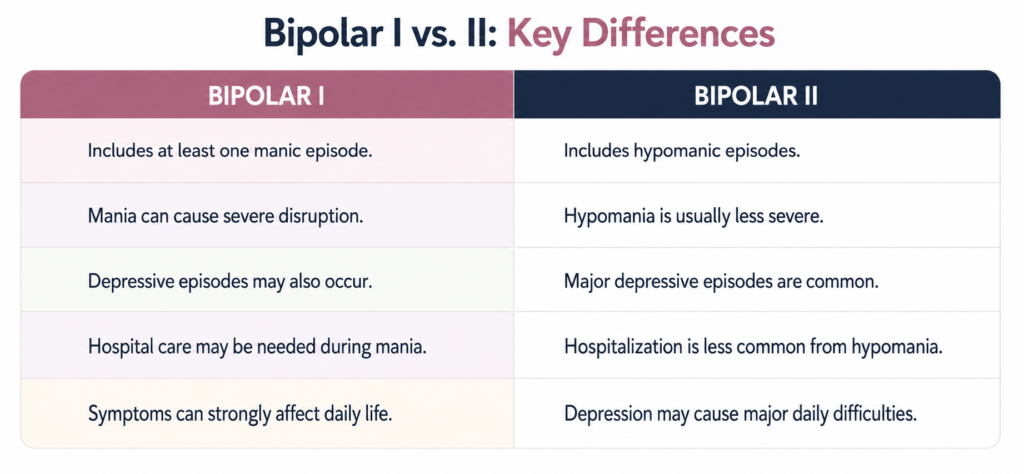
Bipolar 1 vs 2 compares two types of bipolar disorder with different mood episode patterns. Bipolar I involves at least one manic episode, while Bipolar II involves hypomanic and major depressive episodes without a history of mania. Both can affect mood, sleep, energy, behavior, and daily life. Understanding these differences can help you recognize symptoms and seek appropriate professional support.
If mood changes affect your relationships, work, or routines, professional guidance can help. At MindVita, you can connect with psychiatric providers who listen to your concerns. They can review your symptoms and discuss suitable care options. This may include psychotherapy and other approaches. Schedule a consultation today and take a clearer step toward understanding your mental health needs.
What Symptoms Can You Notice During a Bipolar Episode?
You may notice major changes in mood, energy, sleep, thinking, or behavior during a bipolar episode. Manic or hypomanic periods may involve increased energy, rapid speech, racing thoughts, increased activity, and less need for sleep. Depressive episodes may cause sadness, low energy, poor focus, hopelessness, or reduced interest in activities. Symptoms can vary in severity and duration.
Research published in the American Journal of Psychiatry [1] found that some people with bipolar depression also experience manic symptoms, such as racing thoughts, distractibility, or increased activity. These findings show why providers consider the full pattern of mood symptoms during a bipolar assessment.
How Are Mania and Hypomania Different?
Mania and hypomania both involve changes in mood, energy, activity, and behavior. However, mania is more severe and can cause marked problems with daily functioning. Hypomania causes similar symptoms but is less severe. Mania can include psychosis or require hospitalization, while hypomania does not cause marked functional impairment or require hospitalization.
Here are the key differences to keep in mind:
- Severity: Mania causes more severe changes in mood, energy, and behavior than hypomania.
- Daily functioning: Mania can cause marked problems with work, relationships, or everyday activities.
- Duration: Mania lasts at least seven days, or for any duration when hospitalization is necessary. Hypomania lasts at least four consecutive days.
- Psychosis: Psychotic symptoms can occur during mania but not during hypomania.
- Hospital care: Severe mania may require hospitalization, while hypomania does not.
- Symptoms: Both can involve reduced need for sleep, rapid speech, racing thoughts, increased activity, and unusual confidence.
Recognizing these differences can help you describe changes more clearly. However, symptoms can vary between people. Therefore, a mental health provider should assess the full pattern. A detailed history can also support an accurate bipolar diagnosis. If you notice major changes in sleep, energy, or behavior, professional guidance can provide useful direction.
How Do Providers Diagnose Bipolar Disorder?
Mental health providers diagnose bipolar disorder through a detailed assessment of your mood history, symptoms, behavior, and daily functioning. They ask about previous manic, hypomanic, and depressive episodes. They may also review your medical history, medications, sleep patterns, and family history. There is no single blood test that confirms bipolar disorder. Instead, providers use your clinical history and assessment to determine whether your symptoms meet diagnostic criteria.
According to research in Progress in Neuro-Psychopharmacology and Biological Psychiatry [2], different interview methods for identifying Bipolar II disorder. The findings showed that structured and semistructured interviews can produce different diagnostic results. This highlights the importance of a detailed assessment when providers evaluate symptoms that may overlap with other mental health conditions.
What Treatment Options Can Help Manage Bipolar Symptoms?
Treatment for bipolar disorder depends on your current symptoms, mood episode, medical history, and treatment goals. It may include mood-stabilizing medicines, certain antipsychotic medicines, psychotherapy, or a combination of approaches. Your provider can review the benefits and possible side effects of each option. Regular follow-up also helps monitor your response and adjust care when needed. Never stop or change prescribed medication without speaking with your provider.
According to updated guidance in the Indian Journal of Psychiatry [3], treatment choices can differ depending on the current phase of bipolar disorder. Clinicians may consider mood stabilizers, anticonvulsants, or antipsychotic medicines for different episodes. Psychological interventions may also support medication treatment. Regular reviews help providers monitor benefits, side effects, and changing treatment needs.
What Can Support Long-Term Recovery and Stability?
Long-term stability may involve consistent treatment, healthy routines, and regular monitoring. Taking prescribed medication as directed can help manage mood symptoms. Regular sleep and daily routines can provide structure. Learning your early warning signs may also help you recognize changes sooner. Support from trusted people and regular appointments can further support ongoing care.
Consistent Treatment
Follow your treatment plan and attend scheduled appointments. Tell your provider about new symptoms or side effects. Never change prescribed medicines alone. Consistent care can help maintain stability and reduce treatment disruptions.
Stable Daily Routines
Maintain regular sleep, meals, activities, and rest periods. Predictable routines may support mood regulation. They can also make changes easier to notice. Small daily habits can provide structure during different mood phases.
Early Warning Signs
Learn which changes may appear before a mood episode. These might include reduced sleep, unusual energy, irritability, or increased activity. Recognizing these signals early can encourage timely professional support.
Learn About Bipolar Disorder and Track Mood Changes
Learn about bipolar disorder and track your moods over time. This can help you recognize personal patterns. You can also share these observations with your provider. Better awareness may support informed treatment decisions.
Supportive Relationships
Stay connected with trusted family members, friends, or other supportive people. They may notice changes that you miss. Their encouragement can also help you maintain routines, attend appointments, and follow your treatment plan.
Research published in the World Journal of Psychiatry [4], psychoeducation can support long-term bipolar disorder management. A systematic review of 47 studies involving patients and family members found associations with fewer mood episodes, shorter hospital stays, and better medication adherence. Learning about bipolar disorder can therefore help you recognize patterns, understand treatment, and participate more actively in your care.
Take the Next Step Toward Personalized Mental Health Support with MindVita
Changes in mood, sleep, energy, or behavior can make daily life difficult. You may feel unsure about what these changes mean or whether they could be related to a mood disorder. When these concerns affect your relationships, work, or routine, professional guidance can help you understand your symptoms and explore appropriate care.
At MindVita, you can connect with psychiatric providers who take time to understand your symptoms, personal history, and goals. They can assess your concerns and discuss suitable treatment options with you. Your care may include psychotherapy, medication management, or other approaches based on your needs. Contact us today to explore personalized mental health support.
FAQs
Can depression be the first sign of a mood disorder?
Yes, depression can appear before a person experiences a noticeable manic or hypomanic episode. However, depression alone does not mean you have bipolar disorder. A mental health provider can review your mood history, sleep, energy, behavior, and previous episodes to identify the underlying pattern.
Why do I feel unusually energetic but need very little sleep?
Feeling unusually energetic while needing very little sleep can have several causes. Stress, lifestyle changes, medications, or certain health conditions may contribute. However, a persistent reduced need for sleep with increased energy can also occur during mania or hypomania. If this pattern continues or affects your behavior or judgment, speak with a mental health provider.
Can mood swings happen without a serious mental health condition?
Yes, mood swings can happen without a serious mental health condition. Stress, poor sleep, medications, and life changes can affect your emotions. However, frequent or severe changes deserve attention. If they disrupt your relationships, work, or daily routine, speak with a mental health provider for proper guidance and evaluation.
How long does it take to receive a mental health diagnosis?
There is no fixed timeline for a mental health diagnosis. Your provider may need several appointments to understand your symptoms, history, and daily functioning. They may also review sleep patterns, medications, and previous episodes. Therefore, the process can take time, especially when symptoms overlap with other mental health conditions.
Is Bipolar II less serious than Bipolar I?
No, Bipolar II is not necessarily less serious than Bipolar I. It involves hypomanic episodes and major depressive episodes. These symptoms can still disrupt daily life, relationships, and work. Major depression can also become severe. Therefore, both conditions need proper assessment and ongoing support. The main difference is the type of elevated mood episode involved.