Do you avoid speaking in meetings, worry about being judged during conversations, or feel anxious before social events? Social anxiety disorder can affect your confidence, relationships, work performance, and daily life. When symptoms become difficult to manage, psychiatric providers may recommend medication as part of a treatment plan. Several medications can help reduce anxiety symptoms, improve emotional balance, and make social situations feel more manageable over time.
If social anxiety disorder is affecting your daily life, support can make treatment more effective. At MindVita, our licensed psychiatric providers offer clinical assessment, diagnosis, and personalized treatment planning based on your symptoms and treatment needs. Schedule a consultation today to explore evidence-based options tailored to your needs and improve emotional balance in social situations.
When Is Medication Recommended for Social Anxiety Disorder?
You may avoid speaking in meetings, worry for days before a presentation, struggle to make phone calls, or fear being judged during everyday conversations. These symptoms can make it difficult to participate in work meetings, build relationships, attend social gatherings, or handle everyday interactions with confidence. Psychiatric providers recommend medication for social anxiety disorder when symptoms become moderate to severe and start affecting daily life, work, or relationships, especially when therapy alone does not give enough improvement or relief.
According to the National Institute of Mental Health (NIMH) [1], social anxiety disorder is more than just shyness and involves intense fear of being judged, embarrassed, or rejected in social situations. This condition can interfere with daily activities. Psychiatric providers suggest medication for social anxiety disorder when symptoms continue over time and become strong enough to disturb everyday life.
Which Medications Are Commonly Used to Treat Social Anxiety Disorder?
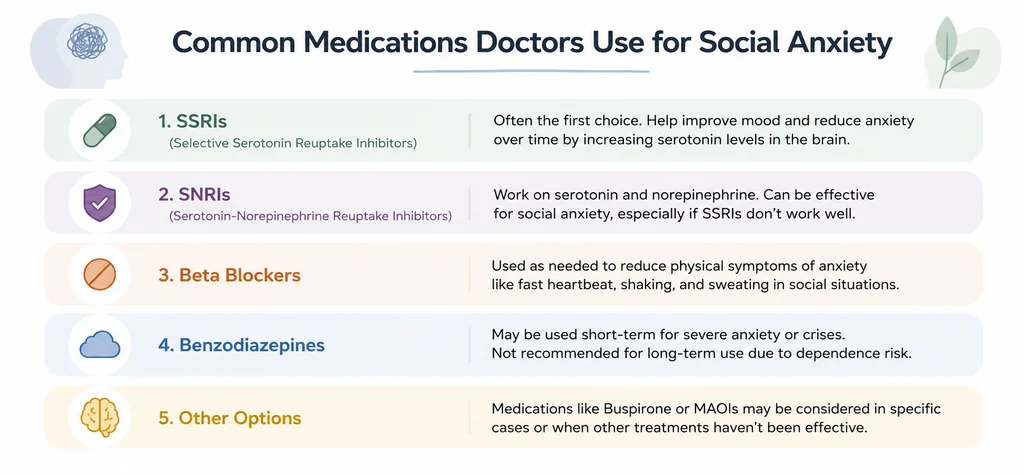
Psychiatric providers commonly prescribe several types of medications for social anxiety disorder based on symptom severity and patient needs. The most commonly prescribed options include SSRIs and SNRIs as first-line treatments. In some cases, beta-blockers, benzodiazepines, or other medications may also be used for short-term relief or specific situations.
Different types of medication may help manage different aspects of social anxiety symptoms:
- SSRIs (such as sertraline and paroxetine): Help improve mood and lower long-term anxiety symptoms.
- SNRIs (such as venlafaxine): Support serotonin and norepinephrine balance in the brain.
- Beta-blockers (such as propranolol): Decrease physical symptoms like shaking and fast heartbeat.
- Benzodiazepines (such as clonazepam): Provide quick relief for short-term or severe anxiety.
- Other options: Used when first treatments are not suitable or effective.
Each medication works differently, so psychiatric providers choose treatment based on your symptoms, medical history, and treatment goals. They monitor your progress closely to ensure safety and effectiveness. With proper guidance, these medications can help reduce anxiety and improve your ability to function in social situations more comfortably.
How Effective Is Medication for Social Anxiety Disorder?
Medication for social anxiety disorder is often recommended when symptoms become difficult to manage and begin affecting daily functioning. It is typically used as part of a structured plan, especially when anxiety begins to interfere with routine activities, work, or social interactions. Many people find it easier to participate in conversations, attend social events, speak in meetings, or interact with others without overwhelming fear over time. However, results vary from person to person, and treatment often works best when combined with therapy and ongoing professional support.
Research published in Expert Review of Neurotherapeutics [2] highlights that medication remains an important treatment option for social anxiety disorder. The review found that SSRIs and SNRIs continue to show strong effectiveness in managing anxiety symptoms and improving daily functioning. It also noted that many people experience better social engagement and quality of life when medication is used as part of a comprehensive treatment plan.
What Should You Know Before Starting Medications for Social Anxiety Disorder?
Before starting medications for social anxiety disorder, it is important to understand how treatment works and what to expect. Different medicines work differently for each person, and it may take time to find the option that works best for you. Your psychiatric provider will consider your symptoms, medical history, and treatment goals before recommending a medication. Regular monitoring helps ensure that treatment remains safe and effective.
Follow Your Treatment Plan
Take your medicine exactly as your psychiatric provider prescribes. Regular use helps the treatment work properly and gives your psychiatric provider a clear idea of your progress, so they can adjust the dose or plan safely when needed.
Learn About Possible Side Effects
Anxiety medicines may cause mild side effects in some people, like tiredness or nausea. Understanding these effects helps you stay prepared and know when to contact your healthcare provider for safe advice and proper guidance.
Avoid Making Changes on Your Own
Never stop or change your dose without your psychiatric provider’s advice. Sudden changes can affect your progress and may increase symptoms or cause discomfort. Always discuss concerns with your psychiatric provider before making any adjustment.
Keep Regular Follow-Up Appointments
Regular follow-up appointments help your psychiatric provider evaluate how well the medication is working, monitor any side effects, discuss concerns, and make safe treatment adjustments when needed. These visits support better long-term management of social anxiety symptoms.
Combine Medication With Healthy Habits
Good sleep, regular exercise, stress management, and a balanced daily routine can support your treatment. These healthy habits help enhance emotional well-being, increase energy levels, strengthen coping skills, and make it easier to manage social anxiety symptoms over time.
According to the Mayo Clinic [3], medicines can help control symptoms of social anxiety disorder, especially when combined with therapy. It also explains that finding the right medicine may take time and requires regular follow-up visits. Psychiatric providers monitor your progress closely to manage side effects and improve results. With proper medical guidance, treatment becomes safer and more effective for long-term symptom management and daily functioning.

Take Control of Social Anxiety Disorder With MindVita
You may avoid speaking in meetings, skip social events, rehearse conversations in your head, or worry for hours after interacting with others. Physical symptoms such as a fast heartbeat, sweating, shaking, or blushing can make even routine social interactions feel stressful and difficult to manage. Over time, these challenges can affect your confidence, relationships, work performance, and quality of life.
At MindVita, our licensed psychiatric providers help you understand your symptoms, explore treatment options, and create a personalized care plan based on your needs. You get safe and proven care that helps reduce anxiety step by step. With the right help, you can feel calmer, gain confidence, and handle social situations in a better and more comfortable way. Contact us today and take the first step toward better mental health, calmer thinking, and stronger confidence in daily social life.
FAQs
Can social anxiety disorder get worse without treatment?
Yes. Without treatment, social anxiety disorder may gradually lead to increased avoidance of social situations, reduced confidence, and greater difficulty at work, school, or in relationships. Symptoms can become harder to manage over time, which is why early treatment is often beneficial.
What causes social anxiety disorder?
Social anxiety disorder develops from a combination of factors rather than a single cause. Genetics, brain chemistry, personality traits, and stressful life experiences can all play a role. In addition, some people are naturally more sensitive to criticism or embarrassment. Together, these factors can make social situations feel stressful and lead to ongoing anxiety.
How long do medications for social anxiety disorder take to work?
The time it takes medication to work depends on the medication prescribed and your individual response to treatment. Some medications may provide symptom relief more quickly, while others can take several weeks to reach their full effect. Your psychiatric provider can explain what to expect based on your symptoms, treatment goals, and medication plan.
Can I take a social anxiety disorder test online?
Yes, you can take a social anxiety disorder test online to check for common signs of social anxiety. These tests can help you better understand your symptoms and decide whether to seek professional support. However, an online test cannot replace a diagnosis from a qualified mental health provider.
Do I Need Medication for Social Anxiety Disorder?
No, not everyone with social anxiety disorder needs medication. Some people manage their symptoms successfully with therapy, lifestyle changes, and coping strategies. However, medication may be helpful when symptoms are more severe or interfere with daily activities, work, school, or relationships. A healthcare provider can recommend the treatment approach that best fits your needs.