

Panic disorder can cause sudden episodes of intense fear that feel distressing and difficult to control. These episodes, often called panic attacks, can affect your confidence, daily routine, and sense of security. With the right support, many people learn to manage symptoms, reduce fear, and regain control of their lives.
At MindVita, our psychiatric providers make custom treatment plans for you. We listen to your experiences and support you during your recovery. If panic attacks are bothering you daily, getting help from a professional is a good first step to feeling more confident, calm, and in control. Contact us today to learn more about our services and schedule an appointment with our team.
What Is Panic Disorder and How Is It Different From Occasional Anxiety?
Panic disorder is a mental health condition characterized by recurring panic attacks and a persistent fear of having additional attacks. Unlike everyday anxiety, which is usually linked to specific stressors or concerns, panic disorder can trigger intense episodes of fear even when there is no immediate threat. Over time, this ongoing fear may interfere with daily routines, relationships, and overall well-being.
While anxiety and panic attacks are closely related, they are not the same. Anxiety often develops gradually in response to stress or uncertainty, whereas panic attacks tend to occur suddenly and reach peak intensity within minutes. Understanding these differences can help you recognize when symptoms may indicate panic disorder rather than normal anxiety.
- Everyday Anxiety: Occasional anxiety is a normal emotional response to stress, uncertainty, or challenging situations. These feelings are typically manageable and often improve once the stressful event passes or the situation becomes more predictable.
- Panic Attacks: Panic attacks are sudden episodes of intense fear or discomfort that can occur unexpectedly. They are often accompanied by physical and emotional symptoms that may feel overwhelming, even when no actual danger is present.
- Fear of Future Attacks: One of the defining features of panic disorder is persistent worry about experiencing another panic attack. This anticipation can create ongoing stress and make everyday situations feel more difficult to navigate.
- Panic Disorder: Panic disorder develops when recurring panic attacks are followed by lasting concern about future attacks or significant changes in behavior to avoid them. As a result, some people begin avoiding certain places, activities, or situations they associate with panic.
According to the National Institute of Mental Health [1], panic disorder involves recurrent and unexpected panic attacks, ongoing concern about future attacks, and behavioral changes aimed at avoiding them. Therefore, understanding the difference between everyday anxiety and panic disorder can help people recognize when professional support may be beneficial.
What Are the Most Common Panic Attack Symptoms in Adults?
Panic attack symptoms can appear suddenly and often feel intense and frightening. Many people experience both physical and emotional symptoms at the same time. Because these symptoms can develop quickly and without warning, they may feel overwhelming and difficult to understand. Recognizing panic attack symptoms in adults can help you identify when professional support may be needed.
Common Physical Symptoms
- Rapid or pounding heartbeat
- Shortness of breath
- Dizziness or lightheadedness
- Sweating
- Trembling or shaking
- Chest discomfort or tightness
- Tingling or numb sensations
- Nausea or stomach discomfort
Common Emotional Symptoms
- Fear of losing control
- Feeling detached from reality
- Fear that something terrible will happen
- Intense feelings of panic or dread
- Feeling trapped or helpless
Because panic attack symptoms can closely resemble a medical emergency, many people initially believe they are experiencing a serious physical health problem. This confusion can increase fear and make the experience feel even more overwhelming. Understanding common panic attack symptoms in adults can help you recognize what may be happening and know when to seek appropriate medical or mental health support.
How Can Panic Disorder Treatment Help You Regain Control?
Panic disorder treatment helps you feel more confident and in control of your daily life. Many people find that panic attacks affect their routines, decisions, and sense of security. With the right support, you can learn how to manage these challenges more effectively and regain confidence in situations that may have become difficult.
Recovery looks different for everyone. However, effective treatment focuses on helping you feel safer, more prepared, and better able to handle daily responsibilities. Over time, many people notice improvements in their confidence, emotional well-being, and ability to participate in work, family, and social activities.
Comprehensive Evaluation
A thorough evaluation helps your provider understand how panic disorder affects your daily life. It also helps identify the most appropriate treatment approach for your needs.
Identifying Triggers
Understanding situations, thoughts, or experiences that contribute to panic attacks can help you respond more effectively and reduce unnecessary fear.
Therapy Approaches
Therapy can help you develop practical strategies for managing panic-related thoughts and behaviors. It also helps you build confidence in situations that may currently feel challenging.
Medication When Appropriate
Some people may benefit from medication as part of their panic disorder treatment plan. Your provider can discuss whether medication is appropriate based on your symptoms and treatment goals.
Panic disorder can make everyday activities feel unpredictable and stressful. However, recovery is possible with consistent support and an individualized treatment plan. People with panic disorder can manage their symptoms and improve their quality of life with appropriate treatment and support. According to the Anxiety and Depression Association of America [2], panic disorder affects about 2–3% of adults each year, making it a common but treatable mental health condition. Over time, many people feel more confident and regain greater control over their daily lives.
What Can You Do During a Panic Attack to Feel More Grounded?
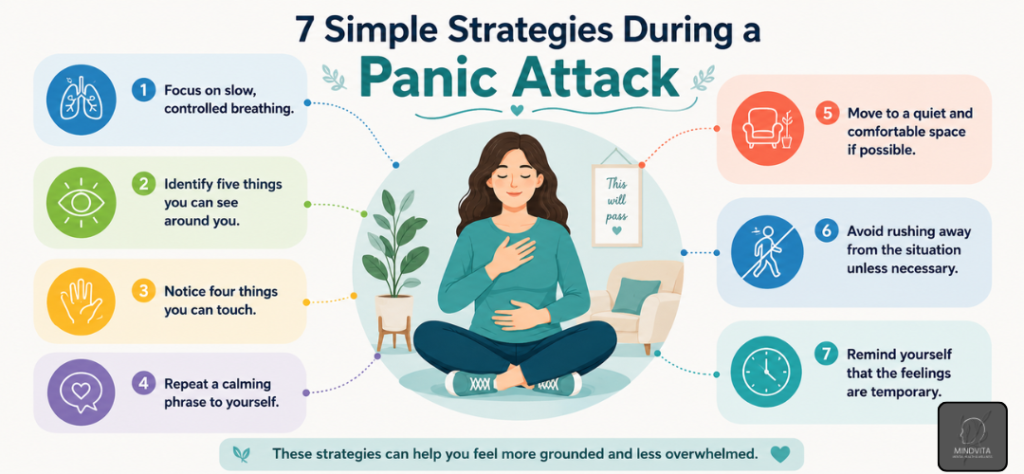
Although panic attacks can feel overwhelming, there are practical steps you can take to feel more grounded. Remind yourself that the symptoms are temporary and will pass. Instead of trying to fight the panic, focus on slow and steady breathing. Paying attention to your surroundings can also help shift your focus away from fear and back to the present moment.
Grounding techniques help bring your attention away from frightening thoughts and back to what is happening around you right now. Many people find it helpful to use calming self-talk, focus on familiar sights and sounds, or move to a comfortable environment when possible. While these strategies may not stop a panic attack immediately, they can reduce fear, increase your sense of control, and make the experience feel less overwhelming.
Why Do Personalized Recovery Plans Matter for Panic Disorder?
Personalized recovery plans are important because panic disorder affects people in different ways. Some individuals experience panic attacks during travel, while others struggle in crowded places, social situations, or stressful environments. Because triggers and experiences vary, treatment should address your specific challenges, concerns, and recovery goals rather than follow a one-size-fits-all approach.
Effective panic disorder treatment should reflect your individual needs. Some people benefit most from psychotherapy, while others may require additional support through medication or other treatment strategies. The National Alliance on Mental Illness [3] explains that treatment choices vary from person to person and that there is no one-size-fits-all approach to mental health care. Therefore, a personalized plan helps ensure that treatment aligns with your symptoms, preferences, and long-term recovery goals.
Recovery is also different for everyone. Some people notice improvement quickly, while others need more time and ongoing support. Regular follow-up appointments allow providers to monitor progress, address concerns, and adjust treatment when needed. This continued support helps ensure that your recovery plan remains effective as your needs change and helps you maintain progress over time.
Start Taking Back Control With MindVita’s Personalized Panic Disorder Treatment
Living with panic disorder can make everyday situations feel stressful and unpredictable. You may find yourself worrying about future panic attacks or avoiding activities that once felt normal. Over time, these challenges can affect your confidence, relationships, work responsibilities, and overall quality of life.
At MindVita, our psychiatric providers create personalized treatment plans designed around your unique needs and recovery goals. We offer comprehensive evaluations, medication management when appropriate, and ongoing support to help you make meaningful progress. Whether you are experiencing frequent panic attacks or struggling with the fear of future attacks, our team is here to help. Schedule an appointment and take the first step toward feeling calmer, more confident, and in control of your life again.
FAQs
Can Panic Disorder Resolve Without Treatment?
Some people notice periods when symptoms improve, but panic disorder often continues without proper support. Ignoring symptoms may increase fear and make daily activities more difficult over time. Seeking professional help can help you understand your symptoms, develop coping skills, and reduce the impact panic disorder has on your life.
Can Panic Disorder Affect Sleep?
Yes, panic disorder can affect sleep quality. Some people experience racing thoughts, worry about future panic attacks, or wake up feeling anxious during the night. Poor sleep may also make anxiety feel more intense during the day. Addressing panic disorder can often help improve overall sleep and daily functioning.
Is Panic Disorder a Long-Term Mental Health Condition?
Panic disorder affects everyone differently. Some people experience symptoms for a shorter period, while others require longer-term support. The good news is that many people learn effective ways to manage symptoms and lead active, fulfilling lives. Early treatment and ongoing support can improve long-term outcomes and recovery.
Can Caffeine Make Panic Attacks Worse?
For some people, caffeine may increase feelings of nervousness, restlessness, or a racing heartbeat. These effects can sometimes feel similar to panic attack symptoms. If you notice that caffeine worsens your anxiety or panic symptoms, reducing your intake may help you feel more comfortable and in control.
Can Panic Disorder Affect Work or School Performance?
Yes, panic disorder can make it harder to focus, complete tasks, or participate in meetings, classes, and social activities. Fear of having a panic attack may also create additional stress. With appropriate treatment and support, many people improve their confidence and become better able to manage daily responsibilities.
When Should You Seek Professional Help for Panic Attacks?
You should consider professional help if panic attacks become frequent, cause significant distress, or begin affecting your daily life. Early support can help identify the cause of your symptoms and provide effective treatment options. Seeking help sooner may prevent symptoms from becoming more disruptive over time.