

Psychotherapy in MD helps you understand your thoughts, feelings, and actions so you can manage life’s challenges more healthily. Many people seek therapy when stress, worry, sadness, relationship problems, or big life changes start to affect their daily routines. With the right support, you can learn useful skills that improve your emotional health and help you handle difficult situations better.
Building a healthier mindset takes time, awareness, and guidance. At MindVita, our trained mental health professionals help you recognize unhelpful habits, develop better outlooks, and work toward meaningful goals through personalized therapy. Whether you’re facing stress, trauma, depression, or personal growth, our team is here to support you. If emotional problems are impacting your daily routine, book an appointment today to begin your path to lasting emotional well-being and a healthier mindset.
How Can Psychotherapy in MD Help You Build a Healthier Mindset?
Psychotherapy in MD helps you learn healthier ways to think, control your emotions, and respond to everyday problems. Negative thinking, ongoing stress, and tough life events can impact how you see yourself and the world. Through therapy, you gain practical tools that promote emotional stability, boost self-awareness, and build your ability to cope with life’s challenges.
Several key elements help psychotherapy support a healthier mindset:
- Identify Unhelpful Thought Patterns: Many emotional struggles are connected to patterns of thinking that develop over time. Therapy helps you recognize thoughts that increase stress, self-doubt, or emotional distress. Once identified, you can begin replacing them with healthier and more balanced perspectives.
- Strengthen Emotional Awareness: Understanding your emotions helps you handle tough situations better. Therapy teaches you to spot emotional triggers, understand your responses, and find healthier ways to express and control your feelings.
- Build Healthy Coping Skills: Life regularly presents challenges that test your resilience. Therapy teaches simple, effective ways to handle stress, deal with setbacks, and stay emotionally balanced during tough times.
- Improve Confidence and Personal Growth: Having a healthier mindset often makes you more confident and aware of yourself. As you understand your strengths and challenges better, you can make smarter choices and build habits that help you stay healthy for a long time.
According to the American Psychological Association [1], psychotherapy uses friendly and professional communication to help deal with emotional reactions, thinking patterns, and behaviors that may cause distress. By exploring these areas in a caring and organized way, people can better see how their thoughts, feelings, and actions are linked. This can help individuals respond more in a healthy way to problems, improve their emotional health, and make good changes that help them in daily life and personal growth over time.
Which Conditions Can Psychotherapy Services Maryland Help Treat?
Therapy services in Maryland can help with many mental health problems, feelings, and life issues. Lots of people go to therapy when their thoughts, feelings, or actions start to affect their daily life, relationships, work, or happiness. With personalized support, therapy helps people understand themselves better and make positive changes.
Different concerns often require different therapeutic approaches. Some people need help managing feelings of sadness or worry, while others may be dealing with difficult past experiences, relationship problems, or big life changes. Since everyone’s situation is different, good therapy focuses on understanding each person’s needs and making plans that help achieve their specific goals.
Depression and Persistent Low Mood
Depression can affect motivation, energy levels, sleep, and daily functioning. Therapy helps individuals explore factors contributing to emotional distress while developing strategies to manage symptoms and improve overall well-being.
Anxiety and Ongoing Stress
Social anxiety can make everyday interactions feel overwhelming. You may worry about being judged, embarrassed, or negatively evaluated by others. Ongoing stress can also affect focus, confidence, and emotional well-being. Psychotherapy helps you understand the thoughts and situations that contribute to anxiety while teaching practical strategies to manage stress and feel more comfortable in daily life.
Trauma and Difficult Life Experiences
Traumatic experiences can affect emotional health long after an event has occurred. Trauma therapy MD focuses on helping individuals process difficult experiences, reduce emotional distress, and regain a greater sense of safety and stability.
Eating Disorders and Body Image Concerns
Eating disorder therapy MDs can help individuals address unhealthy relationships with food, eating habits, and body image. Therapy often focuses on emotional factors that contribute to these challenges while supporting healthier behaviors and self-perception.
Relationship Challenges and Life Transitions
Major life changes, family conflicts, grief, career stress, and relationship difficulties can create emotional strain. Therapy provides a supportive environment to explore concerns, strengthen communication skills, and navigate important transitions more effectively.
According to the American Psychological Association [2], psychotherapy may be provided to individuals, couples, families, and groups. APA also notes that several forms of psychotherapy exist, including psychodynamic, cognitive, behavioral, humanistic, and integrative approaches. Because these approaches address emotional reactions, ways of thinking, and behavior patterns, psychotherapy can be used to support people facing a variety of mental health concerns and life challenges.
How Does Telehealth Psychotherapy MD Make Mental Health Support More Accessible?
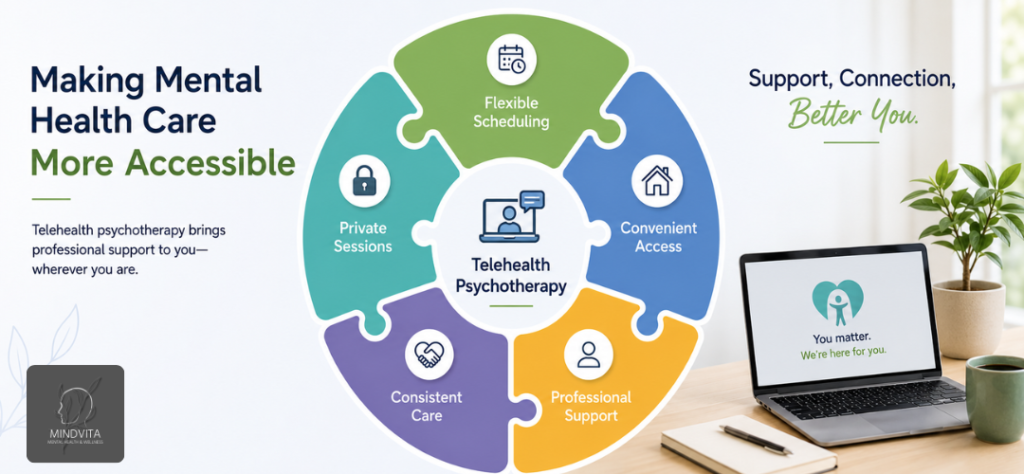
Telehealth psychotherapy MD makes it easier to access mental health support by allowing you to attend therapy sessions remotely through secure online platforms. Instead of traveling to a clinic, you can connect with a licensed mental health professional from home or another private location. As a result, therapy can become more convenient, flexible, and easier to fit into your schedule.
Telehealth can also help reduce barriers that often delay or interrupt treatment. People who live in rural areas, have transportation difficulties, manage busy schedules, or care for family members may find virtual therapy especially helpful. A review published in the World Journal of Psychiatry [4] found that telepsychiatry can improve access to care while maintaining high patient satisfaction and treatment effectiveness. Therefore, telehealth offers a practical way to receive ongoing mental health support.
What Happens During Psychotherapy in MD and How Long Does It Take to Work?
Many people wonder what to expect before starting psychotherapy. During the first few sessions, your therapist focuses on understanding your concerns, personal history, current challenges, and treatment goals. This information helps create a plan that reflects your needs and provides a clear direction for future sessions. The process is collaborative, which means you play an active role in shaping your care.
As therapy continues, sessions may focus on exploring experiences, discussing current concerns, and identifying areas where you would like to see improvement. Over time, you and your therapist can review progress, adjust goals when needed, and address new challenges as they arise. Building trust and open communication often helps create a productive therapeutic relationship and a more meaningful treatment experience.
The experience of psychotherapy can vary from person to person. Treatment plans are developed based on individual needs, medical situations, and the concerns being addressed. The National Institute of Mental Health [3] explains that psychotherapy includes a variety of treatment approaches and that therapists may use different methods depending on the disorder being treated and the needs of the individual. As a result, therapy can be adapted to support different goals, challenges, and treatment needs.
When Should You Consider Child Psychotherapy in Maryland?
Children experience emotional and behavioral challenges just like adults. However, they may express these struggles differently through changes in mood, behavior, school performance, or social interactions. Child psychotherapy in Maryland can provide a supportive space where children learn to express emotions, develop healthy coping skills, and work through difficulties in ways that match their age and developmental stage.
Family-based support can strengthen the progress made during therapy by improving communication and understanding at home. Parents and caregivers often play an important role in helping children apply new skills in everyday situations. When concerns are addressed early, children may develop greater confidence, build healthier relationships, and gain tools that support emotional well-being as they grow.
Take the First Step Toward a Healthier Mindset With MindVita
Struggling with stress, anxiety, relationship challenges, or ongoing emotional difficulties can affect many areas of your life. You may find it harder to stay focused, enjoy daily activities, or manage responsibilities with confidence. Over time, these challenges can impact your well-being and make it difficult to feel like yourself again.
At MindVita, our licensed mental health specialists provide compassionate psychotherapy services tailored to your needs and goals. Whether you are seeking support for depression, trauma, life transitions, or personal growth, we are here to help. Through personalized care, telehealth options, and ongoing support, we help you build healthier habits, strengthen emotional resilience, and move toward lasting mental wellness. Contact us today to begin your journey toward a healthier mindset and a better quality of life.
FAQs
Is Psychotherapy Different From Counseling?
Yes, psychotherapy and counseling are similar, but they often focus on different needs. Counseling usually helps with specific challenges or life situations. Psychotherapy often explores deeper emotional patterns and long-term concerns. Both can help improve mental well-being, and the best option depends on your personal goals and circumstances.
How Often Should You Attend Therapy Sessions?
The right schedule depends on your needs and treatment goals. Many people begin with weekly sessions because regular meetings help build progress and consistency. As symptoms improve, appointments may become less frequent. Your therapist will work with you to determine a schedule that supports your situation.
Can Psychotherapy Work Without Medication?
Yes, many people benefit from psychotherapy without taking medication. Therapy can help you understand emotions, improve coping skills, and address challenges that affect daily life. However, some individuals may benefit from a combination of therapy and medication. Treatment decisions depend on your symptoms, needs, and personal preferences.
How Do You Know If a Therapist Is the Right Fit?
A good therapist helps you feel comfortable, respected, and understood. You should feel able to discuss concerns openly and ask questions without hesitation. Over time, you should notice trust developing within the relationship. Finding the right fit may take time, but a strong therapeutic connection often supports better progress.
What Should You Do If Therapy Feels Uncomfortable at First?
Feeling uncomfortable during the early stages of therapy is common. You may be discussing personal experiences or emotions that are difficult to share. However, this does not mean therapy is not working. Openly discussing your concerns with your therapist can help improve the experience and strengthen the therapeutic relationship.