

Many people experience Anxiety Worse at Night because the brain becomes more focused on stress once daily activities slow down. During quiet evening hours, you may notice racing thoughts, physical tension, or emotional worries more strongly. As a result, anxiety at night can affect your mood, sleep quality, and sense of calm. Some people also experience nighttime anxiety or anxiety attacks at night before sleep. Although these symptoms feel overwhelming, they are common and treatable with the right coping strategies and professional support.
If anxiety worsens at night and continues to disrupt your sleep, emotional well-being, or daily routine, professional support can help you understand and manage your symptoms more effectively. At MindVita, our psychiatric providers and licensed mental health specialists offer personalized care, therapy support, coping strategies, and virtual treatment options designed to help you feel calmer, sleep better, and regain emotional balance over time. Book your appointment today to start building healthier nighttime habits and more peaceful sleep.
Why Does Anxiety Feel Worse at Night Feel More Intense After Dark?
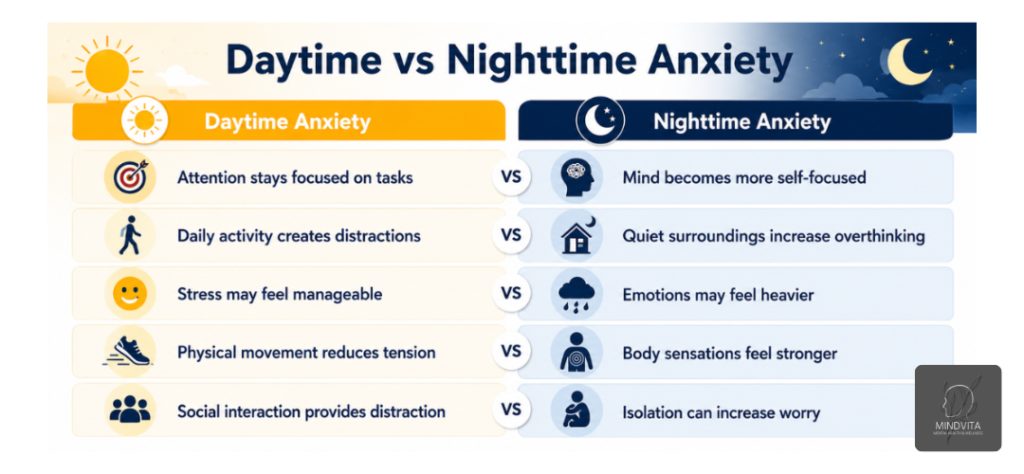
Anxiety, which often feels stronger at night, has fewer distractions because your mind has fewer distractions after dark. During busy daytime hours, work, conversations, and responsibilities keep your attention occupied. However, quiet evenings create more space for overthinking and emotional processing. At the same time, mental fatigue from daily stress reduces your ability to manage worries calmly, which can make nighttime anxiety feel more intense and emotionally draining.
Research suggests that nighttime overthinking can increase emotional distress and make anxiety harder to manage before sleep. A study published in the Journal of Clinical Sleep Medicine [1] found that worry, rumination, and sleep-related cognitive arousal are strongly linked with insomnia and disturbed sleep patterns. The researchers also noted that many poor sleepers become highly focused on stressful thoughts and the consequences of poor sleep at bedtime, which can make anxiety worse in the evening hours.
What Causes Anxiety at Night and Sudden Racing Thoughts Before Sleep?
Anxiety at night often starts when the brain finally slows down after a busy day. Without daytime distractions, stressful thoughts become easier to notice and harder to ignore. Financial pressure, relationship stress, work demands, and fear about tomorrow can all contribute to nighttime anxiety. As emotional tension builds, racing thoughts may become difficult to control before sleep.
Hidden Nighttime Anxiety Triggers
- Unresolved stress from the day
- Financial worries and future uncertainty
- Relationship conflicts or emotional tension
- Work pressure and unfinished responsibilities
- Fear of failure or upcoming tasks
- Excess screen time before bed
- Lack of emotional rest during the day
- Overthinking small mistakes or conversations
Many people also suppress emotions during busy daytime hours. However, those feelings often return once the environment becomes quiet at night. You may replay conversations, imagine worst-case situations, or worry about things outside your control. Over time, this mental overload can keep your brain alert instead of relaxed, which may make anxiety attacks at night more likely before bedtime.
What Are the Most Common Anxiety at Night Symptoms You Should Not Ignore?
Anxiety at night symptoms can affect both your mind and body before sleep. Many people notice a racing heartbeat, chest pressure, sweating, restlessness, or difficulty calming their thoughts at bedtime. Others experience muscle tension, stomach discomfort, or a strong sense of uneasiness. Because nighttime environments are quieter, these symptoms often become more noticeable and emotionally overwhelming.
Some symptoms of nighttime anxiety appear gradually, while others happen suddenly during periods of stress or overthinking. Common signs include:
| Symptom | How It Commonly Appears |
| Rapid heartbeat | Fast or pounding heartbeat |
| Chest tightness | Pressure or discomfort in the chest |
| Restlessness | Difficulty staying calm or settled |
| Sweating | Sudden warmth or night sweating |
| Muscle tension | Tight shoulders, jaw, or body stiffness |
| Stomach discomfort | Nausea or stomach tightness |
| Racing thoughts | Constant worry or mental overactivity |
| Trouble relaxing | Feeling mentally alert at bedtime |
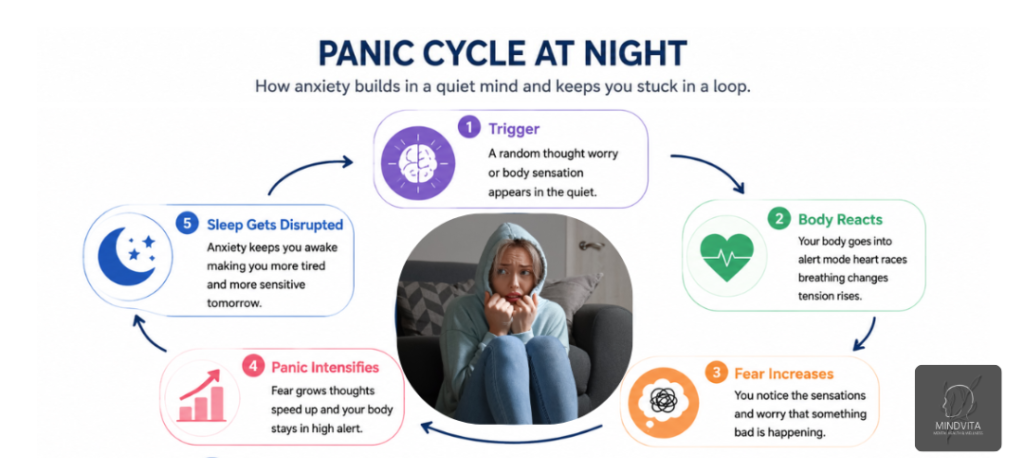
These symptoms usually happen when the body stays in a stress-alert state instead of entering a calm resting mode. As a result, your mind becomes more sensitive to physical sensations and emotional stress. In some cases, fear of the symptoms themselves can worsen anxiety at night. For example, a rapid heartbeat or chest discomfort may trigger more worry, which can further increase anxiety before sleep.
Although anxiety at night symptoms are common, severe chest pain, breathing difficulty, fainting, or sudden intense symptoms should always be medically evaluated. Anxiety can sometimes resemble physical health conditions, so paying attention to unusual or worsening symptoms is important.
Why Do Anxiety Attacks at Night Happen Even When the Day Felt Fine?
Anxiety attacks at night can happen even after a calm day because stress and emotional tension do not always disappear when the day ends. During quiet nighttime hours, the brain becomes more aware of internal thoughts, physical sensations, and unresolved worries. As a result, small feelings of stress may suddenly feel stronger before sleep and trigger nighttime anxiety or panic symptoms without warning.
Many people with anxiety attacks at night experience symptoms such as rapid heartbeat, chest tightness, sweating, dizziness, shaking, or shortness of breath before bed. Some also wake up suddenly with intense fear or panic symptoms already active. Research published in Dialogues in Clinical Neuroscience [2] explains that nocturnal panic attacks are common in anxiety disorders. The review also notes that about 20% to 45% of people with panic disorder experience repeated nighttime panic attacks during sleep.
Sleep disruption can also make nighttime anxiety harder to manage over time. When the brain does not get enough restful sleep, emotional stress becomes more difficult to regulate calmly. Because of this, many people become more sensitive to worry, physical sensations, and fear during evening hours. Understanding this connection can help you recognize anxiety patterns earlier and begin building healthier nighttime habits that support emotional calmness and better sleep.
Which Bedtime Habits Help Calm Anxiety at Night?
Healthy bedtime habits can help calm anxiety at night by reducing mental overstimulation and helping the nervous system relax before sleep. Small changes in your nighttime routine can improve emotional calmness and make it easier to fall asleep peacefully. Consistent habits also help the brain feel safer, more settled, and less reactive during quiet evening hours.
Bedtime Habits Checklist for Nighttime Anxiety
Stop screen use 30 minutes before bed
Keep a consistent sleep schedule
Avoid caffeine late in the evening
Practice slow breathing or grounding exercises
Write stressful thoughts in a journal
Keep the bedroom cool, dark, and quiet
Listen to calming music or soft audio
Avoid work-related tasks in bed
Simple nighttime routines can gradually reduce anxiety at night and improve sleep quality over time. Although results may not happen overnight, consistency helps the brain and body relax more naturally before sleep. These calming habits can also lower nighttime overthinking and make evening anxiety feel more manageable.
When Should You Seek Professional Help for Nighttime Anxiety?
You should seek professional help when anxiety worsens at night and starts affecting your sleep, emotions, daily routine, or relationships regularly. Frequent panic episodes, constant nighttime worry, emotional exhaustion, or fear of going to sleep may be signs that you need extra support. Early treatment can help you manage symptoms before they become more overwhelming.
Some people also notice daytime fatigue, trouble concentrating, or avoiding bedtime because of nighttime anxiety. Research from the National Institute of Mental Health (NIMH) [3] explains that anxiety disorders can interfere with sleep, daily activities, and emotional well-being when symptoms continue over time. Psychiatric providers and licensed mental health specialists can help through therapy, coping strategies, emotional support, and medication when needed.
Ready to Stop Letting Nighttime Anxiety Control Your Nights?
When anxiety worsens at night and keeps you awake, evenings can start to feel mentally and emotionally draining. You may struggle with racing thoughts, poor sleep, nighttime panic, or constant worry before bed. Over time, this exhaustion can affect your mood, focus, energy, and relationships. Many people also delay seeking help because they feel overwhelmed or unsure if their symptoms are serious enough.
At MindVita, our psychiatric providers and licensed mental health specialists understand how difficult nighttime anxiety can feel. We can help you manage anxiety attacks at night through personalized treatment plans, therapy support, coping strategies, and medication management when appropriate. Our virtual care options also make it easier to access compassionate mental health support from the comfort of your home. Contact us today to take the first step toward calmer nights, better sleep, and lasting emotional balance.
FAQs
Why does my anxiety get stronger at bedtime?
Anxiety often feels stronger at bedtime because quiet surroundings reduce distractions and increase focus on thoughts, emotions, and physical sensations. After a stressful day, the brain may continue processing worries even when the body tries to rest. As a result, nighttime anxiety and overthinking can become more noticeable before sleep.
Can anxiety attacks at night wake you from sleep?
Yes, anxiety attacks at night can wake you suddenly from sleep with symptoms such as rapid heartbeat, chest tightness, sweating, dizziness, or fear. These episodes are called nocturnal panic attacks and may happen without warning. In many cases, stress, poor sleep, and heightened nighttime alertness can increase the risk of nighttime panic.
Does poor sleep make nighttime anxiety worse?
Yes, poor sleep can make anxiety worse at night because the brain becomes more emotionally sensitive without proper rest. Sleep loss can also increase stress levels, irritability, and difficulty managing anxious thoughts calmly. Over time, disrupted sleep and nighttime anxiety may create a cycle that becomes harder to break without support.
What helps calm anxiety quickly before bed?
Slow breathing exercises, grounding techniques, journaling, and reducing screen exposure can help calm anxiety before bed. A quiet sleep environment and consistent bedtime routine also help the nervous system relax naturally. In addition, avoiding caffeine late in the evening may reduce restlessness and make it easier to fall asleep peacefully.
Is nocturnal anxiety a sign of an anxiety disorder?
Nocturnal anxiety can sometimes be linked with an anxiety disorder, especially when symptoms happen frequently and affect sleep or daily life. However, stress, emotional overload, and poor sleep habits can also trigger nighttime anxiety occasionally. If symptoms continue regularly or become overwhelming, professional mental health support may help identify the cause.