
Do you spend hours overthinking conversations, struggle with constant worry, experience panic attacks, or feel anxious even when nothing seems wrong? Anxiety can make it difficult to sleep, focus at work, enjoy social situations, or manage everyday responsibilities. Zoloft for anxiety is one treatment option that may help reduce symptoms and improve daily functioning over time.
With the right treatment plan, many people experience less worry, better sleep, improved focus, and greater confidence in daily situations. Zoloft may be one option your psychiatric provider considers as part of a personalized anxiety treatment plan. MindVita supports you through every step of your Zoloft for anxiety treatment journey. We provide safe medication guidance, regular check-ups, and close monitoring to track your progress. Schedule a consultation today and get guided support from licensed professionals.
How Does Zoloft for Anxiety Work?
Zoloft for anxiety works by increasing serotonin levels in the brain. Serotonin helps control mood, stress, and emotional reactions. When serotonin becomes more balanced, anxiety symptoms slowly reduce. Therefore, Zoloft (sertraline) for anxiety helps improve emotional stability, reduces tension, and supports better daily functioning in people with anxiety disorders over time through regular and consistent treatment.
Research published in a PubMed Central (PMC) [1] found that sertraline reduced anxiety symptoms more effectively than placebo and improved several core emotional symptoms, including anxiety, worry, and sadness. The researchers observed beneficial effects within the first weeks of treatment, with continued improvement over time. These findings suggest that sertraline can be an effective option for reducing anxiety symptoms when prescribed and monitored by a healthcare professional.
Is Zoloft for Anxiety Effective for Different Anxiety Disorders?
Zoloft for anxiety is effective for many anxiety disorders. It helps reduce symptoms like fear, tension, and constant worry. Psychiatric providers often prescribe this medication for moderate to severe conditions. It works by balancing serotonin levels in the brain. As a result, you feel calmer, more stable, and better able to manage daily emotional stress over time with consistent use.
Anxiety disorders commonly treated with Zoloft include:
- Generalized Anxiety Disorder (GAD): Helps reduce constant overthinking and daily tension.
- Social Anxiety Disorder: Lowers fear in social situations and improves confidence.
- Panic Disorder: Reduces sudden panic attacks and physical anxiety symptoms.
- OCD (Obsessive Compulsive Disorder): Helps control unwanted thoughts and repetitive behaviors.
- PTSD: Supports emotional stability after trauma and reduces stress reactions.
Zoloft for anxiety works slowly, so you need patience and regular use. It does not give quick results, but it helps improve emotional balance over time. Therefore, with proper professional guidance, this treatment can help manage different anxiety disorders and make daily life feel more stable, calm, and easier to handle.
Why Is Zoloft for Anxiety Considered a Long-Term Treatment Option?
Zoloft for anxiety is often considered a long-term treatment option because it helps reduce symptoms gradually and supports ongoing symptom control over time. Unlike quick-relief medicines, it works slowly and improves brain serotonin activity with regular use. As treatment continues, many people notice better focus, calmer reactions, improved sleep, and greater control over daily anxiety symptoms and emotional responses.
Research published in the American Journal of Psychiatry [2] found that long-term treatment with sertraline helped maintain symptom improvement and reduced the risk of symptom worsening compared with placebo. Patients who continued treatment experienced better quality of life and were less likely to discontinue care because of returning symptoms. These findings suggest that ongoing treatment under professional supervision can help maintain recovery and support long-term mental health stability.
What Safety Precautions Should You Follow While Taking Zoloft for Anxiety?
Zoloft for anxiety should always be taken exactly as prescribed by your healthcare provider. Avoid drinking alcohol while taking this medication because alcohol can increase dizziness, drowsiness, and anxiety symptoms. It may also interfere with treatment effectiveness and make symptom management more difficult.
You should not stop taking Zoloft suddenly without medical guidance, as doing so may cause withdrawal-like symptoms or increase anxiety symptoms. If you experience unusual side effects, mood changes, worsening anxiety, or any unexpected reactions, contact your healthcare provider promptly so your treatment can be reviewed and adjusted if needed.
You should also be cautious when using cold medicines while taking Zoloft. Some over-the-counter products can increase side effects or interact with serotonin levels in the brain. Always read medication labels and consult a healthcare provider before combining treatments. Taking medication consistently, attending follow-up appointments, and discussing any concerns with your provider can help support safer treatment and more effective long-term anxiety management.
How Does Mental Health Counseling Improve Zoloft for Anxiety Outcomes?
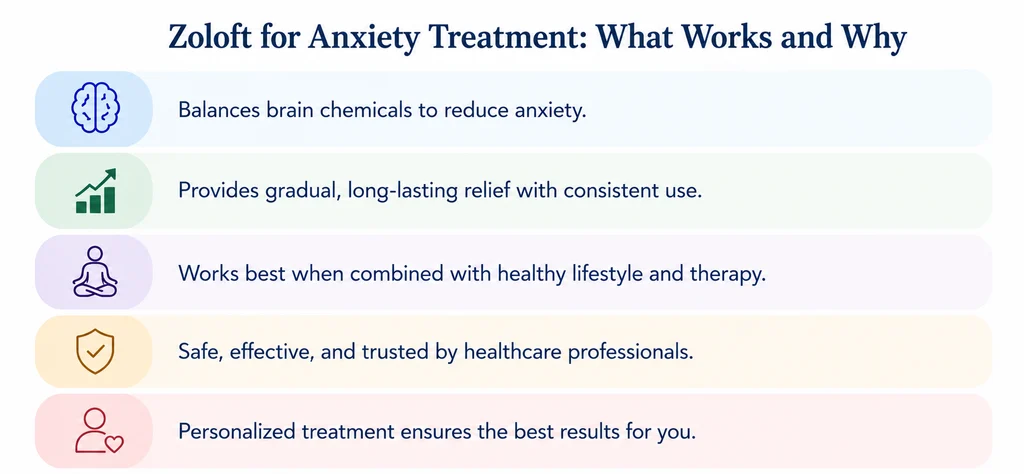
Mental health counseling can improve the effectiveness of sertraline by helping you manage anxious thoughts, emotions, and stress more effectively. Medication management supports brain chemistry, while counseling teaches coping skills and emotional control. Therefore, combining therapy with sertraline for anxiety helps improve recovery, reduces anxiety symptoms, and supports stronger long-term emotional balance and daily mental wellness over time.
Cognitive Behavioral Therapy (CBT)
CBT helps you identify negative thinking patterns that increase anxiety symptoms. It teaches you how to replace them with healthier thoughts. When combined with Zoloft for anxiety, CBT improves emotional regulation and helps you respond better to stress in daily life situations.
Stress Management Techniques
Counseling provides practical tools like breathing exercises, relaxation training, and grounding techniques. These methods reduce physical and emotional stress responses. Along with sertraline for anxiety, these skills help you stay calm, focused, and more stable during anxiety-triggering situations.
Emotional Support and Monitoring
Therapists offer continuous emotional support and track your progress over time. They help adjust coping strategies when needed. Combined with Zoloft for anxiety, this guidance improves consistency in treatment and supports better long-term recovery outcomes.
Research published in the New England Journal of Medicine [3] found that combining cognitive behavioral therapy (CBT) with sertraline produced better treatment outcomes than either treatment alone for anxiety disorders. The study showed that combination therapy led to higher response rates and greater reductions in anxiety severity compared with medication alone. These findings suggest that pairing Zoloft for anxiety with mental health counseling may provide a more effective approach to symptom management and overall recovery.

Manage Anxiety Effectively With Zoloft for Anxiety and Professional Support from MindVita
Maybe you are constantly overthinking, struggling with panic symptoms, avoiding situations that make you anxious, or lying awake at night because your mind will not slow down. When anxiety begins affecting work, relationships, sleep, or everyday responsibilities, professional support can help.
At MindVita, we help people who struggle with constant worry, panic symptoms, racing thoughts, and anxiety that interferes with daily life. We help you use Zoloft for anxiety in a safe and clear way. In addition, we provide regular check-ups and close monitoring to track your progress. You get therapy support to manage stress and feel better. Together, we work to reduce anxiety symptoms and improve your mood and emotional balance. Contact us today to get expert help for Zoloft for anxiety and start your journey toward better mental health with MindVita support.
FAQS
How long does Zoloft for Anxiety take to work?
Zoloft for anxiety does not work instantly, so you need patience. Some people notice early improvements within 1–2 weeks, but full benefits often take 4–8 weeks depending on the condition being treated. With this medication, anxiety symptoms like unease and tension gradually reduce over time. Therefore, consistent use helps your mood stabilize and improves daily emotional control in a natural way.
Can anxiety worsen at the beginning of treatment?
Yes, Zoloft for anxiety may temporarily increase anxiety at the beginning of treatment. You might feel more unease, restlessness, or tension at first. However, with continued sertraline, these early effects usually reduce as your brain adjusts. Therefore, symptoms improve gradually with steady use and proper medical guidance over time.
Is Zoloft for Anxiety safe for long-term use?
Zoloft for anxiety is generally considered safe for long-term use when taken under medical supervision. You can continue this medication for months or longer if needed. Regular check-ups are important. Therefore, it helps keep your mood stable, reduces anxiety, and ensures safety while your psychiatric provider monitors your progress closely.
Can I take cold medicine with Zoloft?
Some cold medicines may interact with Zoloft or increase side effects. Always read medication labels and speak with a healthcare provider before combining medications. In many cases, psychiatric providers may suggest safer options to protect your health and reduce any risk.
Do I still need therapy with Zoloft?
Yes, many people benefit from combining Zoloft with therapy. Medication helps reduce anxiety symptoms, while therapy teaches coping skills and strategies for managing anxious thoughts and behaviors. Combining both can improve recovery, provide better control over anxiety symptoms, and support long-term emotional balance.


2 Responses