

Do you ever feel like panic suddenly takes over, leaving you with a racing heart, shaky breathing, or a sense that you cannot think clearly? In those moments, it may feel difficult to calm down or focus on what is happening around you. The good news is that there are simple ways to regain control. Techniques like deep breathing, grounding exercises, and other coping strategies can help you feel calmer, think more clearly, and handle stressful situations with greater confidence over time.
Understanding panic mode starts with recognizing how it affects your thoughts, body, and daily life. When you learn your triggers, you can respond more effectively and feel more prepared when symptoms arise. With the right guidance, you build stronger emotional control. At MindVita, we support you with personalized online psychiatry care designed for your needs. Our experts help you understand triggers and guide you with practical tools to handle panic mode confidently. Schedule a consultation today and start shaping a healthier response to stress and panic mode.
How Does Panic Mode Start and Why Does It Feel So Sudden?
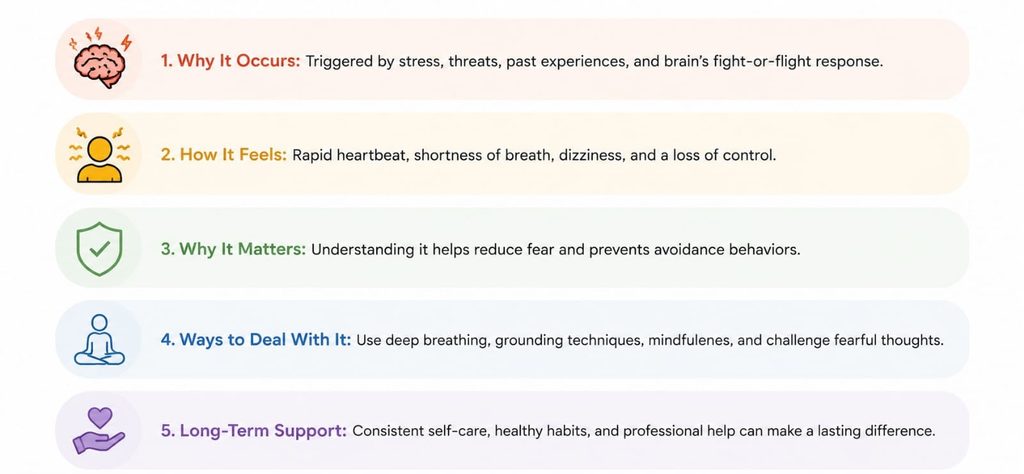
Panic mode usually starts when your brain activates a fight-or-flight response, even when there is no real danger. Stress, fear, or emotional pressure can trigger this reaction. As a result, your body reacts quickly with a racing heart, fast breathing, and intense fear. It feels sudden because your nervous system responds before your mind can fully understand or process what is happening in the moment.
According to Harvard Health Publishing [1], the stress response activates when the brain perceives a threat, leading to the release of stress hormones like adrenaline. These changes prepare your body for action, even when no real danger exists. Over time, repeated stress can make panic mode more frequent and harder to control without proper support.
What Physical and Emotional Signs Show You Are in Panic Mode?
Panic mode shows clear physical and emotional signs that appear suddenly and feel intense. You may notice your body reacting with strong stress even without real danger. These changes can affect your breathing, heartbeat, and thinking. At the same time, you may experience intense fear, nervousness, or a sense of losing control. Recognizing these early symptoms of panic attack helps you understand how to calm panic mode more effectively.
Physical and emotional signs of panic mode:
- Rapid heartbeat or palpitations that feel unusual or intense
- Shortness of breath or a feeling of not getting enough air
- Sweating, shaking, or sudden chills without clear reason
- Dizziness, chest tightness, or lightheadedness during anxiety
- Fear, confusion, or feeling like something bad will happen
- Loss of control or feeling disconnected from reality
These symptoms can feel frightening, especially if they happen unexpectedly. However, recognizing them early can help you respond more calmly and use coping strategies before panic becomes more intense.
What Are the Real Triggers Behind Panic Mode Episodes?
Panic mode often develops after stress has been building for days, weeks, or even months. Work pressure, relationship problems, financial concerns, lack of sleep, or too much caffeine can make your body more sensitive to stress. When these factors build up, even a small trigger may lead to sudden panic symptoms.
According to Wikipedia [2], panic attacks can be linked to both psychological and biological factors, including stress, anxiety disorders, and changes in brain function related to fear response systems. These factors can cause sudden episodes of intense fear and physical symptoms such as rapid heartbeat, dizziness, and shortness of breath.
What Simple Steps Help You Calm Panic Mode in Minutes?
Panic mode can be controlled quickly when you focus on calming your body’s stress response. Instead of reacting with fear, you shift attention to simple actions that help you relax. This reduces physical tension and emotional stress. With consistent practice, you improve control over symptoms of panic attacks and build confidence in handling sudden anxiety. These small steps strengthen your ability to regain balance during stressful moments.
Slow and Controlled Breathing
Slow breathing helps regulate your heart rate and signals your brain to relax. Inhale deeply through your nose, hold briefly, then exhale slowly. This simple technique reduces physical tension and helps calm the nervous system during panic mode.
Replace Fear Thoughts With Calm Self-Reassurance
During panic mode, your mind often creates fear-based and worst-case thoughts. You gently interrupt this by using calm and simple self-talk like “I am safe” or “this will pass.” This helps reduce overthinking, lowers emotional intensity, and brings your focus back to reality. With practice, you gain better control over anxious thinking.
Release Physical Tension Through Gentle Body Movement
Light body movement such as slow walking, stretching, or shoulder rolling helps release built-up tension during panic mode. It improves blood flow, relaxes tight muscles, and reduces stress or mental fatigue hormones in the body. As your body becomes calmer, your mind also feels more stable. This makes symptoms of panic attack easier to manage at the moment.
Create a Safe Mental Space Until Symptoms Pass
You remind yourself that panic mode is temporary and not dangerous, even if it feels intense. You shift your attention to a calm and safe mental image or thought. This helps reduce fear and prevents panic from growing. By staying patient and grounded, you allow symptoms to pass naturally without adding extra stress.
According to NHS guidance [3], panic and anxiety can be managed by using breathing control, grounding techniques, and focusing on the present moment to reduce intense feelings. These methods help interrupt the panic cycle and support emotional balance during intense anxiety episodes.
How Can Online Psychiatry Help You Manage Panic Mode Long-Term?
Online psychiatry helps you manage panic mode long-term by giving you structured, professional support from anywhere. You can easily talk to a qualified psychiatric provider, understand the symptoms you experience during panic attacks, and identify personal triggers. This ongoing guidance helps you learn how to calm panic mode with evidence-based techniques. Over time, you build stronger emotional control, reduce anxiety frequency, and improve daily functioning with consistent care.
With online psychiatry, you also receive personalized treatment plans that may include therapy, lifestyle advice, and medication support if needed. This approach ensures you are not managing panic mode alone. Instead, you get continuous monitoring and adjustments based on your progress. As a result, you develop healthier thinking, better ways to handle stress, and long-term balance. This helps you feel more stable, improve your mental health, and support a better and more comfortable daily life.

Find Personalized Support for Panic Mode at MindVita
You may find yourself avoiding certain situations because you worry panic symptoms will return. A simple drive, work meeting, or social event can start to feel stressful when you are constantly wondering when the next episode might happen. Over time, this cycle increases stress and lowers confidence, leaving you stuck and unsure how to regain control over your emotions and daily life.
At MindVita, we understand what you are going through, and we guide you step by step. Our online psychiatry support helps you identify triggers and manage panic mode with personalized care. We focus on simple, practical strategies that fit your lifestyle. With professional help, you learn how to calm panic mode effectively, reduce symptoms of panic attacks, and build long-term emotional balance and confidence. Contact us today and take the first step toward a calmer, healthier mind.
FAQS
How Can You Calm a Panic Attack at Home?
You can calm a panic attack at home by focusing on slow, steady breathing and reminding yourself that the feeling will pass. Next, sit in a quiet place and pay attention to your surroundings. Drinking water, relaxing your muscles, and using grounding techniques can help you feel more in control and comfortable.
Can stress trigger panic mode?
Yes, ongoing stress can trigger panic mode by keeping your body in a constant state of alertness. As stress builds over time, your ability to cope with challenges may decrease. Consequently, everyday situations can feel overwhelming and lead to sudden anxiety symptoms and intense feelings of panic.
Can children and teenagers experience panic mode?
Yes, children and teenagers can experience panic mode, especially during periods of stress, academic pressure, family changes, or social challenges. They may struggle to understand their feelings, which can make symptoms feel more intense. Early support, healthy coping skills, and professional guidance can help them manage anxiety effectively.
Can therapy teach me how to calm a panic attack?
Yes, therapy can teach you how to calm a panic attack by helping you identify triggers, understand anxiety patterns, and respond more effectively to stressful situations. With professional guidance, you can build confidence, reduce fear during episodes, and develop healthier ways to regain a sense of control.
What should I avoid during panic mode?
During panic mode, avoid thinking about the worst possible outcome or paying too much attention to every physical sensation. Also, limit caffeine and do not skip meals. These habits can increase anxiety and make the experience feel more intense. Try not to stay alone if support is available. Instead, focus on staying calm and giving yourself time to feel better.
Can exercise help prevent panic mode?
Yes, regular exercise can help prevent panic mode by lowering stress levels and improving your overall mood. Physical activity also helps your body release natural chemicals that support emotional well-being. Even simple activities like walking, stretching, or cycling can help you feel calmer and better able to handle daily stress.

One Response