

Imagine a lively kid that cannot sit still constantly spinning things and avoiding eye contact while playing games. These are typical symptoms of ADHD and autism interaction. On the ADHD autism spectrum genetics establish a complicated interaction that usually becomes visible only after the first years of going to school. Early detection helps to address these problems right on time and promote healthy development.
At Mindvita we excel in translating scientific information about neurodevelopment into easily understandable language. In this detailed article we will look into ADHD autism spectrum genetic aspects their overlapping symptoms possible ways to identify them early and treatment options. Based on credible sources such as the CDC and genetic research we will discuss how ADHD and autism are the same as well as shed light on the difference between autism and ADHD.
Key Statistics and Definitions
Autism spectrum disorder occurs in about 1 in 36 children according to the Center for Disease Control and Prevention. Moreover ADHD and autism prevalence is observed in 50 to 70% of patients diagnosed with either of the conditions. Hereditary predisposition is present in 70 to 90% of ADHD and autism cases. The ADHD autism spectrum should be taken seriously for timely treatment.
Our discussion will proceed logically starting from genetics moving onto symptoms detection methods treatments and ending with preventive measures. Mindvita guarantees quality material in each of the following sections.
Introduction: Untangling ADHD and Autism Connection
Despite the common opinion of many professionals, ADHD autism spectrum connection is very complicated. ADHD itself affects 5 to 7% of the world population with inattention hyperactivity and impulsiveness as core symptoms. The combination of ADHD and autism makes the matter even worse due to increasing social isolation difficulties in daily routine and poor academic achievement.
According to a recent study in JAMA Pediatrics 40% of ADHD autism spectrum cases are usually wrongly diagnosed. However genetic predisposition explains the increased rate of the second disorder among relatives.
At Mindvita we can help you understand what ADHD and autism differences are. Firstly let us emphasize that is ADHD and autism the same? Of course not! Nonetheless both belong to the category of neurodevelopmental disorders. One relies on environmental stimulation whereas the second prefers routine and repetition in all actions. Understanding of the difference between autism and ADHD is crucial.
It is extremely important to spot symptoms of ADHD and autism on time. Otherwise risks of mental disorders such as anxiety and depression increase threefold. As an example consider my own experience in which a family suspected their child of ADHD autism spectrum. Genetic screening has revealed the link and led to appropriate therapy. Consequently there is no need to wonder if ADHD and autism are the same or not.
This article provides you with necessary guidelines, examples and data.
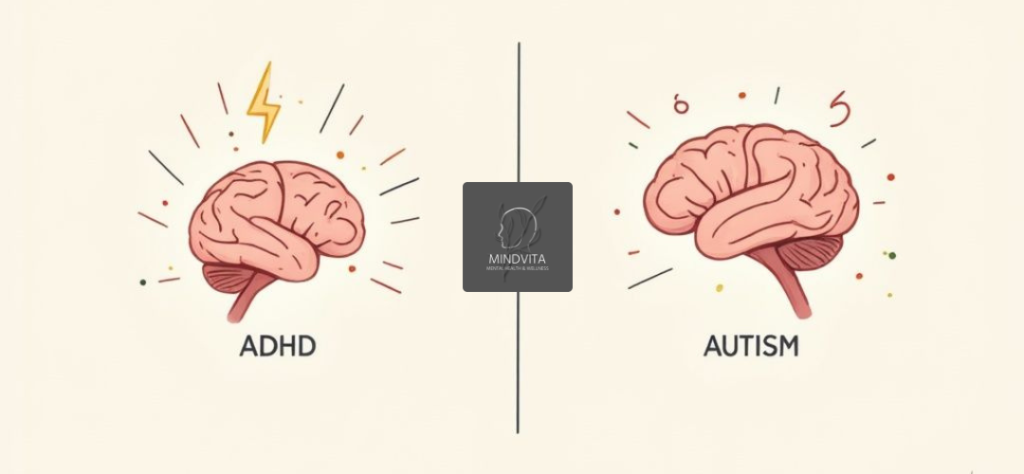
Genetic Basis of ADHD and Autism Spectrum Disorders
To comprehend ADHD autism spectrum connection one should begin with genetics as this condition is mostly hereditary with the environment providing modification. Let us examine the topic deeper.
Shared Genes
Some genetic factors are linked to the development of ADHD autism spectrum diseases. For example CHD8 gene that regulates brain development is affected in both disorders. According to a recent GWAS published in the Nature Genetics journal over 100 gene mutations are responsible for ADHD autism spectrum connection.
SHANK3 protein mutation related to synaptic function is present in 1 to 2% of autism cases as well as ADHD and autism hyperactivity. NRXN1 involved in neural communication is also linked to ADHD and autism because disruptions lead to attention deficit.
Furthermore twin studies indicate 70 to 90% and 30% concordance rate in monozygotic and dizygotic twins correspondingly with respect to ADHD autism spectrum symptoms. Thus there is definitely a genetic component behind it.
Let me cite a particular case. The father of the Johnson family had some ADHD symptoms with slight social awkwardness. Genetic testing has demonstrated a mutation in NRXN1 inherited by his son suffering from ADHD and autism simultaneously. Therefore early detection changed their attitude towards the situation.
Polygenic risk scores help in predicting future disorders. An individual with ADHD has 5 to 10% probability to develop autism in the future based on large scale studies. Mindvita recommends seeking genetic counselor services with the use of tests available in 23and Me where you can find a neurodiversity report.
Deep investigation is connected with copy number variations for example deletion at chromosome 16p11.2 region that doubles ADHD and autism risks by impacting brain size and connectivity.
Hereditary Influences and Environment
The figures related to ADHD and autism are 76% and 83% in terms of genetic components. Polygenic influences occur in an interactive manner.
Epigenetics also plays a significant role. For instance prenatal valproic acid intake doubles ADHD autism spectrum risk via changes in gene expression. Maternal stress methylates the genes associated with neurodevelopmental disorders.
Several protective factors also exist. Taking folic acid during pregnancy reduces autism risks by 40%. Imagine the genes as pieces of music while the environment is a conductor.
In the analysis carried out by the Psychiatric Genomics Consortium 60% of ADHD and autism comorbidity cases are connected with common variants. Additionally urban air pollution increases this ratio by 15% through oxidative stress of neuronal circuits.
Mindvita highlights the importance of preconception planning. You should record your family history and prioritize taking folic acid. New developments in the gut microbiome field suggest a correlation with ADHD and autism because of changes in serotonin related genes. Probiotics have proven their efficacy in several pilot trials.
Symptom Overlap on ADHD Autism Spectrum
Behavioral and cognitive symptoms can confuse you regarding the ADHD autism spectrum difference. Diagnosing these conditions should take into consideration many specific features.
Common Symptoms of ADHD and Autism
Attention deficits are shared by ADHD and autism because inattention affects 60% of patients with the two disorders. The second common factor is impulsive actions leading to interrupting others or doing something inappropriate.
Another symptom of the ADHD autism spectrum involves difficulties in interacting socially. Both ADHD and autism individuals struggle to perceive nonverbal cues and tend to blurt comments and isolate themselves from others. Peer rejection rates reach 40%.
About 70% with autism and 50% with ADHD are sensitive to sensory stimuli. They react negatively to bright lights tactile irritation and loud noises.
For example seven year old Alex tends to hyperfocus while solving complex puzzles (an autistic symptom) but he suddenly runs across the room (a mixture of ADHD and autism). Initially he was considered disruptive. However more thorough assessment has revealed the presence of ADHD autism spectrum.
Finally emotional dysregulation is another common feature. Meltdowns occur during overstimulation in a similar manner for both ADHD and autism. Sleep disturbances occur in 50% of cases due to the imbalance of dopamine neurotransmitter levels.
Diagnosing and Misdiagnosis Risks
Although DSM-5 helps to diagnose ADHD autism spectrum certain difficulties may arise due to overlapping criteria. Thus hyperfocus characteristic of ADHD resembles restricted interests of autistic individuals. About 70% of ASD people satisfy the criteria for ADHD diagnosis.
However is ADHD and autism the same condition? Not quite since the intentionality of actions differs considerably. Autistic individuals do these to calm down while people with ADHD act impulsively and seek thrill. ADHD autism spectrum comorbidity occurs in 1 in 3 cases.
An analysis performed in the UK showed that misdiagnosis costs society billions per year due to unnecessary interventions. Women suffer more because of masking symptoms making misdiagnosis rates twice higher on the ADHD autism spectrum.
Sometimes clinicians prescribe medication without addressing the social aspect of autism despite a clear ADHD autism spectrum presence. It would be advisable to consider ADHD and autism separately.
Early Detection Methods for ADHD Autism Spectrum Linkages
Early identification of the ADHD autism spectrum matters greatly due to brain plasticity before age five.
Screening Tools and Milestones
Starting from 12 months parents should pay attention to a lack of joint attention and pointing. At 18 months the following tests are useful:
- M-CHAT-R screens for gaze avoidance.
- ASQ checks for ADHD and autism motor delays.
The warning signs include delayed speech together with hyperactivity or repetitive behavior with inattention. There are free CDC milestone trackers available online.
At Mindvita we recommend a dedicated application helping you record a child’s behavior and generate reports for doctors. Meta analysis of studies suggests that early screening lowers impairments by 30 to 50%. Longitudinal studies prove the effectiveness of early interventions at the age of toddlers doubling the success rates.
For example in home video footage, Timmy, a two year old, exhibited incessant spinning and constant activity. A quick M-CHAT-R test triggered the need for examination. At 22 months Timmy has received an ADHD autism spectrum diagnosis allowing early intervention before kindergarten.
Sibling risks are two three fold higher than the general population so regular screenings are essential.
Advanced Detection Methods for ADHD and Autism
fMRI can reveal 80% of similarities in prefrontal cortex activation in ADHD and autism cases. EEG demonstrates specific theta waves.
Gold standard includes using ADOS-2 for social reciprocity and Conners scales for ADHD attention. Together these tests have 85% sensitivity.
Genetic panel tests are provided by numerous websites like 23 and Me with polygenic scores reaching 65% reliability rate. At Mindvita we recommend conducting multimodal assessments in order to ensure high precision.
Recently developed AI applications analyzing video clips demonstrate 90% accuracy rates.
Evidence Based Interventions for ADHD and Autism
With the ADHD autism spectrum recognized there are highly effective solutions to address these disorders successfully.
Targeted Therapy and Genetic Analysis
Pharmacogenetics shows high rates with ADHD and autism. 70% of patients respond positively to stimulants in case CYP2D6 metabolism matches their genotype.
ABA therapy combined with counseling is beneficial for reducing 40% of ADHD and autism symptoms. Mindvita programs also involve mindfulness practices aimed at enhancing emotional stability.
As an example, nine year old Jake with ADHD autism spectrum has been diagnosed with a SHANK3 mutation. Consequently standard therapy failed to work. Using alternative approaches made ADHD and autism symptoms reduced twofold according to parents’ observations.
Occupational therapy is needed for overcoming sensitivity to sensory stimuli. Speech therapy helps to cope with pragmatic disorder.
Future Prospects in ADHD Autism Spectrum Studies
There are ongoing initiatives like the GENIAL project focusing on prediction of ADHD autism spectrum disorders using AI and genomics even before birth.
CRISPR techniques target SHANK3 mutations in early stages. Recent probiotic tests reduce gut brain pathway imbalance.In order to prevent ADHD and autism one should start preconception planning by taking folic acid to protect babies by 40%. Screening of siblings allows identifying elevated risks.Current wearable devices can detect ADHD autism spectrum tendencies even before symptoms appear. Gut brain probiotics are an emerging research area in ADHD autism spectrum studies.
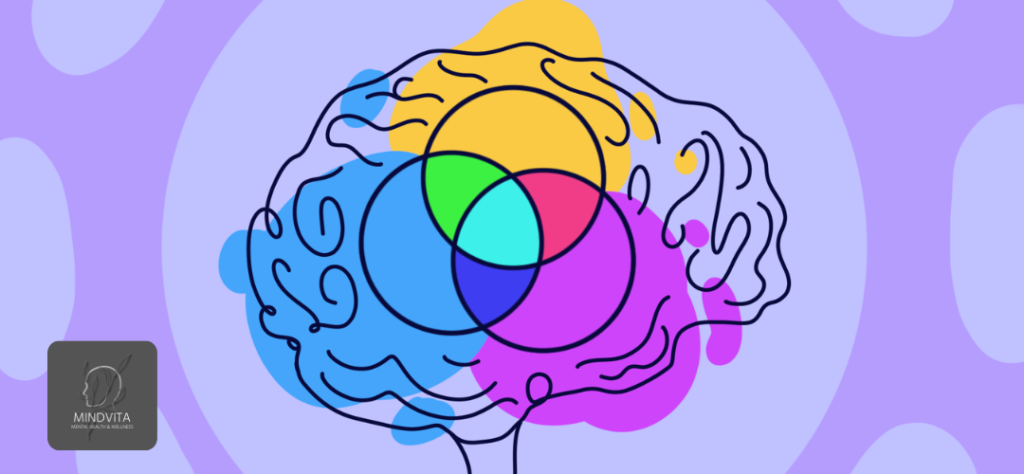
Conclusion: Early ADHD Autism Spectrum Diagnosis Matters
We can say for sure that the genetic basis behind the ADHD autism spectrum is evident and convincing. Early detection brings about IQ score gains equaling 15 to 20 points.
The Mindvita team welcomes you. Learn more details about ADHD and autism, the same and difference between autism and ADHD. Act now!
What Genes Are Linked to ADHD and Autism?
If you suspect genetic issues CHD8 and SHANK3 genes are the most likely candidates for ADHD autism spectrum disorders. You can order affordable polygenic panel tests. Mindvita connects you with experienced genetic counselors.
How Do You Identify Early ADHD Autism Spectrum Signs?
If you suspect ADHD autism spectrum signs then apply M-CHAT-R and keep track of daily behavior. Compile a case for early diagnosis.
Is ADHD and Autism the Same or Different?
You can find out the answer about difference between autism and ADHD on our website. Our screeners are free.
ADHD and Autism Simultaneously What Next?
Do not panic about your child having both disorders. Combine ADOS Conners assessments and receive treatment to reduce symptoms.
Can Genetics Predict Effective ADHD Autism Treatment?
Medication may not fit some individuals which can be predicted with genetic CYP2D6 screening. Mindvita tailors therapy for you.
This content is for educational purposes only and not medical advice. Always consult a doctor.