

ADHD and anxiety can look very similar because both may cause difficulty concentrating, restlessness, and emotional challenges. However, they are different mental health conditions that require different treatment approaches. An accurate diagnosis helps identify whether ADHD, anxiety, or both conditions are causing your symptoms, allowing mental health professionals to recommend the most appropriate treatment. In 2026, treatment increasingly focuses on personalized care, combining medication when appropriate, therapy, lifestyle strategies, and ongoing follow-up to help improve focus, reduce anxiety, and support long-term mental health.
If you often struggle to stay focused, feel mentally overwhelmed, and are unsure whether your symptoms are related to ADHD, anxiety, or both, seeking professional guidance can help you find answers and move forward with confidence. At MindVita, our psychiatric providers offer personalized care, medication management, therapy recommendations, and convenient online psychiatry appointments. We create treatment plans based on your symptoms, medical history, and individual goals. Schedule a consultation today and take the first step toward better focus, improved emotional health, and greater confidence in daily life.
What Are the Key Differences Between ADHD vs Anxiety?
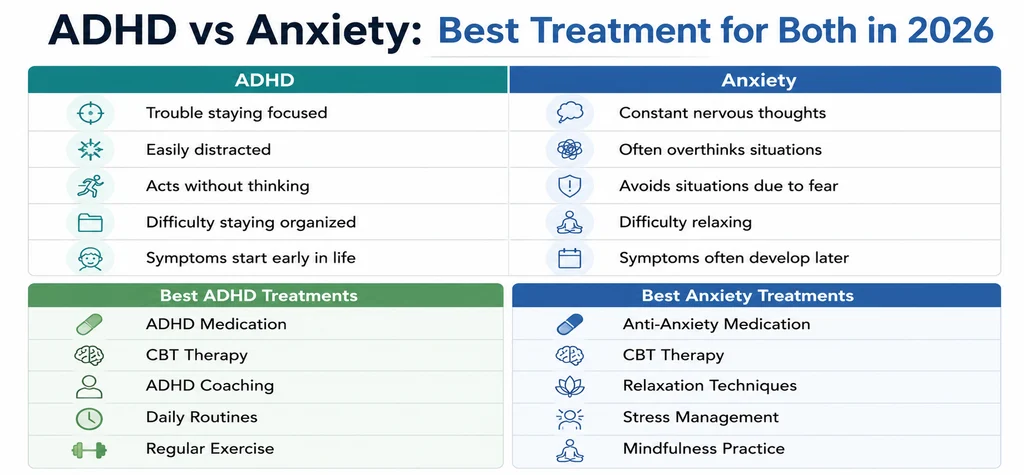
ADHD and anxiety can sometimes look similar, but they affect daily life in different ways. Both conditions may cause concentration problems, restlessness, irritability, and sleep difficulties. However, the underlying causes are different. ADHD is a neurodevelopmental condition that makes it harder to stay organized, manage tasks, and maintain attention. Anxiety, on the other hand, often causes ongoing nervousness, excessive worry, and feelings of unease. Knowing the difference is important because the right treatment depends on the condition causing your symptoms.
According to Neurodivergent Insights [1], ADHD and anxiety can appear similar because both may affect concentration, emotional regulation, and daily functioning. However, people with ADHD are often distracted by external events, while those with anxiety tend to become preoccupied with anxious thoughts and mental stress. Recognizing these differences can help support a more accurate diagnosis and treatment plan.
How Can You Tell Whether You Have ADHD, Anxiety, or Both?
It can be difficult to tell whether you have ADHD, anxiety, or both because several symptoms overlap. However, the reasons behind these symptoms are often different. Someone with ADHD may lose focus because they become distracted by surrounding stimuli. In contrast, someone with anxiety may have trouble focusing because persistent worry makes it difficult to stay present and concentrate on tasks.
- ADHD often causes trouble staying organized and completing tasks.
- Anxiety commonly creates feelings of nervousness and mental pressure.
- ADHD symptoms may appear even during calm situations.
- Anxiety symptoms often become stronger during stressful events.
- Some people experience signs of both conditions simultaneously.
A professional evaluation is the most reliable way to identify the cause of your symptoms. Mental health providers review your experiences, daily challenges, and symptom patterns before making a diagnosis. This process helps determine whether ADHD, anxiety, or both conditions are affecting your life and guides the development of an appropriate treatment plan.
What Is the Most Effective ADHD and Anxiety Treatment in 2026?
The most effective ADHD and anxiety treatment in 2026 depends on your symptoms, overall health, and daily challenges. Treatment usually begins with a comprehensive psychiatric evaluation to determine whether ADHD, anxiety, or both conditions are present, because each requires a slightly different approach. However, many people benefit from a combination of medication, therapy, and healthy lifestyle habits. This approach helps address both attention difficulties and anxiety symptoms at the same time. As a result, many people find it easier to manage daily responsibilities, maintain healthy routines, and cope with challenges more effectively.
According to Weiss et al. (2012) [2], a study published in BMC Psychiatry found that Cognitive Behavioral Therapy (CBT) may improve outcomes for adults with ADHD. The article explains that CBT helps individuals develop practical skills for managing time, staying organized, completing tasks, and handling everyday challenges more effectively. As a result, CBT alone or alongside medication may improve long-term symptom management.
How Can Online Psychiatry Improve ADHD and Anxiety Treatment?
Online psychiatry improves ADHD and anxiety treatment by making professional mental healthcare more accessible and convenient. You can connect with a psychiatric provider from home, discuss your symptoms, and receive a personalized treatment plan without traveling to an office. This flexibility often makes it easier to start treatment early and stay consistent with follow-up care.
Regular online appointments help your provider monitor your symptoms and make changes to your treatment when needed. They can review your progress, adjust medications, and answer any new questions or concerns. As a result, you receive ongoing support and guidance that can help you improve focus, manage anxiety more effectively, and handle daily tasks with greater confidence.
What Lifestyle Changes Support ADHD and Anxiety Treatment?
Healthy lifestyle habits can play an important role in managing ADHD and anxiety symptoms. While they do not replace professional treatment, they can support better symptom control and improve daily functioning. Consistent routines, physical activity, proper nutrition, quality sleep, and stress management strategies may help you stay focused, feel more balanced, and handle everyday challenges more effectively.
Regular Exercise
Regular exercise can help improve focus, lower stress levels, and support emotional well-being. It also increases the release of brain chemicals that help regulate attention and mood. Over time, staying active may make daily tasks feel easier to manage and improve overall mental health.
Consistent Sleep Schedule
Getting enough sleep each night can support better focus, memory, and emotional balance. Following a consistent sleep schedule may reduce daytime tiredness and help you manage ADHD and anxiety symptoms more effectively. Quality sleep also supports overall brain function and daily performance.
Balanced Nutrition
Eating nutritious meals throughout the day can support brain function and maintain steady energy levels. A balanced diet that includes protein, fruits, vegetables, and whole grains may help improve concentration, support mood stability, and promote overall mental and physical well-being.
Structured Daily Routine
Creating a structured daily routine can make it easier to manage responsibilities and stay organized. Consistent schedules help reduce uncertainty, improve time management, and support productivity. Over time, healthy routines can make daily tasks feel more manageable and less overwhelming.
Stress Management Techniques
Practices such as deep breathing, mindfulness, and relaxation exercises can help lower stress and reduce anxiety and improve emotional regulation. These techniques may improve emotional control, support mental health, and make it easier to handle everyday challenges with confidence.
According to HelpGuide.org [3], healthy daily habits can make it easier to manage ADHD symptoms and reduce everyday challenges. Small changes, such as staying active, following consistent routines, eating well, and practicing relaxation techniques, can support better mental well-being. When combined with professional care, these habits may help you stay more engaged, handle responsibilities more effectively, and maintain greater stability throughout the day.
Take the First Step Toward Better Mental Health with MindVita Today
Living with ADHD and anxiety can feel frustrating and exhausting. You may struggle to stay focused, manage daily tasks, or keep up with responsibilities at work or home. At the same time, ongoing anxiety can make it difficult to relax and think clearly. Without proper support, these symptoms can begin to affect your confidence, lower productivity, and interfere with your quality of life.
At MindVita, we help you understand what is causing your symptoms and identify whether ADHD, anxiety, or both conditions are contributing to your symptoms and create the treatment plan that best fits your needs. Our psychiatric providers offer personalized care, medication management, therapy recommendations, and convenient online psychiatry appointments. With the right support, you can improve focus, reduce anxiety, and feel more confident in daily life. Contact us today and start building a personalized plan that helps you manage ADHD, reduce anxiety, and regain control of your daily life.
FAQS
Is anxiety medication enough if you also have ADHD?
Not always, anxiety medication can help reduce nervousness, stress, and physical anxiety symptoms within several weeks, but it may not improve attention, organization, or impulse control related to ADHD. If you have both conditions, healthcare providers often recommend a combined treatment approach to achieve the best long-term symptom improvement.
Can adults have both GAD and ADHD?
Yes, adults can have both GAD and ADHD at the same time. In fact, these conditions often occur together and may make symptoms more challenging to manage. While ADHD can affect focus and organization, GAD can cause ongoing anxiety and mental stress. Therefore, a comprehensive evaluation is important to identify both conditions accurately.
Should ADHD or anxiety be treated first?
There is no single answer because treatment depends on your symptoms and which condition is causing the greatest impairment. In some people, treating ADHD first also improves anxiety. In others, anxiety symptoms need to be managed before ADHD treatment begins. If both conditions are present, psychiatric providers often develop a treatment plan that addresses each condition safely and effectively.
How long does ADHD and anxiety treatment take to work?
ADHD and anxiety treatment timelines vary based on your symptoms and treatment plan. ADHD medications may improve focus within a few hours or days. In contrast, anxiety medications often take 4 to 6 weeks to show full benefits. Meanwhile, therapy typically produces noticeable improvements after 6 to 12 weeks of consistent participation.
Why do ADHD and anxiety often go undiagnosed in adults?
ADHD and anxiety often go undiagnosed in adults because symptoms can develop gradually over many years. Many people assume their focus problems, stress, or constant worry are normal parts of life. As a result, they do not seek help until symptoms begin affecting their work, relationships, or daily responsibilities.