

Do you find yourself replaying conversations for hours, worrying about worst-case scenarios, struggling with panic attacks, or feeling constantly on edge? Anxiety can affect your sleep, focus, relationships, and ability to enjoy daily life. Anti-anxiety medications are one treatment option that may help reduce symptoms and make anxiety easier to manage when it begins interfering with your routine.
If anxiety is causing constant overthinking, panic symptoms, racing thoughts, poor sleep, or difficulty getting through daily responsibilities, you do not have to manage it alone. At MindVita, you can explore professional mental health support and personalized treatment options. With proper guidance and care, you may feel calmer, more focused, emotionally balanced, and better prepared to manage anxiety symptoms effectively. Schedule a consultation today and learn which anti-anxiety medications may support your mental health goals safely.
What Are Anti-Anxiety Medications and How Do They Work?
Many people seek treatment because anxiety causes constant worrying, panic attacks, racing thoughts, muscle tension, or difficulty sleeping. Anti-anxiety medications are prescription medicines that help reduce these symptoms and make daily life more manageable. Psychiatric providers prescribe them to support emotional balance and improve your routine life. These medicines do not cure anxiety completely. However, they help control symptoms effectively, making it easier for you to stay calm, focused, and emotionally stable.
According to the National Institute of Mental Health [1], anxiety disorders are commonly treated with medication and psychotherapy. Anti-anxiety medications help reduce symptoms such as panic attacks, excessive fear, and worry. These medications are often prescribed as part of a broader treatment plan tailored to individual needs. Healthcare providers monitor treatment response and may adjust the plan to improve symptom management and long-term outcomes
What Are the Different Types of Anti-Anxiety Medication?
Anti-anxiety medication includes different types of prescription drugs that help reduce anxiety symptoms in various ways. Psychiatric providers choose these medicines based on your condition, symptom severity, and treatment needs. Some work quickly for short-term relief, while others support long-term anxiety management. Each type of anti-anxiety medication affects brain chemicals differently to improve mood, reduce stress, and help you feel emotionally stable over time.
- Benzodiazepines are often prescribed when someone needs fast relief from severe anxiety or panic symptoms.
- SSRIs increase serotonin levels in the brain, helping improve mood and reduce long-term anxiety symptoms gradually with regular daily use.
- SNRIs help increase serotonin and norepinephrine levels and are often prescribed for generalized anxiety disorder and anxiety that occurs alongside depression.
- Buspirone is a non-habit-forming option that helps manage generalized anxiety symptoms by balancing serotonin and dopamine activity in the brain over time.
- Beta-blockers mainly control physical symptoms of anxiety such as fast heartbeat, shaking, and sweating, especially during stressful situations or performance anxiety.
These different anti-anxiety medication options allow doctors to create a personalized treatment plan. Therefore, the right choice depends on your symptoms, response to treatment, and overall mental health condition for safe and effective anxiety management.
Are Anti-Anxiety Pills Safe for Long-Term Use?
Many people worry that taking anxiety medication for months or years may not be safe. The answer depends on the type of medication, your symptoms, and how closely treatment is monitored. Anti-anxiety pills can be safe for long-term use, but only under medical supervision. Some medicines support long-term anxiety control, while others are best for short-term use. Therefore, psychiatric providers carefully monitor your progress and adjust treatment to reduce risks and improve emotional stability over time.
According to The New England Journal of Medicine [2], anti-anxiety medications such as benzodiazepines can help reduce anxiety symptoms and improve short-term symptom control. However, prolonged use may lead to tolerance, dependence, and side effects, particularly when treatment extends beyond recommended timeframes. The journal emphasizes that careful evaluation, ongoing reassessment, and adherence to prescribed dosing are essential for safe and effective treatment. Therefore, healthcare providers regularly review treatment progress and make adjustments when needed to support better outcomes and long-term mental health stability.
What Safety Rules Should You Follow When Using Anti-Anxiety Medications?
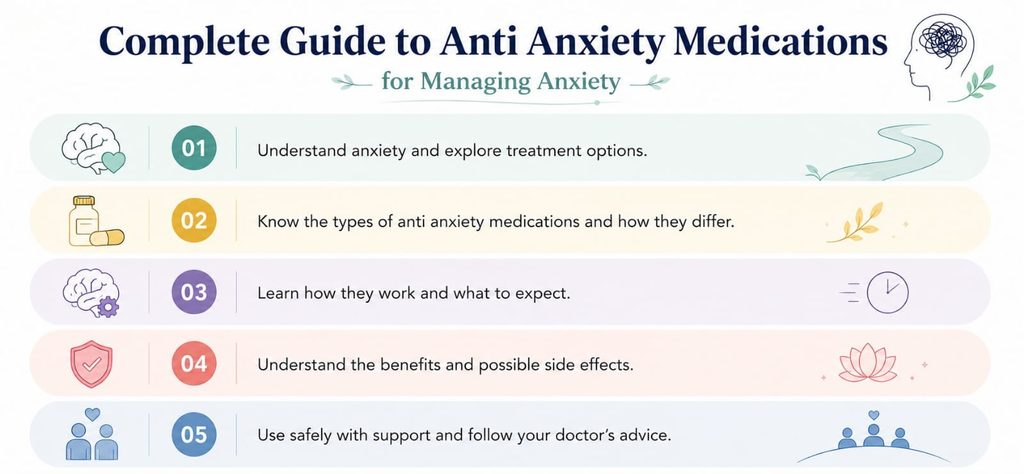
You should always follow safety rules when using anti-anxiety medications to avoid side effects and improve treatment results. Take medicine only as prescribed, avoid sudden stopping, and attend regular check-ups. Also, avoid alcohol and report any side effects quickly. Therefore, proper medical guidance helps you use medication safely and manage anxiety more effectively over time.
Avoid Stopping Medication Suddenly
You should never stop anti-anxiety medications without medical advice. Sudden stopping can trigger withdrawal effects and increase anxiety symptoms. Therefore, psychiatric providers reduce the dose slowly to keep your mood stable and support safe mental health recovery.
Monitor Side Effects Regularly
You should watch how your body reacts to anti-anxiety medications. Report any dizziness, nausea, or mood changes early. This helps your psychiatric provider adjust treatment quickly and ensures safer anxiety control with fewer complications over time.
Avoid Alcohol and Drug Interactions
You should avoid alcohol and other unapproved medicines while using anti-anxiety medications. These can increase side effects and reduce safety. Therefore, always inform your psychiatric provider about all substances to prevent harmful reactions and ensure effective treatment.
Attend Regular Follow-Up Appointments
You should attend regular check-ups during anti anxiety medication use. Psychiatric providers review progress, manage side effects, and adjust dosage. This ongoing care improves treatment results and helps maintain long-term emotional balance and stable mental health outcomes.
According to the Anxiety and Depression Association of America (ADAA) [3], anti-anxiety medications work best when used under the guidance of a healthcare provider and as part of a comprehensive treatment plan. Proper medication use and regular follow-up visits help improve treatment outcomes while reducing potential risks and drug interactions. The ADAA also emphasizes the importance of working closely with a healthcare provider to monitor symptoms, adjust treatment when needed, and support long-term management of anxiety symptoms.

Start Managing Anxiety With MindVita Today
Maybe you are constantly overthinking conversations, struggling with panic symptoms, avoiding situations that make you anxious, or lying awake at night because your mind will not slow down. When anxiety starts affecting work, relationships, sleep, or daily responsibilities, professional support can help. The right treatment plan can help reduce symptoms and make everyday life feel more manageable.
At MindVita, we help you manage anxiety with simple and professional care. Our team guides you with the right treatment and support based on your needs. Therefore, you get proper help to reduce symptoms, feel calmer, and improve daily life. With consistent support, you can build a more balanced, peaceful, and emotionally stable mind. Contact us today and start your journey toward better anxiety management and emotional well-being.
FAQs
How long do anti-anxiety medications take to work?
Some medications, such as benzodiazepines, may provide relief within hours. Others, including SSRIs and SNRIs, often take several weeks before full benefits are noticeable. Usually, results depend on the type of medicine and your body’s response. Therefore, a psychiatric provider checks your progress and adjusts treatment to improve anxiety control over time.
Are anti-anxiety pills addictive?
Some anti-anxiety pills can become habit-forming, especially benzodiazepines when used for a long time. However, not all medicines cause addiction. SSRIs and similar drugs are usually safer for long use. Therefore, psychiatric providers monitor treatment closely and guide you to use medication safely and reduce risks over time.
Can therapy help without anti-anxiety medications?
Yes, therapy can help manage anxiety without anti-anxiety medications in many cases. It teaches coping skills, reduces negative thoughts, and improves emotional control. Cognitive behavioral therapy is often effective. Therefore, with regular sessions and practice, you can reduce symptoms and build long-term mental strength and stability naturally over time.
What side effects can anti-anxiety medications cause?
Anti-anxiety medications can cause mild side effects in some people. These may include dizziness, drowsiness, nausea, headache, or sleep changes. Sometimes, dry mouth or tiredness can also occur. Therefore, psychiatric providers monitor your response and adjust treatment if needed to ensure safe use and better anxiety management over time.
Can I stop anti-anxiety medications suddenly?
You should not stop anti-anxiety medications suddenly. Doing so may cause withdrawal symptoms such as increased anxiety, dizziness, or sleep problems. Some medicines need gradual dose reduction. Therefore, psychiatric providers slowly lower the dose over time. This helps your body adjust safely and supports stable mental health during the recovery process.


One Response