

Do you sometimes forget to take your medication, feel unsure whether your treatment is working, or struggle to keep track of multiple prescriptions? Many people find it difficult to stay consistent with medications, especially when managing anxiety, depression, ADHD, or other ongoing mental health conditions. Medication management helps reduce confusion, prevent missed doses, and make treatment easier to follow. With the right support, you can feel more confident about your treatment plan and daily routine.
If you are struggling to manage your medicines or feeling confused about your treatment, MindVita is here to support you. Our psychiatric providers help you understand prescriptions, stay on track with your medication plan, and improve treatment safety. Schedule a consultation today through online secure care for trusted medication management and support that helps you feel more confident about your health.
Why Is Medication Management Important for Your Health?
Have you ever realized you forgot your medication halfway through the day? Maybe you are not sure whether a medication is helping, struggle to remember refills, or stop taking medicine because of side effects. These challenges are common and can make treatment much less effective. Medication management helps create a clear treatment plan so you can take medications safely, stay consistent with treatment, and better understand how your medications are working. It also helps psychiatric providers monitor your progress and make adjustments when needed.
The research study published in PubMed Central [1] found that poor medication adherence can limit treatment effectiveness and contribute to poorer health outcomes. The study also showed that medication adherence interventions were associated with improvements in medication knowledge, quality of life, physical function, and symptoms. These findings suggest that following a medication plan and working closely with healthcare providers can help improve health outcomes and support better day-to-day functioning.
How Can a Medication Plan Improve Daily Life?
Have you ever wondered whether you already took your medication or missed a dose during a busy day? A clear medication plan helps reduce confusion, makes treatment easier to follow, and helps you stay consistent with medications. It can also make daily routines feel less stressful and more predictable while reducing the chances of missed doses. Good medication management also lowers the risk of missed doses and medicine mistakes. When you follow a clear medication plan, it becomes easier to stay consistent with treatment, avoid medication mistakes, and manage daily responsibilities with less stress and confusion.
Benefits of a strong medication plan:
- Helps you remember doses more consistently.
- Reduces the risk of missed or double doses.
- Supports better communication with healthcare providers.
- Makes it easier to track medication effectiveness.
- Helps monitor side effects more effectively.
- Supports long-term treatment success.
With proper medication support, you can manage your treatment more easily and stay consistent with your routine. A clear medication plan can help reduce stress, prevent medication mistakes, and make it easier to manage daily responsibilities. Over time, these small improvements can help you feel more confident and in control of your treatment.
What Risks Can Poor Medication Management Cause?
Missing doses, stopping medication too early, or taking medication inconsistently can make symptoms harder to control and reduce the effectiveness of treatment. When you miss doses or take medicines the wrong way, your treatment may fail. It can also lead to side effects and drug interactions and make your condition worse. Without a clear medication plan, you may feel confused and find it hard to follow your medicines correctly every day. For example, missing antidepressant doses may cause symptoms to return, while taking medication inconsistently can make it difficult to know whether treatment is actually working.
According to The National Institutes of Health (NIH) [2], poor medication adherence is a common problem that can reduce treatment effectiveness and lead to poorer health outcomes. The review found that factors such as forgetfulness, concerns about side effects, and other treatment-related barriers often contribute to patients not taking medications as prescribed. These challenges highlight the importance of medication management and regular follow-up care.
How Can Medication Support Make Treatment Easier to Follow?
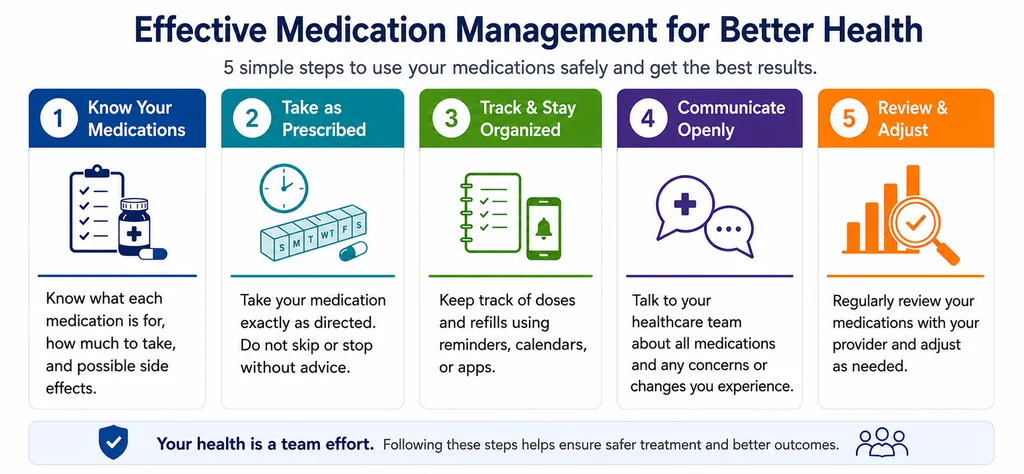
Staying consistent with medication can be challenging, especially when treatment schedules change or multiple medications are involved. Medication support helps create structure, reduce confusion, and make it easier to follow your treatment plan. Simple strategies such as reminders, clear instructions, regular follow-ups, and routine planning can help you stay on track and get the most benefit from your medications.
- Forgetting Fewer Doses
Many people miss doses because of busy schedules, work responsibilities, or simple forgetfulness. Reminder systems can help make medication part of a regular routine.
- Understanding Whether Medication Is Working
Some people stop treatment too early because they are unsure if medication is helping. Regular follow-ups allow providers to track progress and answer questions.
- Managing Side Effects
Concerns about side effects are one of the most common reasons people stop taking medication. Ongoing support helps identify problems early and make adjustments when needed.
- Staying Consistent During Busy Periods
Travel, work deadlines, family responsibilities, and schedule changes can make treatment harder to follow. A structured treatment routine can help you stay on track even when daily schedules change.
A systematic review in the American Medical Informatics Association [3] found that electronic reminders, particularly SMS reminders, can improve adherence to chronic medications. The researchers found evidence that reminders help patients take medications more consistently and reduce forgetfulness-related missed doses. Because better adherence is associated with improved treatment effectiveness and positive health outcomes, reminder systems can play an important role in supporting ongoing medication management.
In conclusion, medication support plays a key role in helping you stay consistent with your treatment. It improves safety, reduces mistakes, and makes medication management easier and more effective. With the right support system, you can follow your medication plan with confidence and achieve better, more stable health results over time.

Take Control of Your Medication Management With MindVita Today
Maybe you are forgetting doses, feeling unsure whether your medication is helping, struggling with side effects, or finding it difficult to keep track of multiple prescriptions. These challenges are common, but the right support can make treatment easier to manage. Without proper medication support, it can become harder to follow your treatment plan and manage your health safely.
At MindVita, we make medication management simple and supportive. Our psychiatric providers listen to your concerns, check how your medicines are working, and adjust your treatment when needed. With regular follow-ups and secure online care, we help you stay on track, feel more comfortable with your treatment, reduce missed doses, manage side effects, and stay consistent with treatment. We also help you understand whether your medication is working and feel more confident about your progress. Contact us today to get the support and care you need.
FAQs
What is medication management?
Medication management is the process of choosing, using, and monitoring medicines safely for better health. It helps you follow the right medication plan, avoid side effects, and improve treatment results. Psychiatric providers review your medications regularly and adjust doses when needed. This support helps people manage mental health conditions more effectively.
Why is medication therapy important?
Medication therapy is important because it can help reduce symptoms, improve daily functioning, and make treatment more effective when used correctly. Regular monitoring also helps providers adjust treatment when needed and improve long-term results. The right medication plan also lowers the risk of complications. Regular checkups help psychiatric providers see how the medicine is working and make changes if needed.
How often should a medication plan be reviewed?
A medication plan should be checked regularly to make sure the medicine is helping you. Many psychiatric providers review it every few months or when your health changes. These checkups help adjust medicines, reduce side effects, and improve results. Regular medication support also helps people manage health problems safely and follow the right treatment plan.
Can medication support reduce side effects?
Yes, medication support can help lower side effects by making sure you use the right medicine in the right way. Psychiatric providers check how the medicine affects you and make changes if needed. Regular follow-ups help catch problems early. This support keeps your treatment safer, more comfortable, and easier to manage over time.
Who can benefit from medication management?
Medication management can help anyone who takes medicine for mental health problems. It is especially helpful for people managing anxiety, depression, ADHD, bipolar disorder, or other long-term mental health conditions. Regular medication support helps medicines work better, lowers side effects, and makes treatment easier to follow. It can also help people who frequently forget doses, take multiple medications, struggle with side effects, or feel unsure whether their treatment is working.
What should I do if I keep forgetting to take my medication?
If you often forget your medication, you are not alone. Busy schedules, ADHD symptoms, stress, or changes in routine can make it difficult to stay consistent. Your psychiatric provider can help you create a medication routine, manage reminders, and identify barriers that may be affecting treatment success.